Live Music Sound, Power and AV: What Your Venue Needs to Provide
Performing across the United States since 2009, now based in the DMV (Washington DC, Maryland, and Virginia), more than 1,500 events. Mentored by music legends John Mayer, Paul Simon and Livingston Taylor.
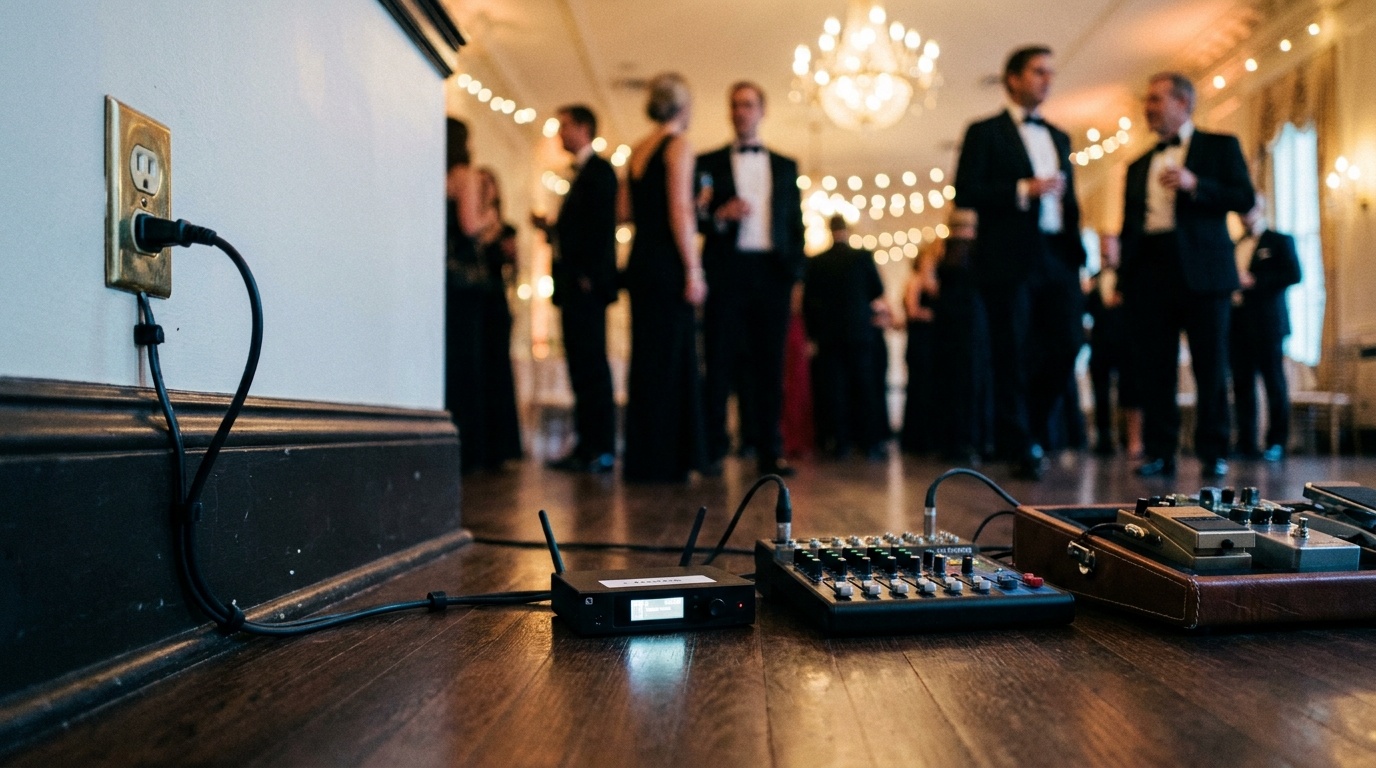
You're booking live music. It's easy to assume you already know what equipment is showing up. That assumption is the mistake, because there's no standard answer. One performer needs nothing but the wall outlet behind them. Another needs a full house sound system.
What gear your performer brings, and how well it will cover your guest count, varies by act. This page covers what to ask about a performer's own setup, wireless mics for toasts and remarks, how an unexpected equipment quirk between a venue's AV team and a performer gets caught before guests arrive, what happens when there's no house power or amplification isn't allowed, and when consolidating sound systems across your event makes more sense than renting three separately.
What Gear Does Your Performer Bring?
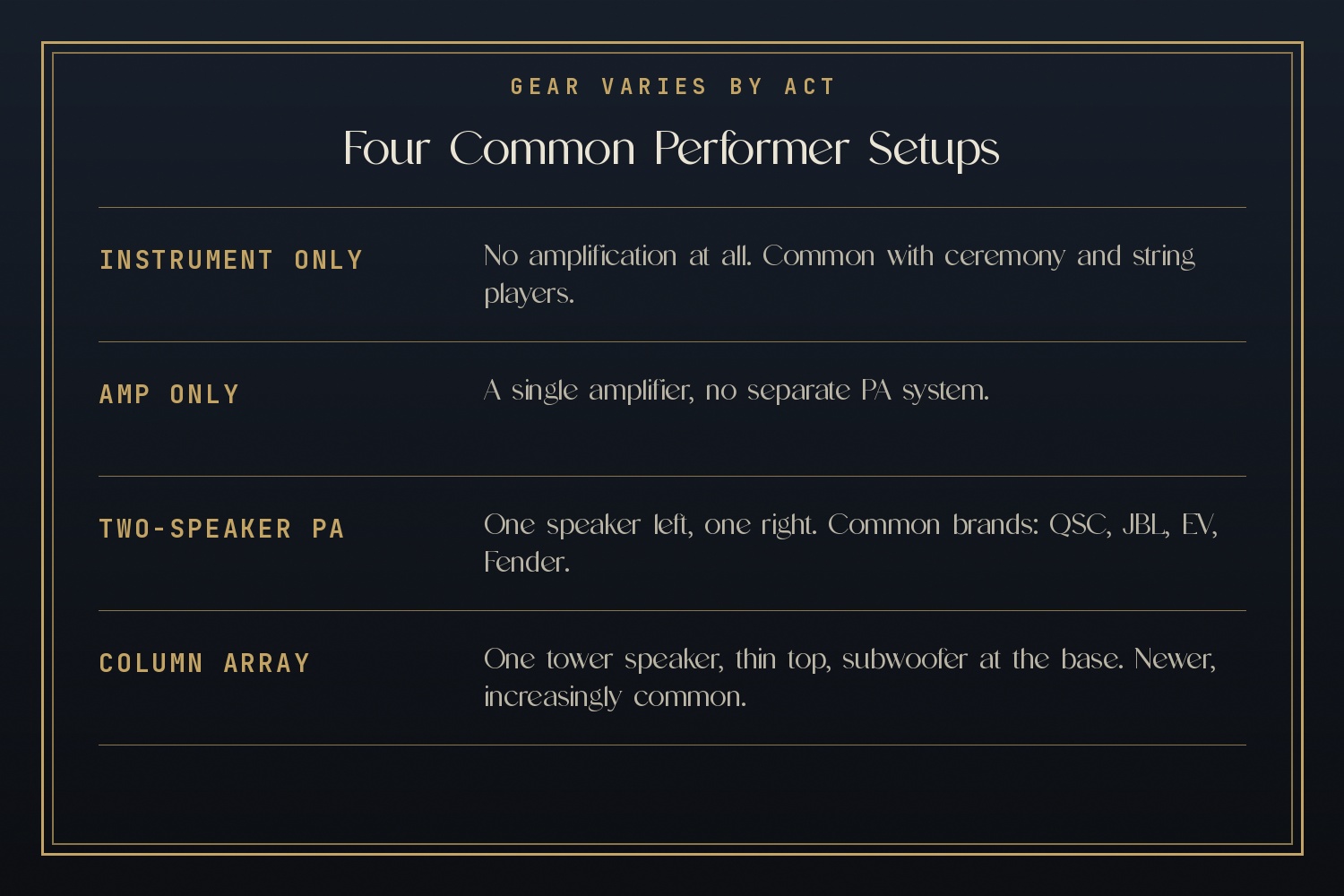
Gear varies widely by act, and it's a mistake to assume. Many ceremony musicians, especially string players, bring nothing but their instrument. Some solo performers travel with an amplifier but not a full PA system. Others bring a two-speaker system, one speaker on the left and one on the right (common brands include QSC, JBL, Electro-Voice, and Fender), or a column array: a single tower speaker with a thin top and a subwoofer at the base, a newer style you'll likely see more of going forward.
One example of a fully self-contained setup: an acoustic guitar, a portable column speaker system, a compact digital mixer, a wireless instrument and vocal system, and a pedal board for live looping, all running on one single standard household outlet. It's one example among many different setups performers bring to an event.
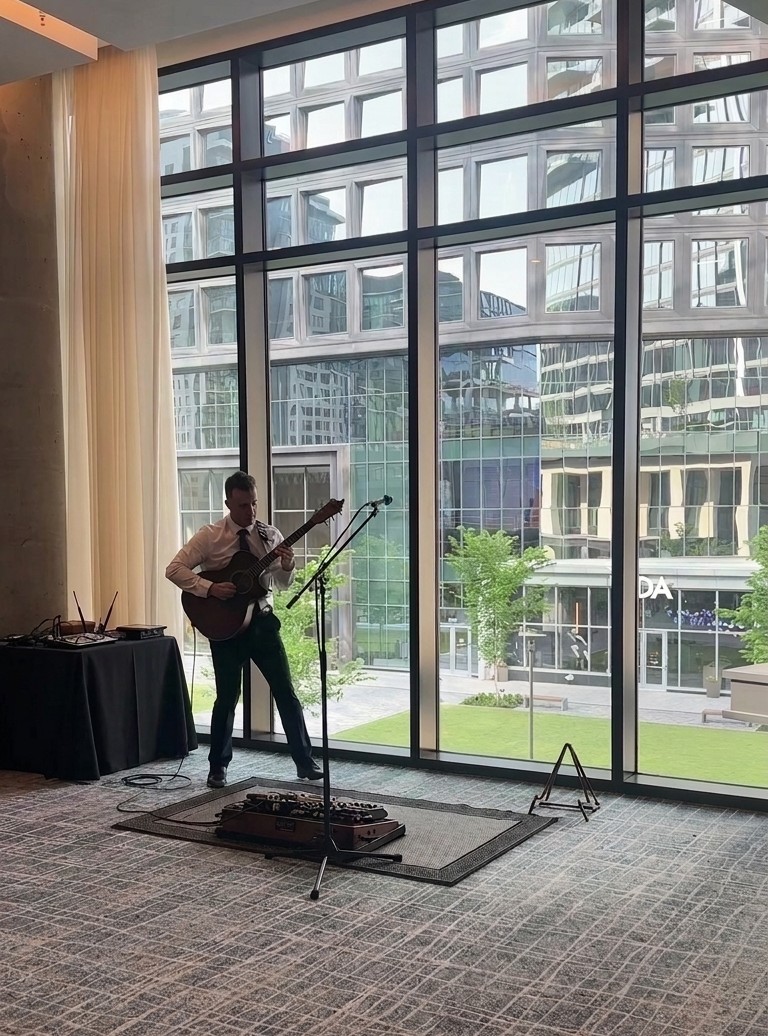
No full band can run its full setup on that kind of minimal footprint. A band's equipment and power needs scale with every additional player.
Ask two questions before you book: what kind of gear does your performer bring, just an amp, or a full PA system, and do they offer AV services? This matters more with a solo performer than it does with a DJ or a full band, since a DJ or a full band may come with a whole separate house sound system built in. A solo performer doesn't always include AV services, and sometimes can't, because they don't have the right equipment for it.
Also ask your performer what crowd size their own system is built to cover, whatever kind of act you're booking. One setup might top out around 150 people. Another might comfortably reach a crowd of 400. The number comes down to that performer's own gear, so ask them.
In one performer's own booking records, more than half of corporate inquiries raise a sound-system, AV, or power question before a booking is confirmed, and about a third or more of inquiries across every event type raise it too. The most common version of the question is almost always the same one: what kind of power does the setup need. The honest answer depends on which performer you're asking. Confirm it with your own performer before you book.
Wireless Mics for Toasts, Awards and Executive Remarks
At an annual company event held at a large restaurant, the head of the company wanted to say a few words partway through the evening. The performer ran a standard Shure SM58 handheld connected to the wireless unit, kept the channel muted until the executive stepped up to speak, then unmuted and adjusted the EQ live at the mixer to match his voice as he spoke.
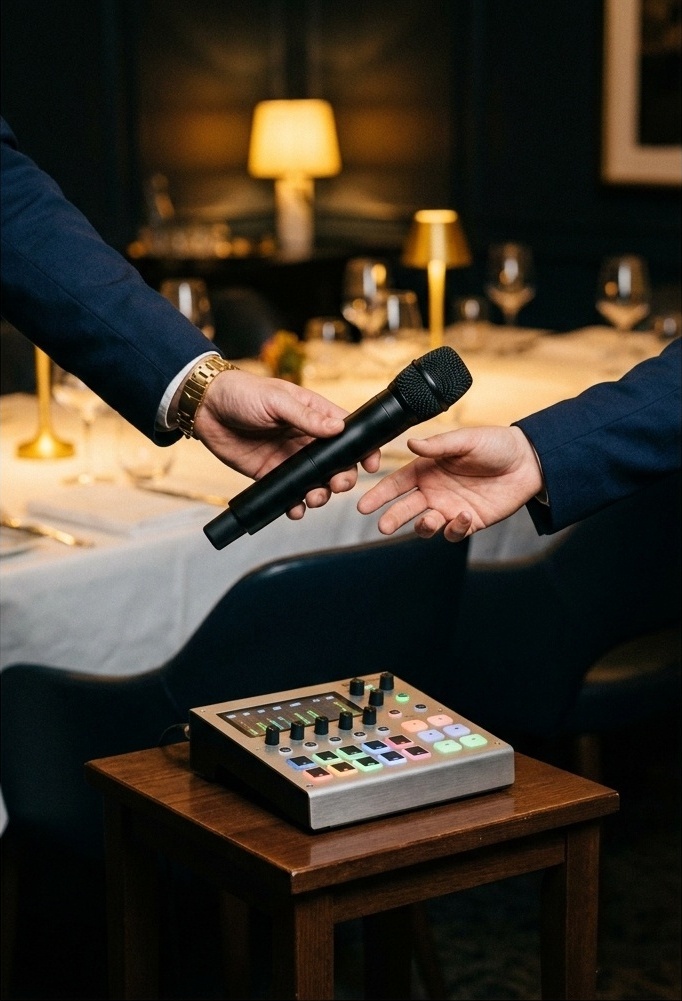
Untrained speakers hold a microphone very differently from a performer. Someone who holds the mic too far from their mouth forces the channel up loud enough to squeal into feedback. Someone who holds it right against their lips blasts the room instead. Fixing either one live, at the board, in seconds, takes real-time mixing skill. Not every act offers it.
If your event includes toasts, an award, or executive remarks, ask whoever you're hiring directly: are you able to do live mixing when we give our toasts? Don't assume the answer is yes. Most solo performers can't do this, and even a full band doesn't always offer it. It's generally a skill reserved for AV teams. Skip the question and you risk technical difficulties in the middle of your company's speeches.
For how the speech handoff fits into a solo guitarist's corporate set, see how a solo guitarist handles the microphone handoff at a corporate event.
When Venue AV and a Performer's Gear Hit an Unexpected Quirk
A venue's AV team and a hired performer can each bring equipment that should work together and doesn't, for reasons neither side could have predicted ahead of time. That kind of problem usually stays hidden until the full signal path gets tested.
At a bar mitzvah in New Jersey, the venue's AV team could not get the performer's pedal board producing any sound through their house system, no matter what they tried. The fix turned out to be a single input switch, from line level to mic level, on the AV team's own board, something neither side had any way to foresee. It was found and corrected only because the performer arrived well before doors opened, with enough time left to troubleshoot before a single guest walked in.
Confirming compatibility on paper still leaves room for issues between two different brands of equipment. Ask your performer to arrive early enough to test the full signal path before your guests arrive, in an empty room where a quirk like this is easy to fix. It belongs on the same pre-event checklist as other logistics to confirm ahead of time, including what happens if a hired musician doesn't show up.
Outdoor, Rooftop and No-Amplification Venues
Outdoors, on a rooftop, on a boat, in a backyard, or anywhere else reliable power isn't guaranteed, ask what your performer's setup needs to run. That question matters for a corporate reception on a rooftop terrace the same way it matters for a private event in a garden, which is one more reason to ask about a performer's gear before booking either a wedding music act or private and corporate events entertainment.
At a four-star resort, a large room the venue rents out was hosting a wedding, under a policy, unrelated to power, that did not allow any amplification at all. The performer went entirely unplugged and acoustic, moving freely among the guests, and relied on musicianship to project across the room. Because the group was not enormous, the sound carried clearly through the ceremony and the cocktail hour without a single speaker turned on. A battery-powered rig would not have solved anything here. The constraint was permission, and no amount of equipment changes the venue's own policy.
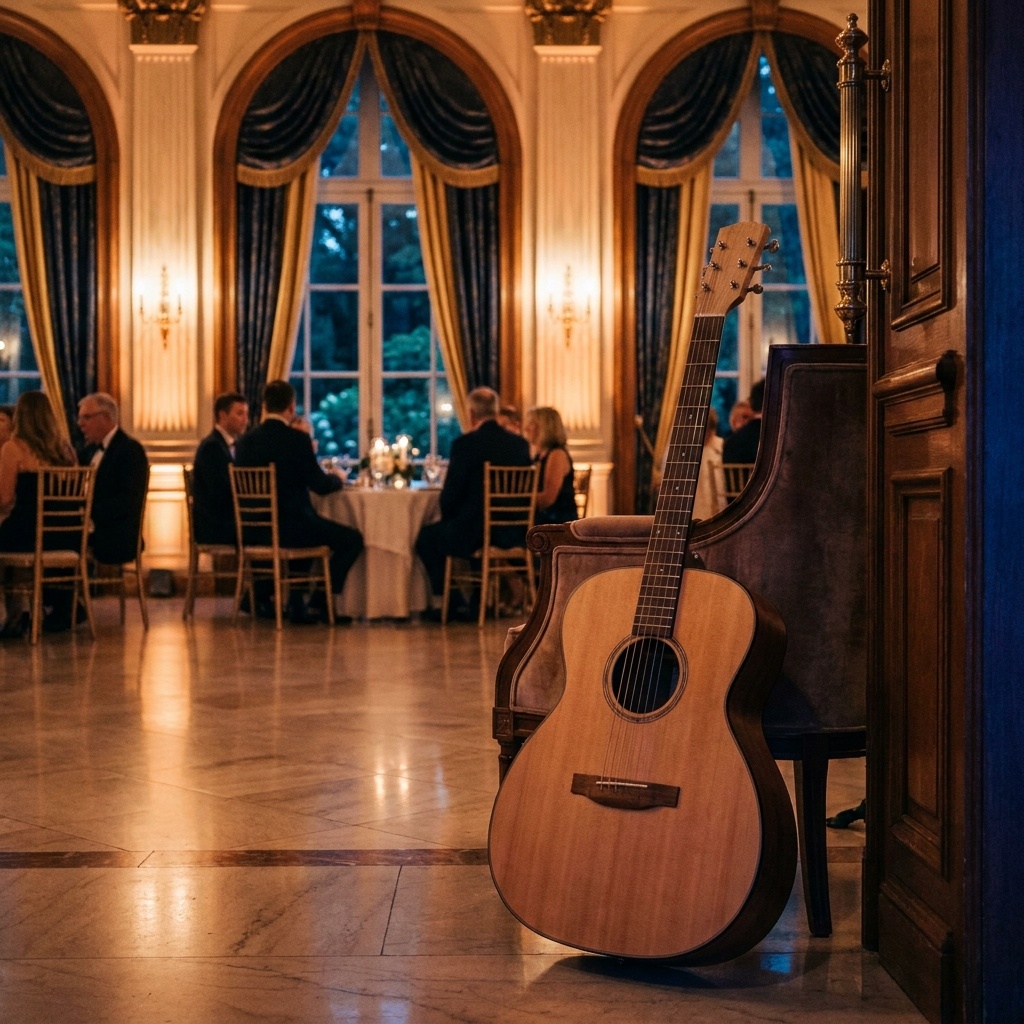
If your venue restricts amplification, confirm that with them before booking.
Multiple Segments, One Sound System: Why Consolidating Saves Money and Reduces Risk
A multi-segment event, whether that is a wedding's ceremony, cocktail hour, and reception, or a corporate program's welcome reception, dinner, and awards, creates an incentive problem for a full-service AV vendor. Running three separate sound systems for three segments, each billed and staffed separately, is more profitable for an AV production company or a full-band agency than consolidating two of those segments onto one system would be. That is a structural incentive built into how the industry prices and staffs multi-segment productions.
An experienced, self-contained musician or DJ can often run sound for multiple segments of an event directly, on the same equipment, without bringing in a separate AV production company at all. Some full AV-vendor setups run into the tens of thousands of dollars for redundant systems across a multi-segment event. One performer who has watched those quotes over years of gigs puts the savings from consolidating onto a musician's or DJ's own system at several thousand dollars, based on general market patterns across many vendors over time. Different brands of gear also have compatibility quirks. Connect your musician or DJ with the venue's AV team ahead of the event so both sides can talk through exactly what equipment is being used before the day.
One more thing to confirm with your AV team: local noise restrictions. Historic Alexandria, Virginia, for example, enforces noise regulations that carry legal penalties. An AV team unfamiliar with the area may have no idea those restrictions exist. Confirm them before the event.
FAQ
Does a live musician bring their own sound system?
It varies by act. Some bring a full PA system, complete with a power conditioner and every cable the setup needs. Others bring only an amp, or nothing but their instrument. Ask directly what your performer plans to bring, and confirm it in writing if the event depends on it.
Do we need to provide a wireless mic for toasts or remarks, or does the performer bring one?
Who supplies the wireless mic varies by act. It's often a DJ or an AV team that provides one, though some musicians carry their own. Confirm this by name when booking if the event includes speeches, an award, or executive remarks.
What if there's no power or sound system available at the venue at all?
A battery-powered rig can cover a true no-outlet location for several hours. Compared with a gas-powered generator, a battery rig runs quiet, but it will run out of power sooner.
Who's responsible for confirming who provides the sound system: us, the venue, or the performer?
You are the one who connects the parties. Confirm in writing whether the musician, DJ, or venue is providing the sound system, then give the AV team what they need to prepare: each segment's location, the distance between them, headcount, whether there will be speeches, and any local noise restrictions.
No Two Performers Bring the Same Setup
One musician needs a single wall outlet. Another needs a full house system. Neither answer tells you anything about the other, and neither is the default. The way to know what you're getting, and what your venue needs to provide, is to ask.
Quick Recap: What to Ask Your Performer
- What gear do they bring? It ranges from nothing but an instrument to a full PA system, with an amp, two-speaker setup, or column array in between. Ask specifically.
- Do they offer AV services? Ask before booking, since it isn't automatic for every act. Many solo performers don't carry the gear for it.
- What crowd size is their system built for? Get the number before you book. A system built for 150 people won't reach every corner of a 400-guest room.
- Who mixes the mic during speeches? Confirm it by name before the event. It is usually an AV-team job, and many performers don't offer it.
- Do they arrive early enough to test the full signal path? Equipment quirks between a venue's AV team and a performer's gear often only show up once everything is plugged in together.
- Would consolidating systems across your event save money? Ask your performer or DJ whether they can cover multiple segments on one rig. Separate systems per segment usually cost more and add compatibility risk.
- Does your venue have noise restrictions? Check with your venue and AV team before the event. Some jurisdictions, including historic Alexandria, Virginia, enforce rules with penalties.
Questions about music for your own event? The contact page is here.
Blog Categories
Latest Blogs