Hiring a Solo Guitarist for a Corporate Event? Here's What Most Planners Get Wrong
Dylan Galvin is a Berklee College of Music graduate, mentored by music legends John Mayer, Paul Simon and Livingston Taylor. Performing across the United States since 2009, now based in the DMV (Washington DC, Maryland, and Virginia), more than 1,500 events, including work for Coca-Cola, Wells Fargo, Lincoln, and CBRE.
Most planners who've never booked one picture the same thing when they hear "solo acoustic guitarist": someone in the corner with a small amp, playing quietly through dinner, disconnected from whatever else is happening in the room. That picture describes a real, common type of solo performer. A corporate program calls for a different one.
A solo guitarist built for corporate work is its own category, built around reading a room and moving through an entire evening's worth of energy: soft instrumental ambience during a reception, a fuller vocal set once dinner winds down, a hybrid DJ set to close the night if that's what the room wants. The corner-sitting version and the full-range version get hired under the same job title, which is exactly why so many planners go in unsure of what they're getting. Knowing which one is being booked, before the contract is signed, is the difference between entertainment that disappears into the background all night and entertainment that tracks the room throughout.
How Corporate Energy Moves Through a Room
"A wedding's core theme is celebratory and romantic... A corporate event might celebrate a milestone or a win, but romance has no meaningful place in it... Corporate events run a steadier energy band, roughly 2–4, versus a wedding's full 1–5 range."
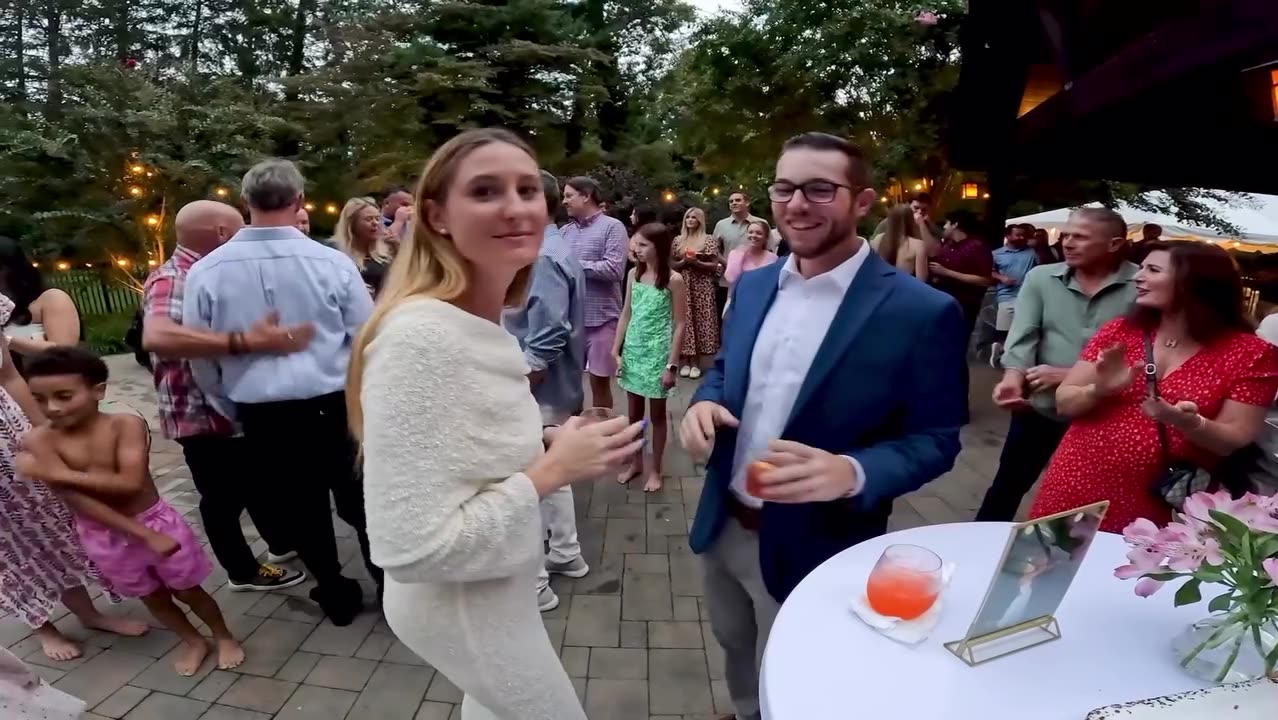
At a corporate event, the music's job across the evening is helping people share stories and connect as coworkers. That steadier register shows up as fewer full-energy peaks and more sustained, conversational volume, present enough to shape the room without pulling focus from the conversation. Song selection follows the same logic, chosen for a room built around shared work and shared wins.
This steadier register is the baseline the rest of this piece is built around: the vetting, the coordination, and the way an evening gets rebuilt on short notice when the program calls for it.
What to Look For in a Corporate-Ready Solo Guitarist
The corner-performer concern is a reasonable one. Plenty of solo acoustic acts are built for one mode: quiet, static, playing to fill the space for the night.
A corporate event usually carries its own structure: a program, a schedule, sometimes a CEO or an award presentation, always a brand behind the whole evening. That structure is what sets corporate and private event entertainment apart from a private party with no program to work around.
Range Across the Evening
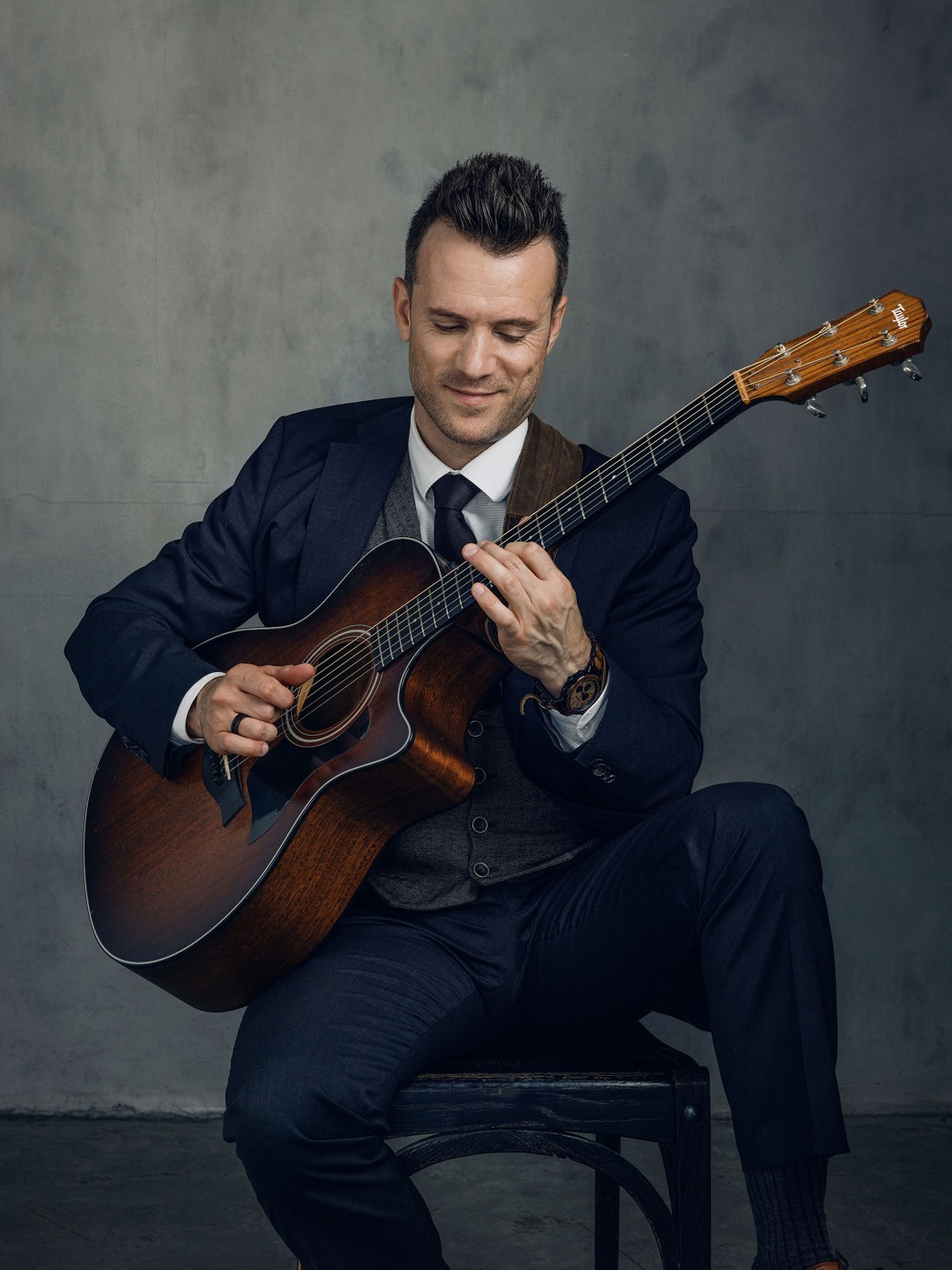
Instrumental fingerstyle guitar suits a cocktail hour. A full vocal set that gets a room singing along suits the later part of the night. A corporate evening often calls for both, moving from one register to the other as one continuous performance. Live looping, layering guitar, rhythm, and vocals live, one part at a time, lets a single guitarist cover that full range without adding a band. Covering the whole evening this way also keeps it to one performer and one contract for cocktail hour, dinner, and a closing DJ set. A band-plus-DJ lineup covering the same evening typically means two or three separate bookings to coordinate.
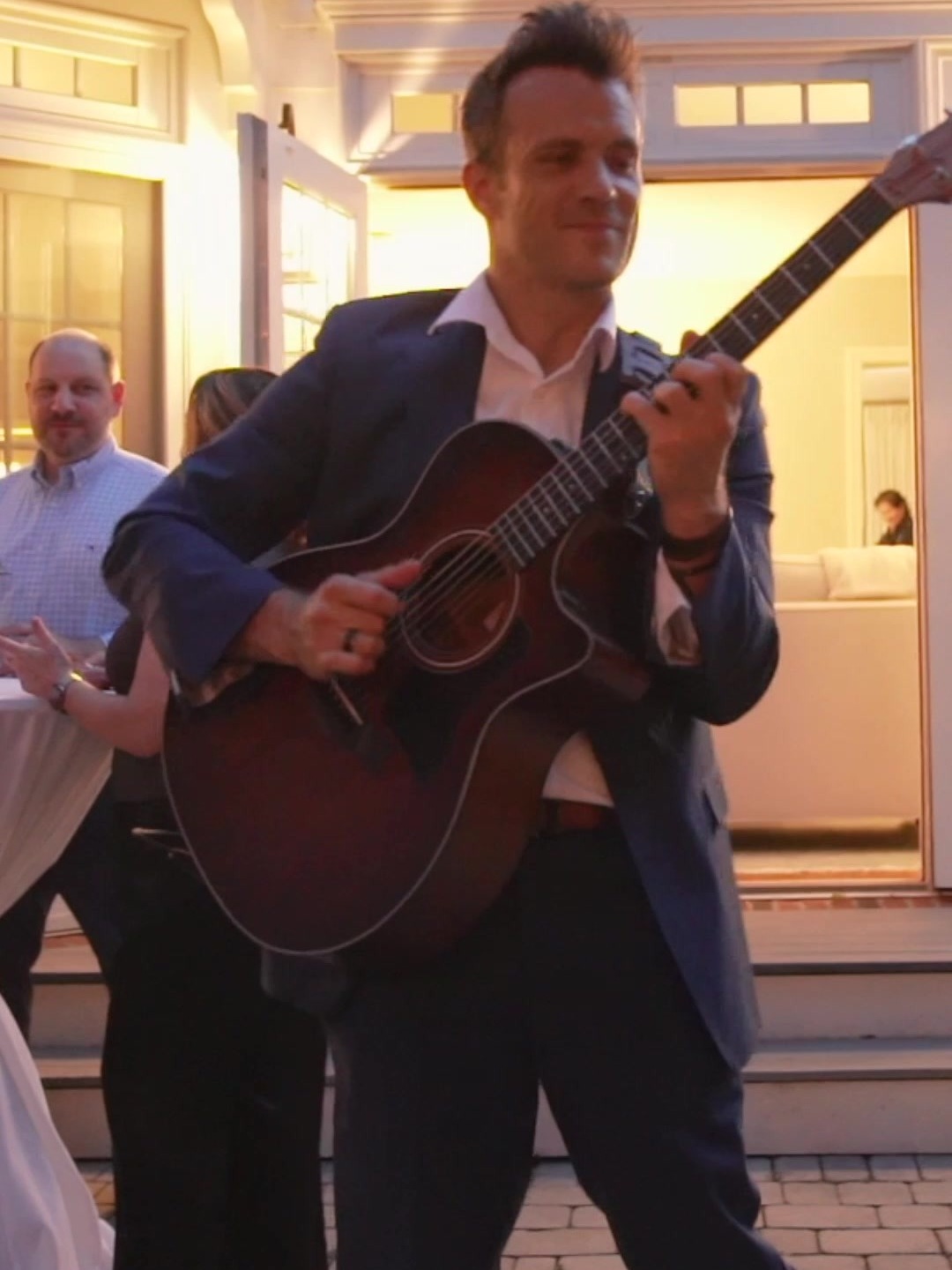
A wireless guitar and mic matter here too. That combination is what lets a performer walk the room during a cocktail hour, moving among guests while the set continues.
Coordinating in Real Time With the Program
The strongest corporate performers work the itinerary out with the planner in advance: when the CEO speaks, when awards happen, when dinner service starts and ends. During the event, that itinerary becomes part of the set.
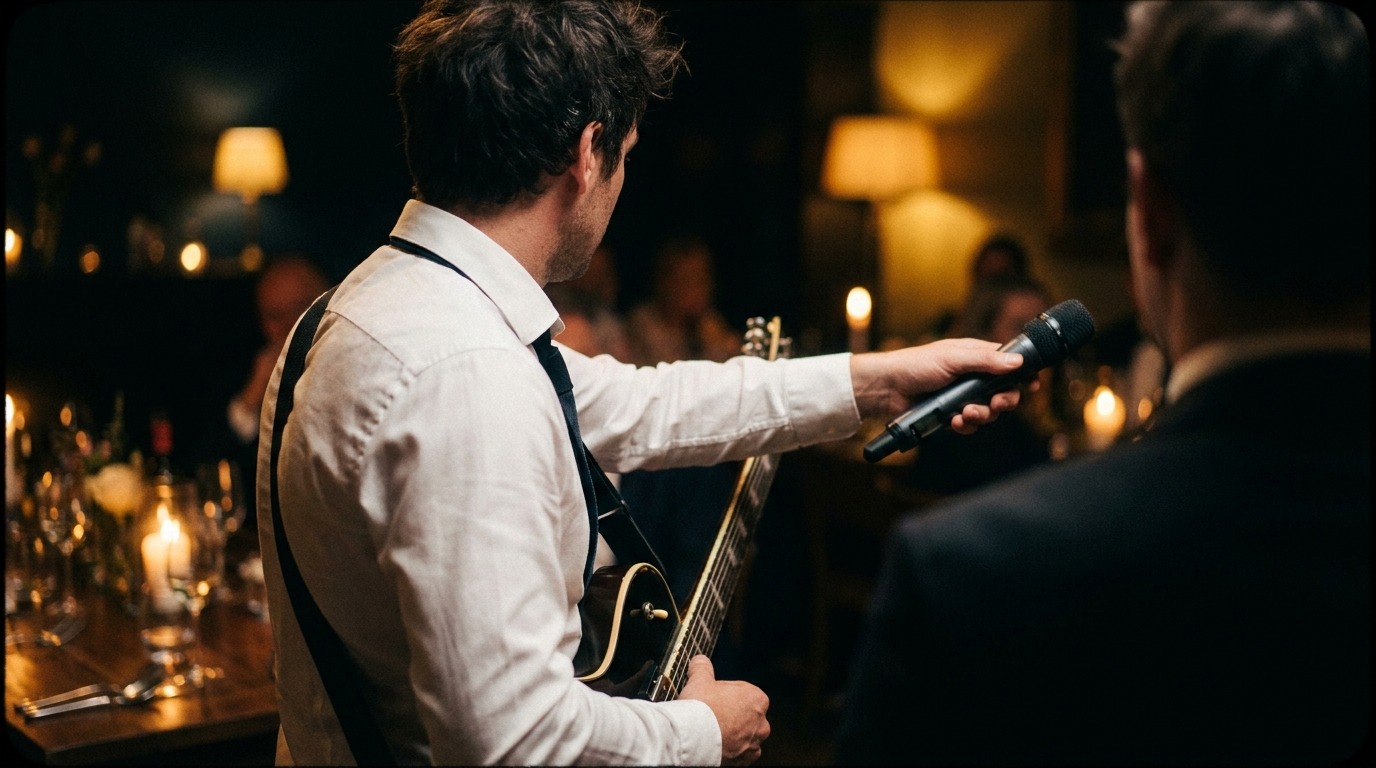
In practice: mid-song, on a cue from the planner, the music fades out cleanly. A wireless mic gets handed to the speaker, and the performer manages sound levels for the speech in real time, riding the gain if someone holds the mic too close, adjusting so the back of the room can hear. When the speaker finishes, the mic fades down, the music fades back in, and the set continues. Ask a prospective performer to walk through exactly how that handoff works.
Song Selection Built Around the Brand in the Room
A corporate event has a host with a specific message, tone, and things it wants to avoid. A song with explicit lyrics in the middle of the set reflects on the company that booked it, and this is worth a real conversation before the event, sometimes down to approving every song on the list. For the length of the evening, the performance represents the company's brand to the guests in the room.
Three Things to Confirm Before You Book
A category tag on a roster page is only a label. Three concrete things separate a real corporate-ready performer from that label.
1. "Confirm it's an instrumentalist and singer. Some solo guitarists are instrumental-only with no mic at all."
2. "Confirm they have a full PA system, not just an amplifier. Different things entirely."
3. "Specifically ask if they have wireless mics available for the client or guests to use." A dry, effects-free wireless mic that lets someone walk the room is a separate piece of equipment from the mic on the performer's own stand, usually preset with vocal effects and tied to wherever the performer is physically set up.
Put all three answers in writing before you book.

Adapting on the Fly, in DC and in Napa
A law firm's milestone-celebration rooftop event in Northwest DC came with a specific, last-minute request: keep the sound system in one fixed spot, with little to no vocals across the performance. The change meant auditing the entire set list on the spot and rebuilding it around mostly instrumental material, then working the room by leaning mostly on the guitar playing itself.
That request meant rebuilding the evening's material into a different form, on short notice. The set held.

The same flexibility shows up at a different scale.
A private dinner in Napa, California, hosted by the CEO of Coca-Cola as a collaboration with Outstanding in the Field, the company known for staging elegant, outdoor dinners on hillsides and mountaintops, brought together CEOs and executives from other major food and beverage companies, including Chick-fil-A and Wendy's, at a single table running over 100 people long.
That room needed music that tracked table energy continuously, present enough to shape the atmosphere, restrained enough that a hundred people could still hear each other across the table. Reading the room and adjusting song by song for the entire evening is the same underlying judgment call as the rooftop rebuild, at a larger scale.
When the Plan Falls Apart
Some itineraries fall apart before the event even starts. One booking involved a coordinator who seemed overwhelmed, unsure of the plan, and missing pieces of the night's run of show. The fix was coordinating directly with the DJ, keeping music running through every gap in the evening and smoothing over the disorganization as it happened.
Coordinating with a program can also mean covering for a plan that never fully came together, on top of running whatever cue sheet was agreed in advance. Worth asking a prospective performer directly how they've handled an itinerary that fell apart, beyond whether they can follow one that holds together.
The Business Case for Getting This Right
Gallup's Q12 meta-analysis has found, comparing top-quartile and bottom-quartile business units across decades of data, that highly engaged teams outperform disengaged ones by a median of 23% on profitability. The moments that build engagement include the ones outside a conference room, where employees, clients, and leadership experience something together. A client dinner or company celebration that feels well-produced is one of the levers a company has for that kind of engagement.
Corporate bookings also run on a different calendar than weddings. Wedding bookings cluster heavily from September through November and nearly disappear in winter, tracking the outdoor, weather-dependent nature of most ceremonies. Corporate bookings run year-round and fairly evenly, since most of them happen indoors. By one performer's own estimate, roughly a quarter of his bookings overall, corporate and wedding alike, involve coordinating around a speech, toast, award segment, or presentation, worked out from an itinerary supplied in advance. Even without a program to build around, a curated background playlist stays on standby and comes in immediately on any break, keeping the transition between live playing and downtime smooth.
That range also matters for the room itself. Corporate work in the DMV covers very different spaces: a hotel ballroom in DC, a corporate campus lobby in Northern Virginia, a client dinner at a private venue in Maryland. A guitarist with only one register, whether that's quiet dinner music or full amplified vocals, is a mismatch for whichever of those rooms calls for the other. What a wireless, roaming setup adds to that flexibility is covered in more depth in what is a roaming musician, and more on how this plays out at large corporate bookings is in what playing corporate events for Fortune 500 brands looks like.

Frequently Asked Questions
Can a solo guitarist work around a CEO speech or awards presentation?
Yes, when the itinerary is planned with the performer in advance. The music fades out cleanly at the right moment, a wireless mic is handed to the speaker, and the performer manages sound levels for the speech in real time before fading the music back in. That handoff is the job an AV tech would otherwise be doing.
Will the music be appropriate for our brand and industry?
That's a conversation to have before the event. Song selection gets shaped in advance around a company's tone, message, and anything it wants to avoid, in some cases down to a fully pre-approved list.
Does a solo guitarist need our in-house AV team, or bring their own equipment?
Either works. A solo guitarist with a full setup can run independently or plug into an existing in-house system, acting as the point of contact for the music specifically while coordinating with the broader AV team on everything else.
Is a solo guitarist too quiet for a large corporate event?
Volume comes down to the setup. A full PA system is what fills a large space, a separate piece of equipment from a guitar amplifier, which covers a much smaller area. With a full PA and a wireless mic, volume scales to the room, from soft ambience for a small table up to a full vocal set for a much larger crowd.
Can the same performer cover both an indoor reception and an outdoor space at the same event?
Yes, and it's common at properties with both a ballroom and a patio or lawn. A solo setup moves easily between spaces without the load-in time a full band needs, which matters most at venues where the reception and the main event happen in two different rooms.
How do I know if a "solo guitarist" listed on a booking agency's roster page can run our event?
Ask specifically whether the performer is a singer as well as an instrumentalist, whether their setup includes a full PA system, a separate piece of equipment from an amplifier, and whether an effects-free wireless mic is available for guests or speakers to use. A quick email confirming all three answers protects both sides before the contract is signed.
The Bottom Line
A solo acoustic guitarist gets booked for two different jobs under the same title: someone who plays quietly in a fixed spot for the night, and someone who reads the room, moves through a full range of energy, and coordinates with a live program in real time. Knowing which one is being booked, before signing, is what the sections above are for.
"Talent level alone is the wrong filter. Do they look sharp and professionally dressed in their photos and videos, or are their videos shot in a dimly lit bar under a TV? Do they have a track record with other reputable companies? Is any of their content actually live, not just polished pre-recorded tracks? You're hiring someone who functions as an extension of your brand in front of your guests."
Questions about music for your own event? The contact page is here.
Sources
1. Gallup, Q12 Meta-Analysis, 11th Edition: comparing top-quartile and bottom-quartile business/work units across the full study (736 research studies, 183,806 units), the median difference in profitability is 23%.
2. Unattributed first-hand account: a law firm's rooftop milestone celebration, Northwest DC. Firsthand account, not independently verified beyond the general event type and location.
3. Unattributed first-hand account: a private dinner performance for Outstanding in the Field (Napa, CA), hosted by the CEO of Coca-Cola with attendees including the CEOs of Chick-fil-A and Wendy's. Firsthand account, not independently press-verified.
Blog Categories
Latest Blogs