Wedding Events
Wedding Prelude Songs: The Half Hour Before the Ceremony and the One Song That Closes It
Dylan Galvin is a live events performer who has performed across the United States since 2009, now based in the DMV (Washington DC, Maryland, and Virginia), more than 1,500 events. Mentored by music legends John Mayer, Paul Simon and Livingston Taylor.
Guests at the ceremonies I play do not listen to the prelude music the way they listen to a concert. Not even your nerdy audiophile uncle does. They talk and find their seats while the wedding party is concerned with its own cues, so the music works as a timeline tool. That makes the song list a small decision and the musician a large one.
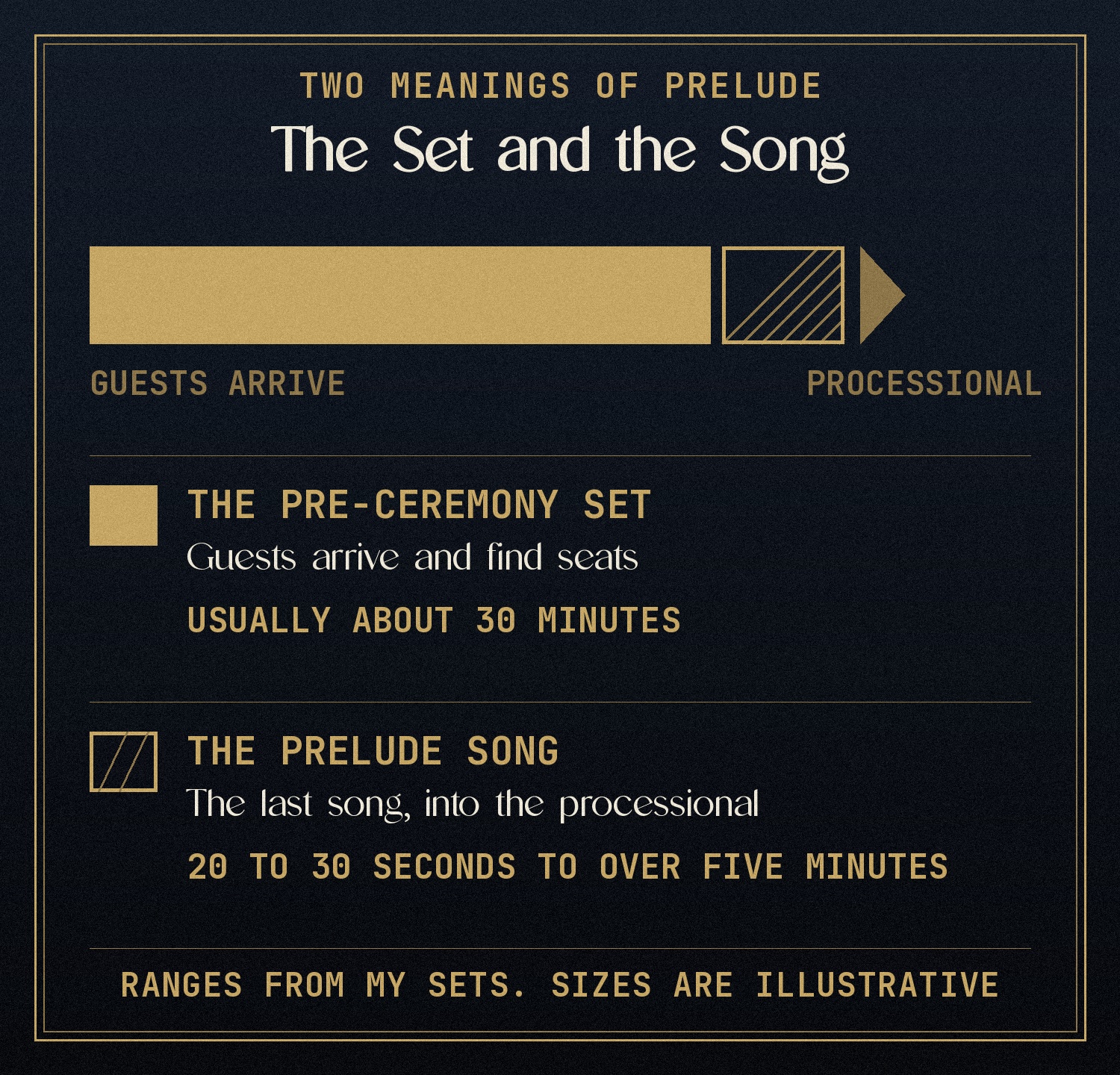
This page is for the person choosing and booking the ceremony music, whether a couple or a planner doing it for them. The word "prelude" means two things. The planning guides use it for the half hour of music while guests arrive and find their seats. In my usage, the prelude is usually just one song, the last one, which transitions the room from the pre-ceremony music to the processional. I call the half hour the pre-ceremony set and the final piece the prelude song.
In my work, the pre-ceremony set is generally half an hour of music, and the prelude song has no fixed length. It can run from as little as 20 to 30 seconds to over five minutes. Choose a musician whose sound you like and who can stretch or shorten the music without a seam. The song titles can be nearly anything.
What "Prelude" Means: The Half Hour and the Last Song
The pre-ceremony set is the music that plays while guests arrive and sit down. Planning guides point to about half an hour. Joy's guide to the ceremony order of events starts prelude music 20 to 30 minutes before the ceremony, and a ceremony musician quoted in The Knot's guide to planning ceremony music gives the same window. My own set usually starts about 30 minutes before the ceremony.
The prelude song is narrower. The same Joy guide marks the hand-off point: the prelude ends when the processional begins.
The guide to choosing a ceremony musician uses "prelude" for the whole set.
The wedding music page covers the other parts of the day.
Guests Listen Passively, and That Changes What the Music Is For
Lots of musicians and bands may think this music is listened to far more than it is. It does more to keep the timeline smooth than it does as a performance.
Think of the songs as beautiful furniture. Properly placed in a room, they highlight and accentuate the room's beauty. Put them all in the center of the floor and they are in everyone's way.
Some of the large wedding websites give you enormous lists of songs to choose from for your prelude. That is not particularly helpful if you have alternative tastes, and it is not needed. I think these are generally written just to show up in search engines with a bunch of links. I wrote this and opted out of all the keyword stuffing and laundry list of songs to try and give you a concise guide on the best way to do this so that you don't have to read any more blogs other than this one when you're figuring out your wedding music.
You can tell your musician the mood you want.

Which Songs Work While Guests Arrive: Patterns to Follow
Profanity is a terrible choice for a pre-ceremony song. Hip-hop, hard rock and metal do not work well here at all. Songs that are flowy, slower, mid-tempo and romantic fit best, because the music is introducing the guests to the event. It should not try to change the tone of the event.
Anthemic songs such as bar sing-alongs, rock anthems and party music are too much to begin a wedding with. A song needs to be familiar enough to recognize and presented in a way that stays unobtrusive.
Many different songs work if they are done instrumentally.
Older songs travel across age groups. I lean toward more classic and older songs at guest arrival, because the guests are a large mix of demographics. The older guests recognize the older music, and the younger guests recognize it too. Older guests do not always recognize the younger music. Slipping in a recent Top 40 song here and there is okay. A playlist heavy with modern hits disrupts the vibe.
Songs I have played at guest arrival or as the last song before the processional include "Here Comes the Sun," "Human Nature" by Michael Jackson, "Viva La Vida" by Coldplay and "Riptide" by Vance Joy. For a list built around the ceremony itself, see 20 acoustic guitar songs for a wedding ceremony.
The Prelude Song Is a Cue and a Buffer
At one wooded campground in New Hampshire, about 150 people came to an outdoor ceremony in the early afternoon, with a day-of coordinator. The music was strictly instrumental. The coordinator usually gives me the cue to start. This time the wedding party began walking without telling her. I looked around, didn't see the coordinator, and saw the party beginning. I had to improvise and take the initiative to begin the ceremony sequence, even though they had started early.
There was no clock. I usually have an iPad synced with my sound system and a phone, in case I need to check timing or cue a song through the sound system. That is one way to do it.
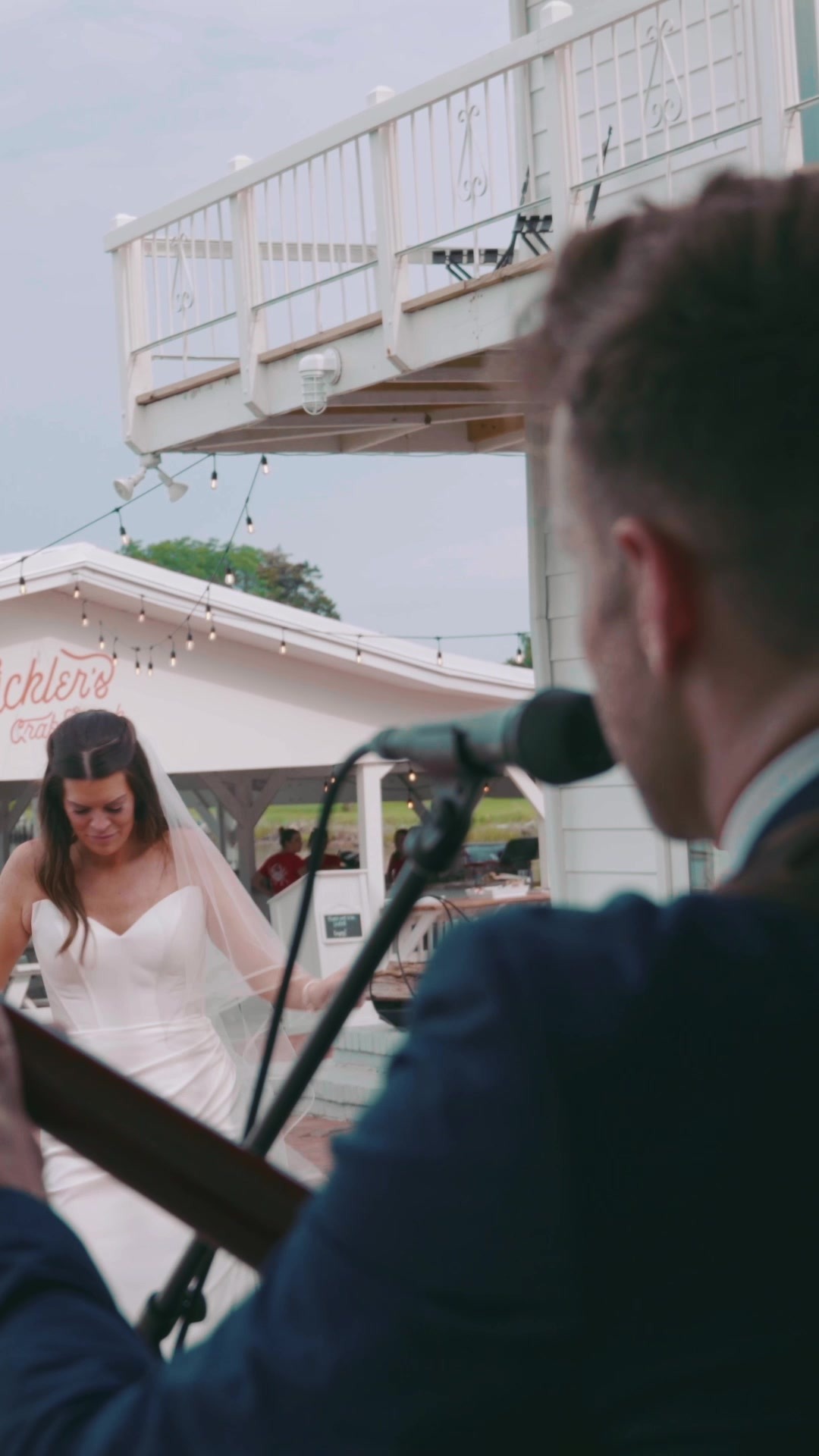
The shortest prelude might be only 20 to 30 seconds. When there is no cue, or the timeline is off slightly, the ceremony musician has to guess and do their best to stick with the timeline. If the wedding party begins early, I have to switch into the processional song right after I start the prelude. If the party does not start early, the prelude song can play for the full length of the song the couple chose, about three to four minutes. If the party is not ready, I repeat part of the song, and it can run past five minutes. The song itself is kind of a cue to let everyone know to get into place.
Choosing an experienced musician helps avoid hiccups if something like the New Hampshire scene happens at your ceremony. In my view, an inexperienced musician will have no idea what to do and will freeze.
When the Ceremony Starts Late
Out of my last 10 ceremonies, probably two or three started late, and they started late by less than 10 minutes. About 15 minutes is the latest a ceremony has ever started late for me. That one started late because guests were arriving late from the shuttles and needed time to go to the bathroom and sit back down before everything began.
When a ceremony starts late, I add more songs to the instrumental set in the pre-ceremony section. It is not a big deal. An experienced ceremony musician has extra songs ready for each section of the wedding. In my view, no musician should carry only the exact number of songs needed to fill the time. They should be ready to play another one and to stretch, expand or shorten the set list as needed.
At a large private estate in Virginia, a ceremony ran late. The planner and coordinator told me. Some guests had arrived behind schedule, and the timeline needed a little space so that everyone could use the bathroom without disrupting the ceremony. I had an entire set of instrumental acoustic pop songs that I was DJing for the pre-ceremony, and I was roaming the lawn playing acoustic guitar to the tracks. Now and then I walked back to my DJ stand and changed the order of the songs if I thought another one would fit better next. I let a few more songs on the playlist play all the way through.
As the time for the prelude song got close, I turned off the playlist and played one fingerstyle arrangement of a song live. That way I would not have to run over and turn off the music when the processional started. I was ready to transition at a moment's notice.
My plan for a longer delay follows the same method. If a ceremony is 15 minutes late, I keep performing. If it ran so late that an intermission made sense, I might take a break and switch to the DJed tracks for a short time. Then I would come back and perform until things begin.
Instrumental First, Vocals Later
Every wedding I perform begins with instrumental music. I never start out with vocals. The pre-ceremony, the processional and the bridal walk are all instrumental almost exclusively. If one song at a wedding includes vocals, it is the recessional, right after the kiss.
If a couple wants singing while guests arrive, I will do it, but vocals tend to pull a bit more attention to the performer and work less as a backdrop, so couples need to be aware of that effect.
Ask for instrumental versions of the songs you love.
Volume and Playing Without Amplification
Changing location is the only option a totally unamplified musician has. With no amplification, I stand fairly close, where everyone can hear the music and follow the cues. Normally I would be farther back, behind the guests or off to one side. About 30 people is right around the point where I would recommend amplification.
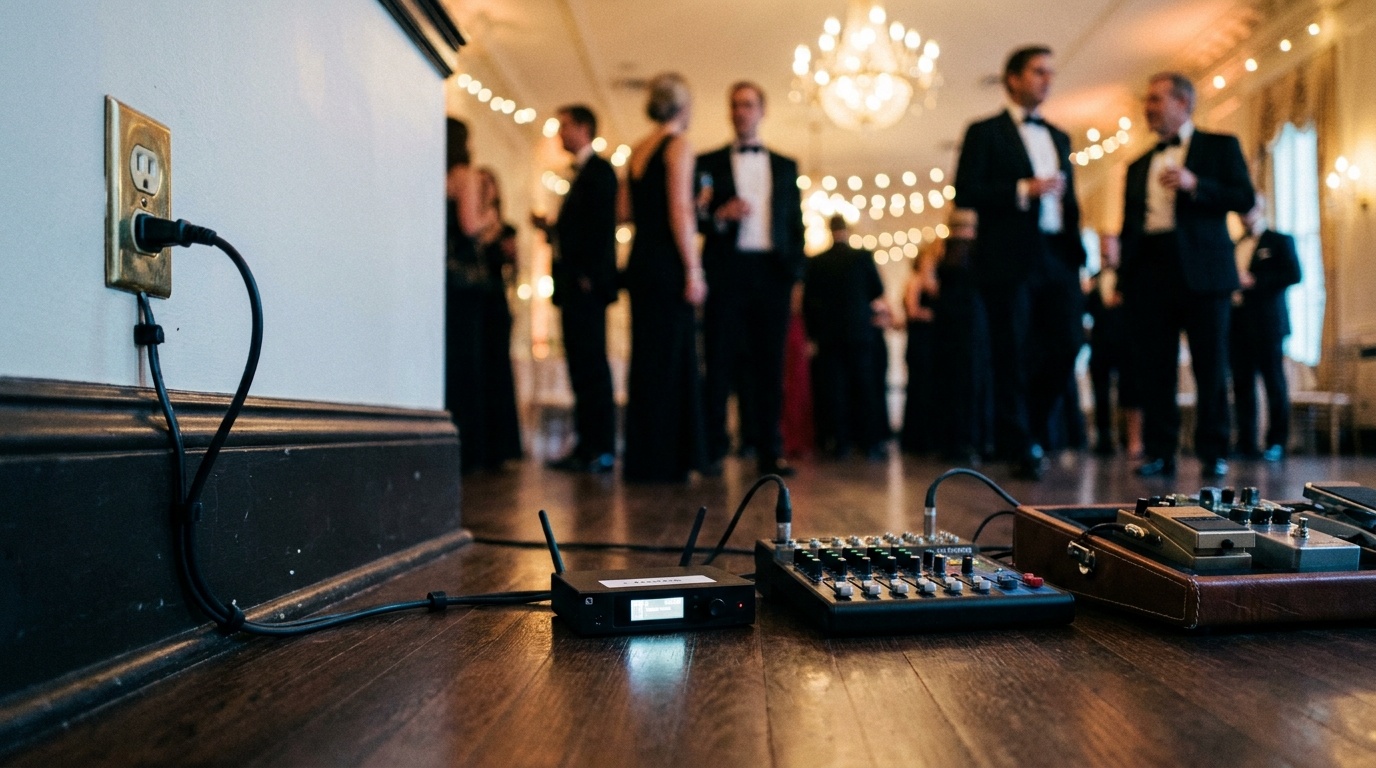
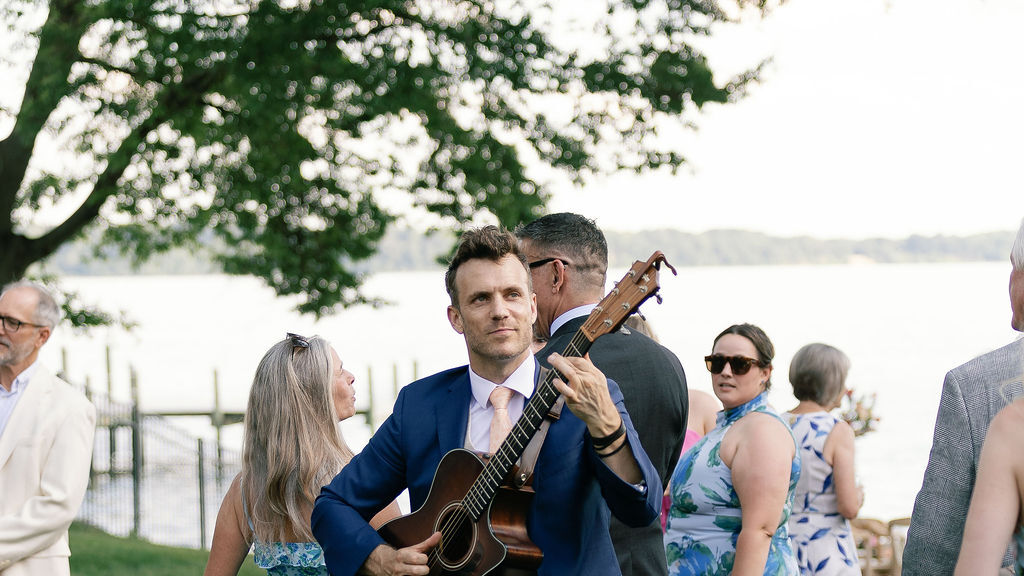
When guests arrive talking and amplification is not allowed, a roaming performance helps. Walking among the guests signals that there is live music if they couldn't hear it before. It also tells them the music will be at a low level, and it helps them take the cue to go quiet and listen when the ceremony music starts. Sound, power and AV for live music tells one no-amplification scene in full, and acoustic guitar player for hire covers unamplified performance in more depth.

What to Send and What to Ask Before You Book
A mood is enough. In my last 10 weddings, only one couple gave me a prelude song, and they wanted it instrumental, with no other details. The rest generally sent their choices for the processional, the bride's walk and the recessional. Most couples I speak with are happy to leave the pre-ceremony set in my hands. They say, "you can take care of the vibe."
Ask a musician these three questions before you book:
- Can you learn a specific song for my ceremony?
- Can you do an instrumental version of this song that we love?
- How far ahead of the ceremony do you need our song choices?
Two answers are warning signs. The first is a dodgy answer, such as "maybe" or "I'll see what I can do." Once you have booked a musician, they need to give you a clear yes or no. The entire structure of the ceremony depends on their ability to do the song.
The second is a musician who does not tell you they need at least a few weeks out to learn a song. That means a totally unrehearsed version, possibly played while looking at an iPad or sheet music. A solo musician should be watching you and the wedding party and be able to start and stop as needed. Eyes on a page cannot also check whether the party is ending early or late, and the timing drifts a little.
For how many songs a performer will learn for a ceremony and the shortest notice that works, see wedding song requests with a live musician.
FAQ: Wedding Prelude Songs
How do I tell the musician exactly which version of a song I want?
Send a recording of that version, or send the title and name the version you want.
How do a harp, a pianist, a quartet, a DJ or a playlist handle the prelude?
A harp or a piano creates an atmosphere comparable to an instrumental guitarist, but neither can roam while it plays. In my experience, a string quartet almost always reads sheet music, so don't fault one for it. Very seldom do quartets memorize all of their music. A DJ can play any song you hand over, as long as you give the specific version for each part of the ceremony. A playlist sets a backdrop.
Do bigger weddings run slower than small ones?
Timelines tend to run slower the more people there are at a wedding. It takes more time for people to get to their marks, and more guests have to arrive, go to the bathroom and sit down.
Hire the Vibe You Heard in the Videos
Pick whatever songs you like and do not think too hard about them. Spend that effort on the musician. Watch their videos and listen to their music. If you like the vibe you see and hear there, you will get it on the day.
Quick Recap
- The half hour while guests arrive is the pre-ceremony set. The last song, which hands the room to the processional, is the prelude song.
- Guests talk and find seats during this music, so they listen passively.
- A quiet, familiar, instrumental arrangement does the job, and the exact title is flexible.
- A prelude song can be over in 20 to 30 seconds if the wedding party starts early, or stretch past five minutes if the party needs more time.
- Late starts happen, and a musician with extra songs ready can fill the time without a seam.
- Ask for a clear yes or no on any song to be learned, and ask how many weeks the act needs.
Questions about music for your own event? The contact page is here.
Blog Categories
Latest Blogs