Acoustic Guitar Player for Hire: What Decides the Right Fit
Dylan Galvin is a Berklee College of Music graduate, mentored by music legends John Mayer, Paul Simon and Livingston Taylor. Performing across the United States since 2009, now based in the DMV (Washington DC, Maryland, and Virginia), more than 1,500 events, including work for Coca-Cola, Wells Fargo, Lincoln, and CBRE.
Vibe decides whether a live musician works, and it matters more than skill or reputation. A technically excellent guitarist with a personality mismatch is still a bad hire. The surest way to check for fit is to start with footage from a real live event (not a studio performance), since a portfolio or a star rating can’t show and then a phone call or zoom with the entertainer. Don't ever skip this.
Most hiring guides for a live musician focus on experience, portfolio, and star ratings, with fit getting a passing mention at best. This page covers what decides fit in practice, along with the mechanics those guides tend to skip past: which instruments can perform without power at all, what actually changes the price of booking a musician across more than one phase of the day, how a guitarist and a DJ share one sound system, and the vetting habits that catch fit before a contract gets signed. Guitar shows up most at weddings, and most of this logic holds for a corporate reception or a private party too. For a broader look at live music for weddings, or for a corporate-specific breakdown, see the guide to solo guitar at corporate events. For the step-by-step of what actually happens once a guitarist is booked for a wedding day specifically, see this guide to what to expect.
The Instruments That Hold Up Without a Power Source
Most venues allow amplification. Going fully unplugged only happens when the venue itself bans a PA system, and it’s a rare requirement rather than a default preference. This happens most often At certain wedding venues with very strict sound restrictions and historic venues.
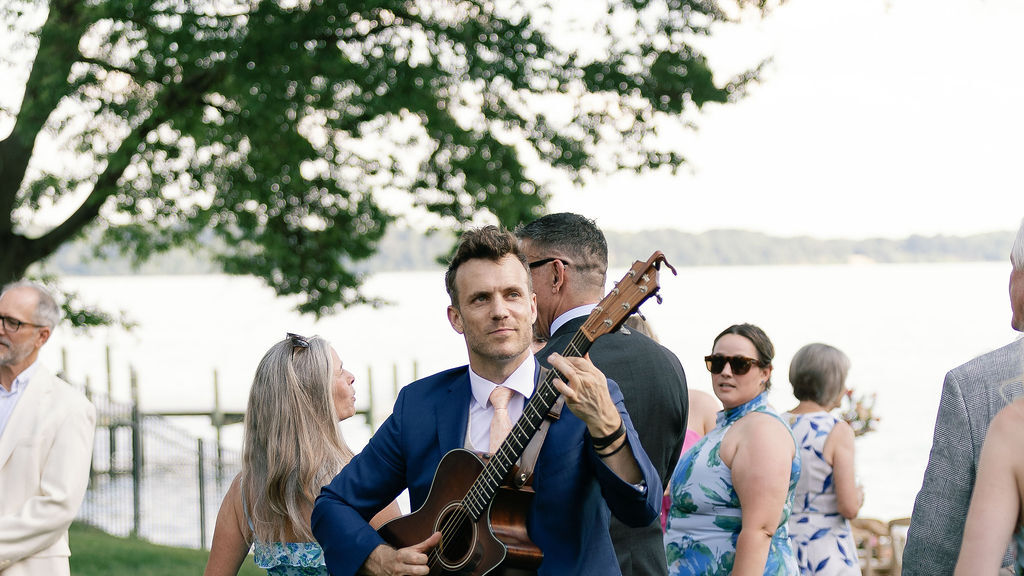
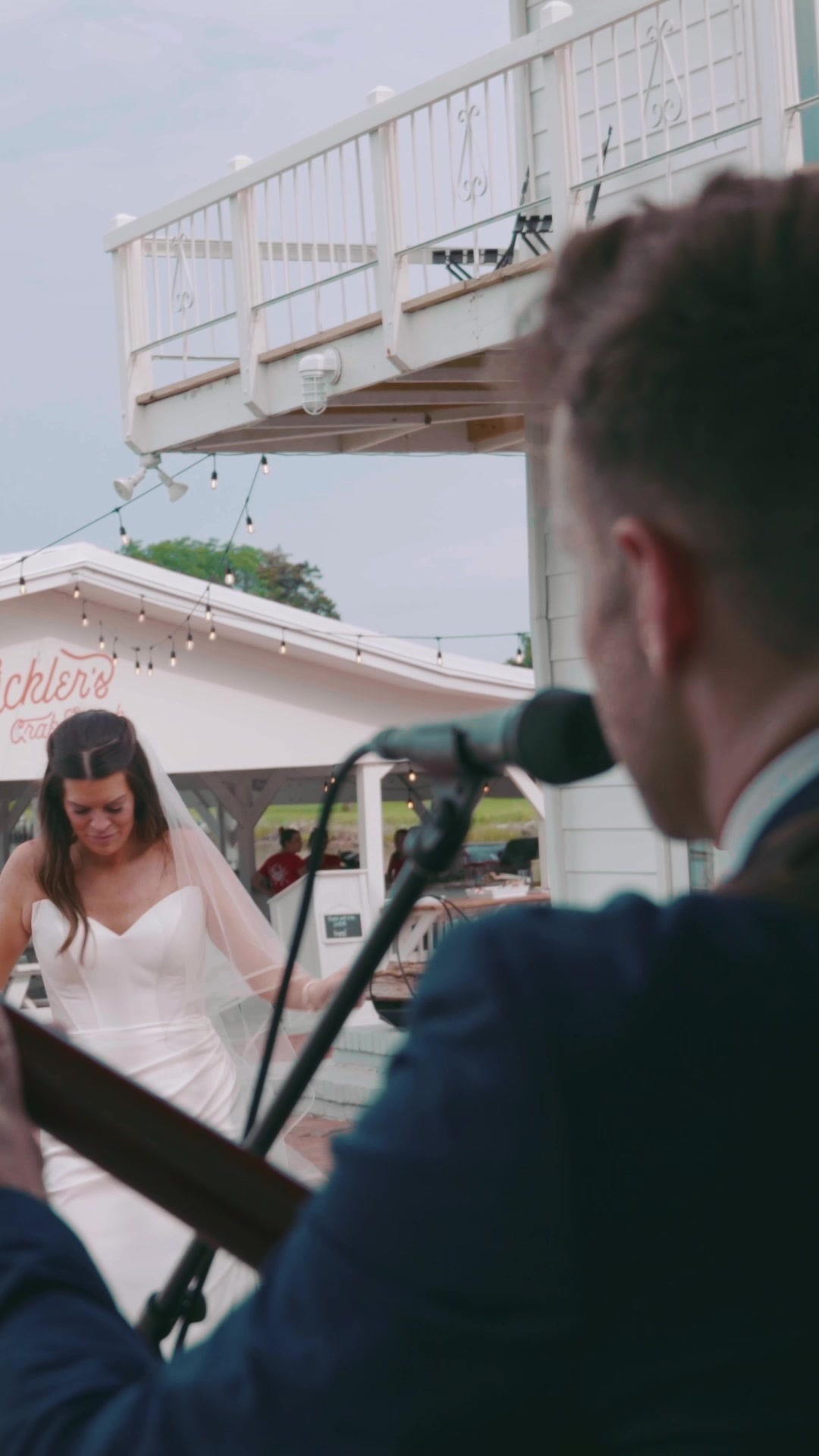
At one private-estate wedding in Bend, Oregon, a venue required exactly that: a pre-ceremony set on guitar alone, no PA, played as guests arrived. The performer stayed close to the crowd rather than fixed in one spot, since roaming close to an audience is the only way an unamplified instrument reaches them at all when there's a decent size group of people outside. The same flexibility applies closer to home, at the Wylder Hotel in Tilghman Island, Maryland.
Not every instrument can do that.
| Instrument family | Works unamplified | Can roam to close the distance |
|---|---|---|
| Percussion, hand-held (djembe, tambourine) | Yes | Yes |
| Percussion, stationary (drum kit, cajon) | Yes | No |
| Horn and woodwind (sax, oboe, flute, trumpet) | Yes | Yes |
| Strings (guitar, violin) | Can struggle outdoors, generally manageable | Yes |
| Strings (harp) | Can struggle outdoors | No |
| Keys (piano) | Very difficult to move at all | No |
Guest count matters too. Unamplified performance holds up under roughly 30 guests. Past 30 to 40, ambient chatter tends to swallow the sound regardless of instrument. Outdoor settings add their own interference: wind, nearby road or highway traffic, and a stream or body of water all work against a performance with no amplification, and a limited carrying range is inherent to playing without amplification at all as a baseline, whatever the instrument.
Harp and piano hit a wall here that guitar doesn’t. A harpist can’t walk the room to close the distance with a crowd, and a piano can’t be moved at all once it’s placed. Guitar can roam, which is why it clears a bar that rules out two of the other instrument families outright.
When Solo Acoustic Guitar Is the Wrong Call
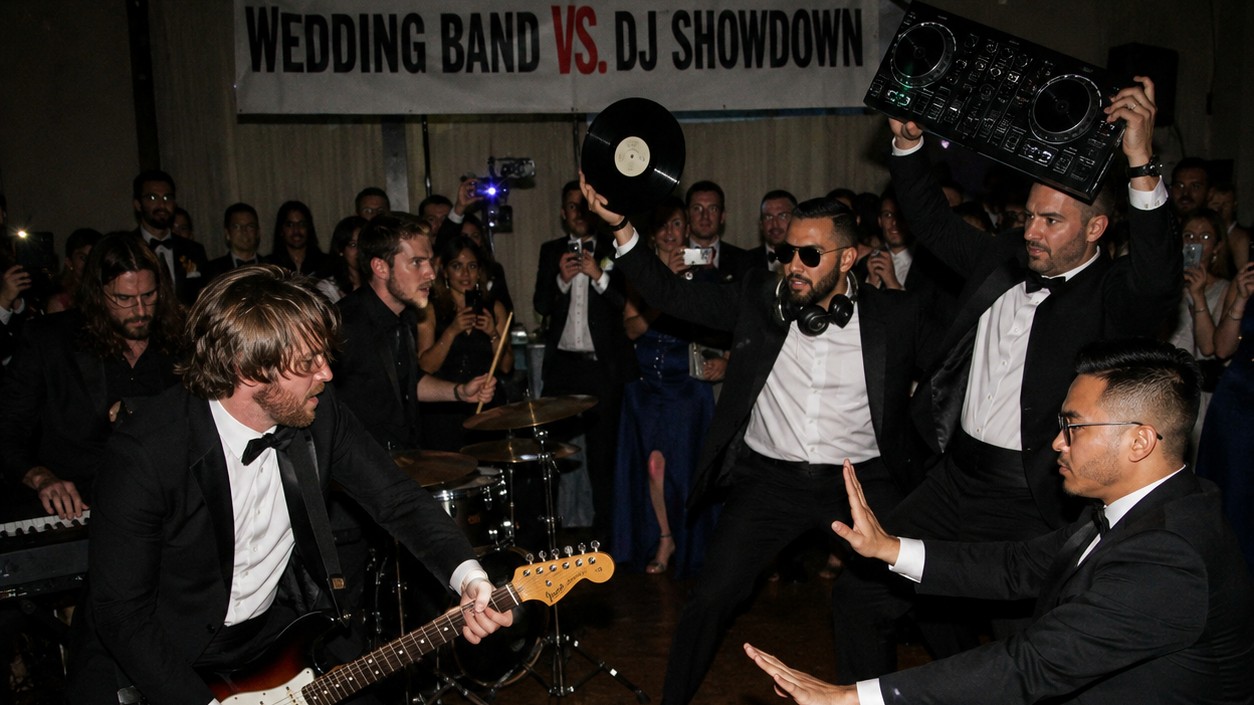
A club-like, high-energy dance floor calls for a DJ. A solo guitarist can get a room singing along or moving together, but sustaining a packed dance floor for hours runs on a different kind of energy than one instrument produces alone. This is a different format built for a different job, and a reception built around dancing should book a DJ for exactly that role. However, if you really want a guitar player, there are some musicians who offer a hybrid guitar-DJ combo, which you get the best of both worlds, and you don't have to worry about hiring a whole band. Someone who plays guitar along to the DJ and gets the dance floor started is a really fun vibe where you get the fun of a live performance as well as the dance ability of the DJ at the same time.
How Booking Structure Changes the Price
Most musicians build the early arrival window into the base rate instead of billing it as separate time. That’s standard practice whether the window falls before a ceremony or before a corporate program starts, and either way, it’s already priced in.
The same overhead logic explains why adding a second segment to a booking with the same musician typically costs a fraction more, well short of doubling the price. A cocktail hour added onto a ceremony works this way. So does a second segment added later in a corporate event, after a networking hour. Setup, travel, and teardown are overhead the first booking already absorbs, so keeping that musician on-site for an extra hour or two doesn’t require paying for a second full setup. As a rough guide, extending one booking by a phase adds roughly 20% to the single-phase rate. Booking two separate musicians for those same two phases runs close to double, since each one brings its own separate setup, travel, and teardown cost.
The same logic drives the gap between solo guitar and a full band for the same event. A full band means more musicians, more gear, and more setup time, all priced in. Solo guitar for the same event costs meaningfully less, reflecting one person’s overhead instead of five to ten.
For a real dollar comparison across a solo musician, a full band, and a DJ in the DMV, see this cost breakdown.
Sharing a Sound System With a DJ: The Coordination That Has to Happen First
Pairing a guitarist and a DJ on one sound system for the same event is common, and it works when the coordination happens ahead of time rather than during setup.
Three formats come up most often. Some events alternate full sets back and forth through the night in 30 to 40 minute blocks. Some run a one-time handoff, the guitarist covering the first half of the event and the DJ taking the second. Others have both performers playing at the same time, guitar layered over a DJ’s set rather than trading off.
Whichever format applies, the musician and the DJ or AV team settle gear and input requirements ahead of the event. On a shared mixing console, each performer typically gets a separate input channel and its own monitor send, and confirming that assignment early is what keeps the changeover smooth on the day. Comfort sharing a rig this way varies by musician and by DJ, which makes the vetting call the right place to raise it directly.
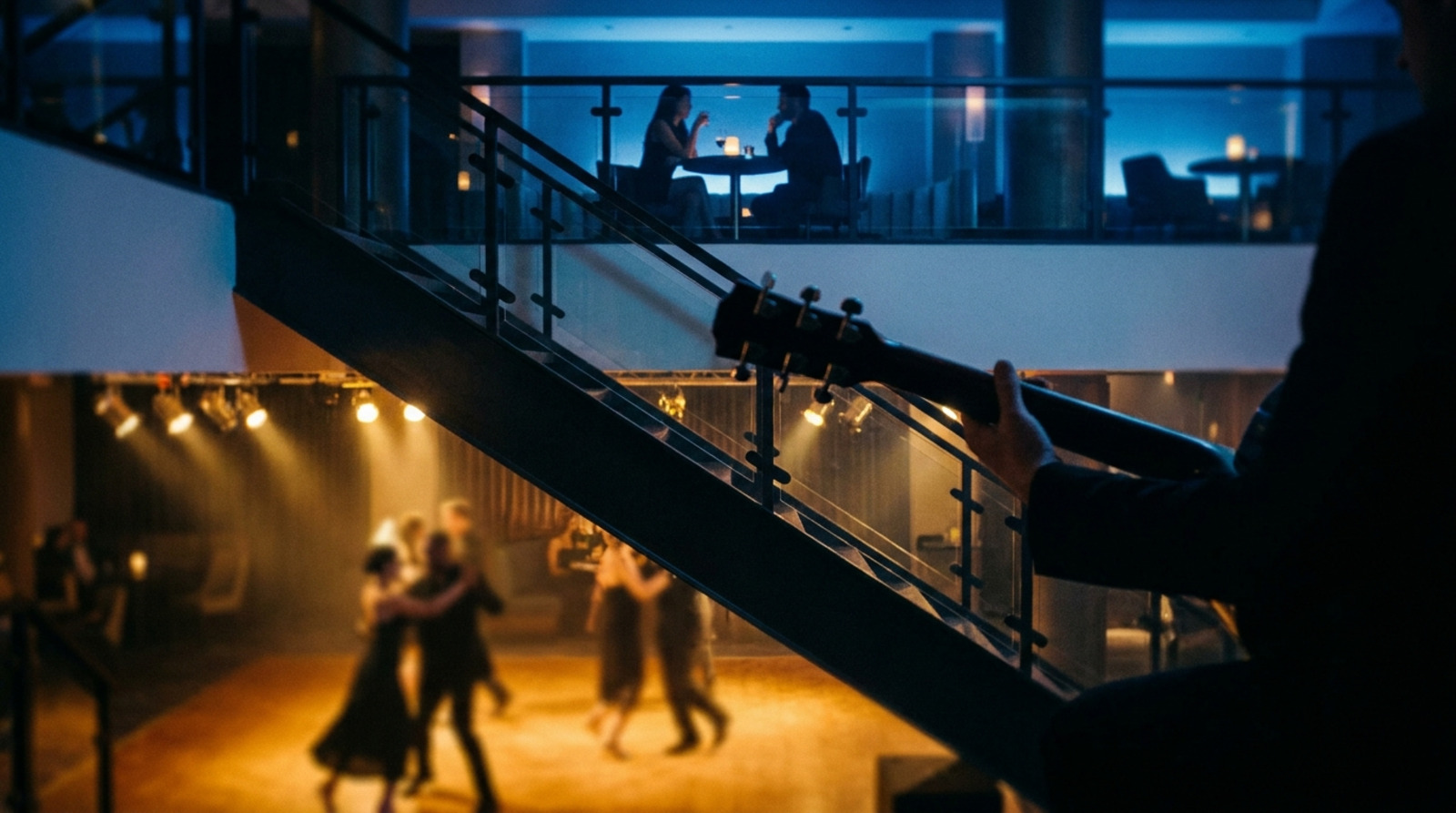
A different version of this pairing has one performer running both the live set and the DJ mix personally, handling the whole transition solo. That’s what happened at Blackwall Hitch in Baltimore, where one performer ran both a live guitar set and a DJ mix through the same system across a two-level venue, roaming between the main floor and the mezzanine for a corporate anniversary party. See how that hybrid handoff works.
The Vetting Checklist Built for Fit
Credentials and reviews can all be exaggerated online. None of them show the one thing that determines whether a hire works: fit. Vibe outweighs skill in deciding whether an event goes well, and a mismatched personality undoes even the strongest resume.
Real footage from an actual live event, ideally from the same kind of event being booked AND a live call or zoom with the performer is the clearest way to check for it. A performance in a setting of the same kind shows how someone reads a room, and it’s difficult to fake convincingly. That fit often comes through as something as simple as an easy rapport with the performer from the first conversation. Chasing the best reputation misses the point. The right fit for a specific booking is the better choice, even against a more decorated option. I'm telling you this as one of the most decorated live performers in the U.S. Don't let accolades trick you into thinking a person's automatically the best. Vibe is everything.
A marketplace or directory site is a reasonable place to start looking for candidates, though a poor reputation on one platform doesn’t stop a performer from moving to a different one and starting over. The booking decision itself should move off-platform: check the performer’s own website, watch real footage, and get them on a phone call before booking. A high review count on a marketplace listing doesn’t prove quality by itself. It can just as easily reflect high booking volume, since a performer booking 200 to 300 weddings a year structurally can’t put the same effort into each one that a more selective performer does. It actually can really be a bad thing to hire a performer who does hundreds of weddings a year because they're booked so much they're not going to be able to spend a whole lot of time getting all your preferences done well.
Reviews themselves are worth reading past the star count. A review naming a specific detail, how the musician read the room, handled a request, adjusted to an unusual setting, reflects something that actually happened. Generic praise carries less weight regardless of whether it’s genuine. Academic research on online ratings has found that lower-rated items accumulate reviews more slowly than highly-rated ones.
The Two Patterns Behind Choosing Guitar Over Another Instrument
Two patterns explain why people land on guitar over another solo instrument. One is chasing a Pinterest-style, picture-perfect wedding image, choosing guitar because it looks like what a wedding is supposed to look like. The other comes from a real personal memory: a guitar on a porch, a parent or a friend who played, an instrument tied to a real moment rather than an aesthetic.
The second pattern holds up better. Resonance should come first, what the instrument actually means to the people getting married, decided before venue or logistics enter the conversation. A piano might get ruled out for a ceremony space three floors up with no elevator access, but that’s a constraint to solve once the real preference is already clear. Ask the resonance question first, then work around whatever the venue requires.
The Right Fit Beats the Best Reputation
A real conversation, real footage, and a clear sense of what the day needs do more for a booking decision than any checklist. A packed portfolio and a high star rating were never the variables that decided whether a hire worked. Fit was, and it still is, whether the venue allows a PA, the day needs two musicians or one stretched across two phases, or a guitarist is sharing a rig with a DJ.
Questions about music for your own event? The contact page is here.
FAQ
Can you play if a venue doesn’t allow amplification, or a ceremony or event space has no power at all? Yes, within limits. Acoustic guitar can perform fully unplugged, but the sound doesn’t carry far without amplification. It works best under roughly 30 guests, without heavy wind or nearby road noise, with a performer moving close to the crowd to close the distance.
Is solo acoustic guitar ever the wrong choice for an event? Yes. A club-like, high-energy dance floor calls for a DJ instead. A solo guitarist can get a room singing along or moving together, but a packed dance floor for hours runs on an entirely different kind of energy.
Does adding a second segment, like cocktail hour after a ceremony, cost close to double? No, whether that’s a ceremony and cocktail hour or a second segment added later in a corporate event, after a networking hour. Booking the same musician for both typically adds roughly 20% to the single-phase rate, since the setup, travel, and teardown overhead from the first booking already covers the extra time. Two separate musicians for those same two phases runs close to double, because each one brings its own separate overhead.
If I book a guitarist for part of the day and a DJ for the rest, how does the handoff actually work? It depends on the format chosen. Some events alternate full sets between the two performers through the night, some run a one-time handoff at the midpoint, and some have both playing at once. Every format still leaves one job for the musician and the DJ to settle beforehand: gear and input requirements, confirmed well before the event so the changeover looks effortless once it happens live.
Why do people choose guitar over violin, piano, or a singer? Most often because of a real personal connection to the instrument: a memory, a porch, a parent or a friend who played it. That reasoning tends to hold up better than choosing an instrument because it fits a picture-perfect wedding image.
Should I book through a marketplace or directory site? A marketplace is a reasonable way to see who’s available. The actual booking decision should move off-platform: check the performer’s own website, watch real event footage, and speak with them directly before booking. A high review count on a marketplace listing mostly reflects booking volume, since well-booked musicians accumulate reviews fast regardless of how any single event went.
Blog Categories
Latest Blogs