Wedding Music Cost in the DMV: Band vs DJ vs Solo (2026)
Wedding Music Cost in the DMV: Band vs DJ vs Solo
Performing across the United States since 2009, now based in the DMV (Washington DC, Maryland, and Virginia), more than 1,500 events. Berklee College of Music, magna cum laude. Mentored by music legends John Mayer, Paul Simon and Livingston Taylor.
Two couples get quotes for the same Saturday, the same guest count, the same kind of venue. One quote is $1,800. The other is $6,000. Neither vendor is lying, and neither number is wrong. They're just not quoting the same day.
Cost at a Glance: DMV Wedding Music, 2026
| Format | DMV range | National average (The Knot) | What it usually covers |
|---|---|---|---|
| Full band, 5–10 musicians | $4,000–$9,000 | $4,500 | Reception only, 4–5 hours |
| Top-tier band, larger lineup | $10,000+ | — | Reception only |
| Professional DJ | $1,500–$5,000 | $1,800 | Reception, announcements, MC duties |
| Professional solo performer | $2,500–$6,000 | — | Varies by how many segments of the day |
| Solo-to-DJ hybrid, one performer | $2,500–$6,000 | — | Ceremony through reception, one contract |
The Scope Problem Nobody Explains at the Quote Stage
A wedding band quote is usually a reception quote. Four to five hours, doors open after dinner service starts, load-in earlier in the afternoon. It doesn't typically include the ceremony. It doesn't typically include cocktail hour.
A DJ quote usually covers more of the evening and folds in announcements and transitions, which is part of why it reads cheaper per hour.
Neither one, in its standard form, covers the processional.
So the couple comparing a $4,500 band against an $1,800 DJ is comparing two packages that both stop at the reception door. The ceremony and the cocktail hour, roughly three hours sitting at the front of the day, get solved later. Usually in a hurry. Often with a second vendor and a second minimum.
That second booking is where wedding music budgets quietly break. Not at the band-versus-DJ decision, which every planning site covers, but at the part after it that almost none of them do.
What Each Format Costs in the DMV
National averages set the frame. The Knot Worldwide's 2026 Real Weddings Study, drawn from 10,474 US couples married in 2025, puts the average wedding DJ at $1,800 and the average live band at $4,500. Roughly 71 percent of couples book a DJ. About 12 percent book a band.
The DMV runs above those national numbers, which is what you'd expect in a market carrying DC hotel rates and Northern Virginia estate venues. Those DMV band and DJ ranges come from a 2026 regional breakdown by The Goat Audio, which puts a solid professional wedding band at $4,000 to $9,000 for a four-to-five-hour reception and a professional DJ at $1,500 to $5,000.
The solo category is the one that needs a warning label.
Why Solo Quotes Vary More Than Any Other Category
Search "wedding musician" on a booking marketplace and you'll see quotes starting around $350. Search the same term through a planner or a venue referral list and the entry point is closer to $2,500. Both are real. They're not the same product.
Marketplace averages pool full-time professionals with weekend hobbyists, students, and people who own a guitar. The platforms have every incentive to publish the blended number, because a low average drives sign-ups. It's not a lie. It's just an average across a category that contains two different businesses.
The professional tier in this market starts around $2,500 for a single segment of the day. Below that, you're generally buying someone's side income — fine for a backyard party, genuinely risky for a 150-guest ceremony where the processional has to start on a cue.
The booking agency Extraordinary Entertainment publishes its ceremony musicians at $600 to $2,000 and up, and says plainly that it's "by no means suited for customers looking for the cheapest wedding musician on the market." Agency rates sit below direct-booking rates because the agency is placing a roster player rather than the performer you researched, and the performer is taking a cut of that number.
How the DMV's Three Sub-Markets Price Differently
This is the part most cost guides skip entirely, because it requires knowing the venues rather than just the averages: the DMV isn't one wedding market, it's three, and equipment and logistics costs move with the sub-market as much as the format does.
Downtown DC hotel ballrooms. Hard-surfaced rooms with hotel-precision timing, service elevators, and load-in windows set by the venue's own event staff. A single guitar or a small ensemble is often more resonant here than a larger group fighting the room's natural reflections, and load-in logistics are usually the most predictable of the three sub-markets.
Northern Virginia estate and vineyard venues. Acreage and outdoor ceremony sites change the calculation. Wind and open-air distance mean acoustic instruments need discreet, venue-appropriate amplification rather than a small tabletop speaker, and a longer carry from the parking area to the ceremony site adds real load-in time.
Maryland waterfront venues. Weather is a running variable. A ceremony on a terrace at 4pm in September is a different sonic environment than the same slot pushed under a tent because of a Chesapeake system moving through, and a performer working this sub-market needs to be equipped and calm about the pivot.
A quote that doesn't account for which of these three a venue falls into is quoting a generic room, not the actual one.
The Three Hours Most Quotes Leave Out
Walk the actual timeline of a DMV wedding.
Guests arrive and are seated: twenty to thirty minutes of prelude music. The processional. The ceremony itself, with a song during a unity moment or a reading. The recessional. Then cocktail hour, typically an hour, sometimes ninety minutes at venues with a photo-heavy schedule.
That's close to three hours of continuous music before the reception band or DJ has played a note.
Couples solve it three ways. They hire a second musician for the ceremony, which means a second minimum and a second load-in. They run a playlist through a rented speaker, which works until the processional cue arrives four bars late and the officiant is standing there. Or they book one performer who covers the front of the day and hands off cleanly.
The cost difference between those three is smaller than most couples assume, because the second-vendor route carries a minimum that's often 60 to 80 percent of a full booking anyway. Nobody prices a two-hour ceremony gig at two-sevenths of a wedding rate. Travel, load-in, setup, and the dead hours between segments all get built in regardless.
What Actually Moves the Price
Guest count matters less than couples expect. A 90-guest wedding and a 160-guest wedding at the same venue often carry the same music quote, because the equipment and the hours are the same.
These move it more:
Segments of the day. One segment costs less than two. Two cost less than full coverage. This is the single biggest lever, and the one couples have the most control over.
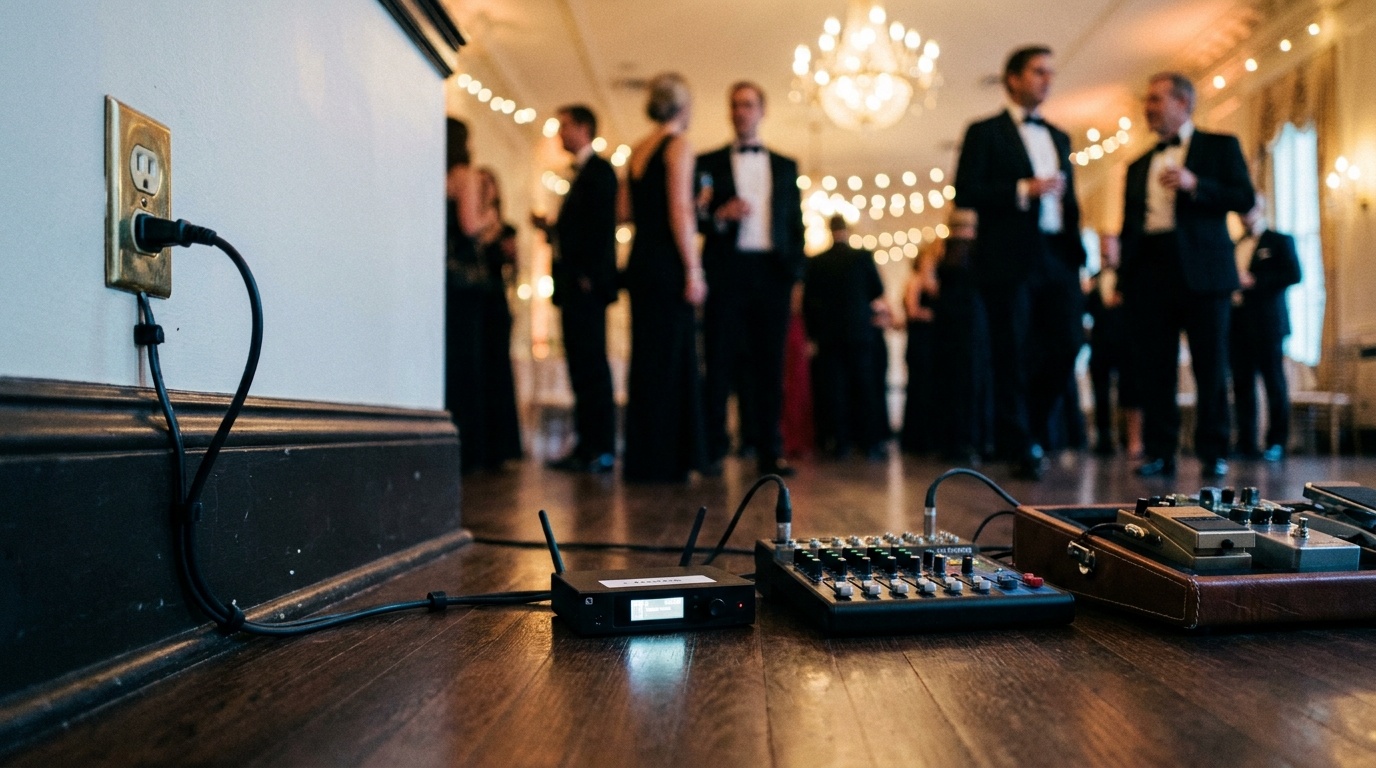
Venue acoustics and power. A hard-surfaced atrium, a tented field with a generator, or a room where the ceremony and reception happen in two different spaces all change the equipment requirement. A second speaker location is a real line item, not an upsell.
Travel and load-in. Load-in for a full PA with a tower speaker and proper cable management runs about forty-five minutes. A venue with a long carry from the loading dock, or a Loudoun County vineyard forty minutes past the Beltway, prices differently from a downtown DC hotel with a service elevator.
Date. Friday and Saturday in peak season, May through June and September through October, hold firm. Winter dates and weekdays have more room, and winter calendars in this market fill several months ahead rather than at the last minute.
Overtime. The reception runs long more often than not. Band overtime is the steepest, because it's priced per musician. Solo and DJ overtime is a single rate.
How to Compare Quotes Without Getting Fooled
Ask every vendor the same four questions and the numbers become comparable for the first time.
A $4,500 band that covers four reception hours and a $3,200 solo booking that covers ceremony, cocktail hour and dinner aren't $1,300 apart. They're different products, and only one of them leaves you shopping for a second vendor in April.
For how the wider market splits by experience level rather than by format, the wedding entertainment pricing tiers breakdown covers that ground. For a venue-by-venue view of how these timelines play out locally, the Northern Virginia wedding musician guide and the Old Town Alexandria venue guide walk through specific rooms and their quirks. Cocktail hour music covers the middle segment in more depth, and live looping explains how one performer builds a fuller sound than a single instrument suggests.
Frequently Asked Questions
How much is a band for a wedding in the DC area?
A professional wedding band in the DMV runs $4,000 to $9,000 for a typical four-to-five-hour reception, with top-tier larger lineups above $10,000. That figure almost always covers the reception only. Ceremony and cocktail hour are usually quoted separately or handed to a different vendor entirely.
What do wedding singers cost?
A professional solo singer or singer-guitarist in the DMV starts around $2,500 for one segment of the day and runs to about $6,000 for full ceremony-through-reception coverage. Quotes below roughly $2,500 in this market generally come from booking marketplaces that blend full-time professionals with part-time performers.
What are typical wedding ceremony singer rates?
Ceremony-only bookings rarely price proportionally to their length. A two-hour ceremony booking usually costs 60 to 80 percent of a fuller booking, because travel, load-in, setup and equipment are the same regardless of how long the performer plays. Adding cocktail hour to a ceremony booking is often the cheapest hour you'll buy all day.
Is a live band or a DJ better value for a wedding?
Neither, until you define what you're buying. A DJ covers more hours for less money and handles announcements. A band delivers live performance energy during dancing. Most couples who feel burned by the decision were comparing a reception-only band quote against an all-evening DJ quote without noticing the scopes differed.
Can one performer cover both live music and DJ sets?
Yes, and it's increasingly common in this market. A single performer plays live for the ceremony and cocktail hour, then runs DJ sets for dancing, on one contract with one load-in. It sits between DJ and band pricing while covering more of the day than either standard package.
Does pricing really differ between a DC hotel wedding and a Northern Virginia estate wedding?
Yes. A hotel ballroom's predictable load-in and hard-surfaced acoustics price differently than an estate venue's outdoor ceremony distance and amplification needs, or a Maryland waterfront venue's weather-contingency planning. The format (band, DJ, or solo) matters, but so does which of the DMV's three sub-markets the venue sits in.
How far in advance should we book wedding music in the DMV?
Six to twelve months for peak season, which is May through June and September through October. Winter dates fill several months ahead. Weekday and off-season events have meaningfully more flexibility on both availability and rate.
The Bottom Line
The band-versus-DJ debate is the wrong first question. The right one is how many hours of your day you actually need covered and which DMV sub-market your venue sits in, because those two answers move your music budget more than the format does.
Price the whole timeline before you price the format. Ask the four questions above of every vendor you talk to. If the numbers still look far apart after that, they probably genuinely are, and now you know why.
If you want to see how full-day coverage is structured and priced in this market, the pricing page lays out segments, add-ons and what changes the number.
Blog Categories
Latest Blogs