Wedding Events
The Best Wedding Day Entertainment Idea
Berklee-trained guitarist, vocalist, and live entertainer performing across the United States since 2009, now based in the DMV (Washington DC, Maryland, and Virginia). Mentored by music legends John Mayer, Paul Simon and Livingston Taylor, with more than 1,500 events performed, including weddings and private celebrations across Washington DC, Maryland, and Virginia. Dylan Galvin Entertainment carries $1M liability insurance and provides certificate coverage for venues on request.
There are tons of different great options for wedding entertainment. One of the biggest Recent trends though is the hybrid DJ musician or DJ in band combo.
Couples who land on the solo-musician-plus-DJ combo often assume it's a strict upgrade over every other format: better than a band, better than a DJ alone, better than one musician covering the whole day. It isn't, and the difference between a wedding that gets this format right and one that doesn't has nothing to do with which option sounds more impressive on paper.
What a Real Solo-to-DJ Handoff Looks Like
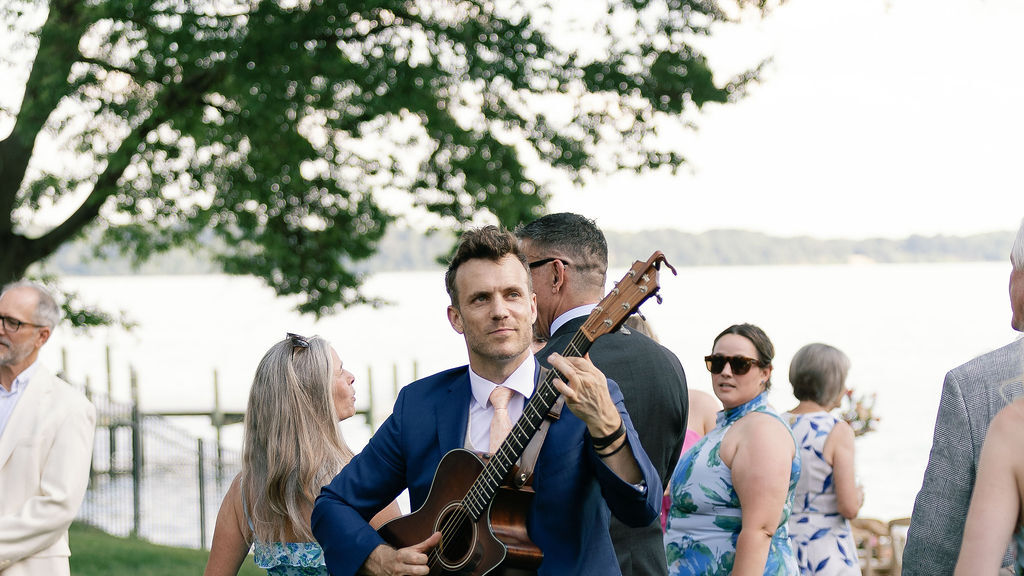
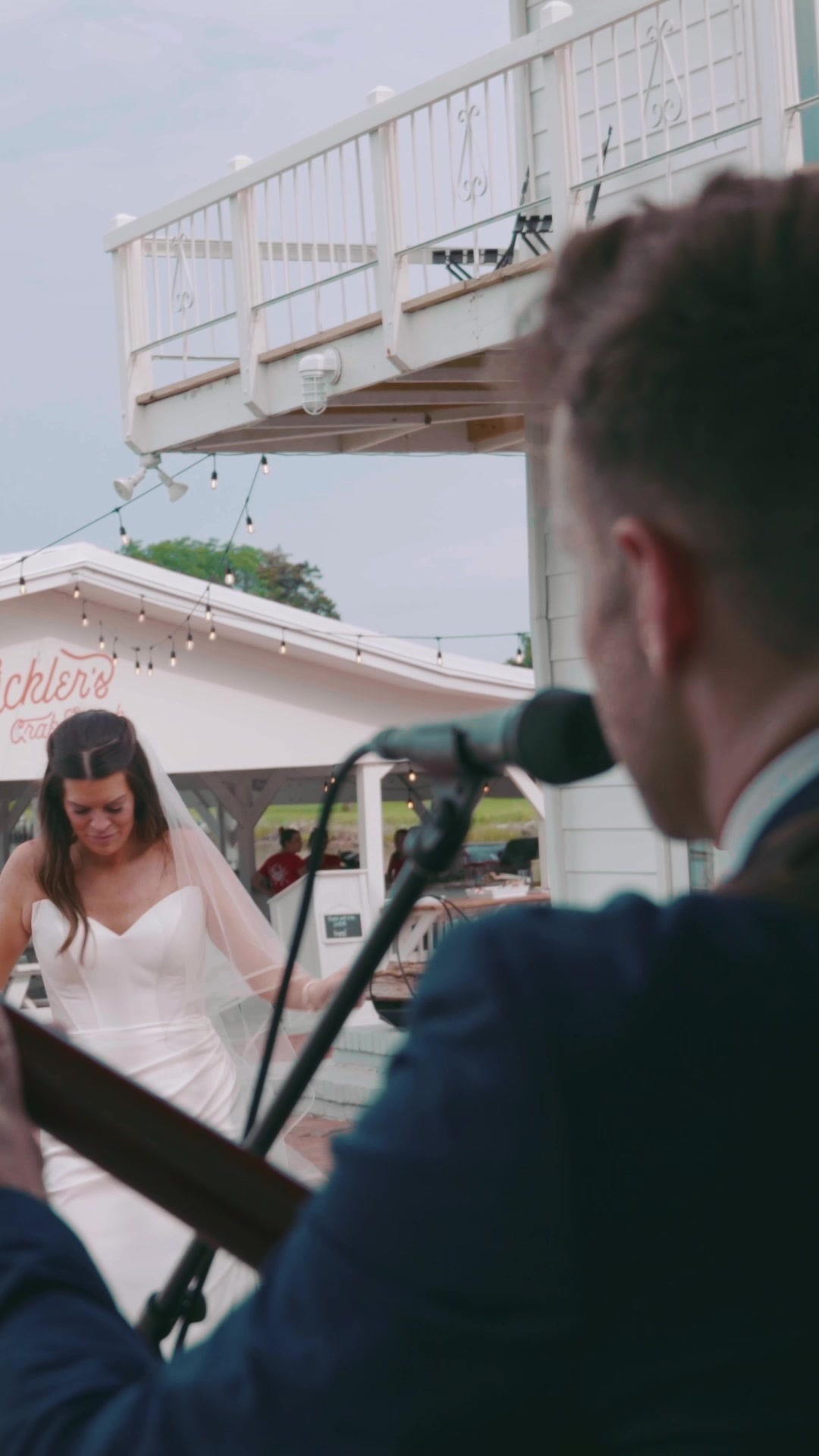
At The Towers in Narragansett, Rhode Island, the ceremony took place somewhere else entirely. The couple and their guests traveled to The Towers afterward for cocktail hour, dinner, and the reception. A solo musician was hired to play roaming acoustic instrumental as guests arrived and found their seats, then switch to guitar with vocals once cocktail hour started, ahead of a DJ picking up the room from there.
The handoff itself went off without a hitch. Nothing about that happened by luck. It happened because of everything that took place before a single guest arrived: heavy email exchange in the weeks leading up to the wedding, then an in-person walk-through before anyone showed up, working out every important moment together, side by side.
Timing is everything in a two-vendor handoff. A smooth one comes down to whether the two vendors communicated with each other before the day started. That's as true of a ceremony-and-cocktail-hour set handing off to a DJ as it is of one handing off to a live band, covered further down.
What to Check Before the Wedding Day
Wedding advice on this format usually stops at "get both vendors on a call before the wedding." That's the right instinct with none of the substance. Here's what needs to happen on that call, and what tends to go wrong when it doesn't:
- Gear and sound-system compatibility. Each vendor states what gear they're bringing, in both directions, and confirms whether the two systems can connect to each other.
- A shared song list. The musician hands the DJ a list of what they can play on electric guitar, in case the two end up playing together at some point during the reception.
- An itinerary cross-check. The itinerary the DJ received from the planner gets checked against the musician's own copy, confirming both sides carry the same minute-to-minute plan and know what's expected of each of them.
- Handoff-moment coordination. Anything that interrupts a set, a mid-set announcement, a surprise, gets planned and walked through in advance, before the wedding party ever sees it happen.
- Wireless-mic ownership. Deciding upfront who's providing wireless mics. A musician typically brings their own, but a DJ already on-site can make a second set redundant.
- Physical setup and audibility. Confirming where each vendor will be positioned, and making sure they can hear each other well enough to cue transitions cleanly.
None of this is complicated. It's also the exact list of things a two-vendor handoff skips when it goes wrong. Sharing a detailed day-of timeline with every vendor working the event, including whoever isn't the couple's usual point of contact, is standard wedding-planning guidance. Two vendors working off two different versions of that plan is usually where a handoff breaks down.
When Solo + DJ Is the Right Call (and When It Isn't)
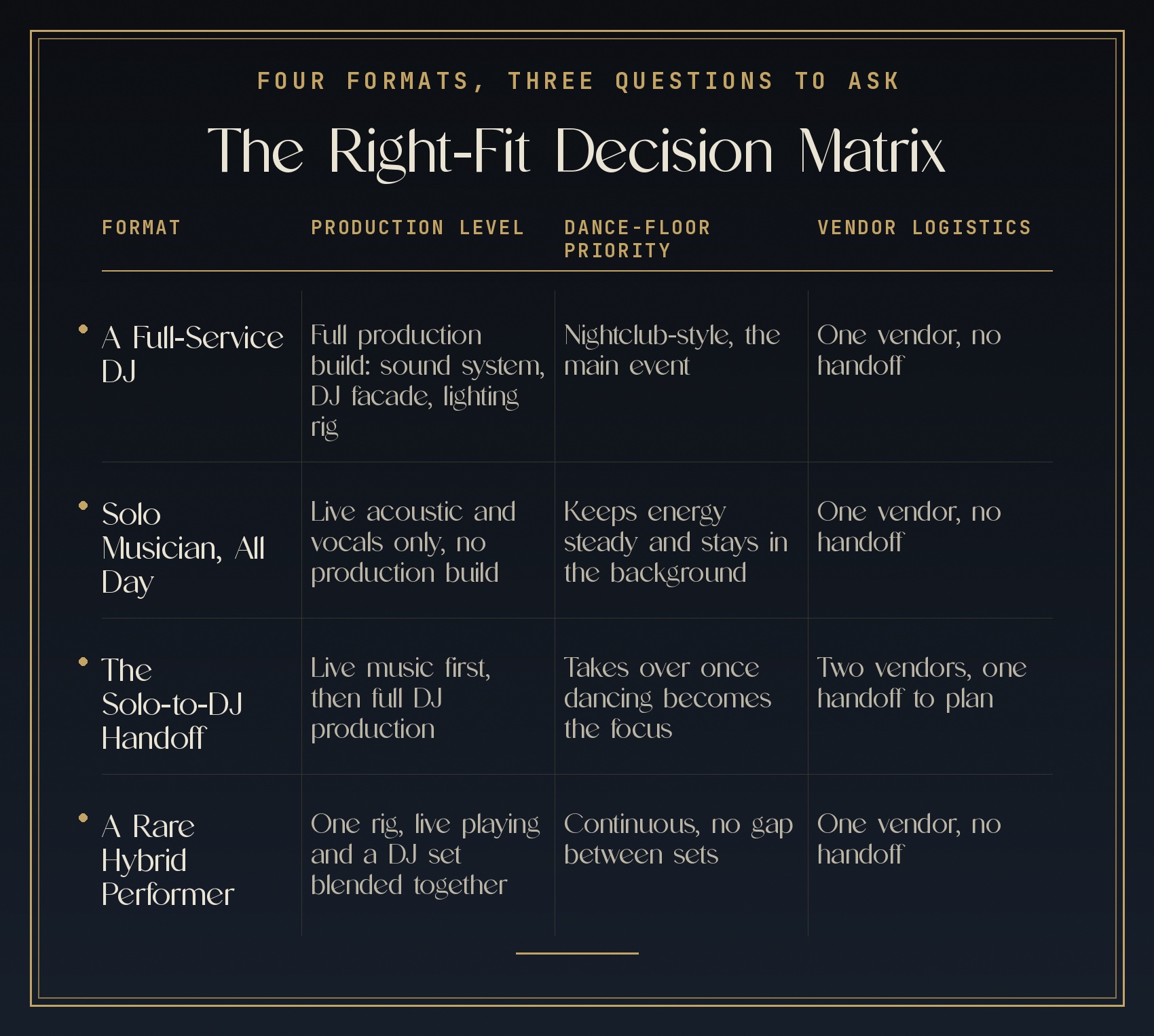
A couple who wants a full-service DJ experience, a big sound system, a DJ facade, a lighting rig, a nightclub-style dance floor, is better served booking a full-service DJ outright. That's not what a solo-musician-plus-DJ combo is built to deliver, and steering a couple toward it anyway sets up a mismatch between what they paid for and what they wanted on the day.
A couple who wants a real, live-curated playlist and managed dance-floor energy, without the bells and whistles of full production, is exactly the case this format is built for. One wedding took that shape from start to finish: no second vendor at all, one musician covering the ceremony, cocktails, dinner, and the entire reception. In that stripped-down version, going solo the whole day can save a couple the cost of a second vendor they never needed.
Between those two ends sits the real middle case: a couple who wants live music for the emotional stretch of the day, vows through cocktails, then a dedicated dance-floor specialist once energy matters more than atmosphere. That's where handing off from a solo musician to a separate DJ genuinely earns its place, and it's a narrower case than "always the best choice."
One step above that middle case is rarer still: a performer who can blend live playing directly into a DJ set in real time. Few musicians and few DJs can do this well. Where it exists, it gives a wedding something close to a live band plus a DJ, without either the cost or the extra vendor.
Why Couples Who Want This Don't Always Book It
Interest in this format doesn't always turn into a booking, and budget is usually the reason. Two high-end vendors, a musician and a DJ, cost more together than either one alone, and that math catches some couples off guard partway through planning. A useful rule of thumb for where a wedding budget does the most damage if it goes wrong: entertainment, food, and a day-of coordinator are the three areas worth prioritizing over almost everything else, since those three shape how the day feels far more than décor or favors do.
That prioritization lines up with a broader pattern in what guests remember. The Knot Worldwide's 2025 Global Wedding Report, surveying more than 33,000 couples married in 2024, found entertainment ranks third in what guests remember about a wedding at 21 percent, trailing only personalized details (36 percent) and food and drinks (23 percent). The same report found 68 percent of couples want their wedding to feel unlike anything their guests have attended, and close to half name whether guests have fun as their top wedding-day worry, ahead of budget or logistics.
Managing two vendors instead of one carries its own cost too, and money is only part of it. Two contracts, two sets of logistics, two people who need meals and a load-in window on the wedding day. None of it is difficult on its own, but it's one more thing on a couple's plate during a season that already has plenty on it.
That friction is exactly what a genuine hybrid vendor solves, which is why one is worth asking about before ruling out the simpler option. A performer who both plays live and runs a DJ set is rare, rare to find a DJ who also plays an instrument, just as rare to find a ceremony musician who also DJs, but where one exists, hiring that single person removes the two-vendor problem at the source: one contract, one load-in, one person to coordinate with instead of two.
DJ or Band: Does the Handoff Work the Same Way?
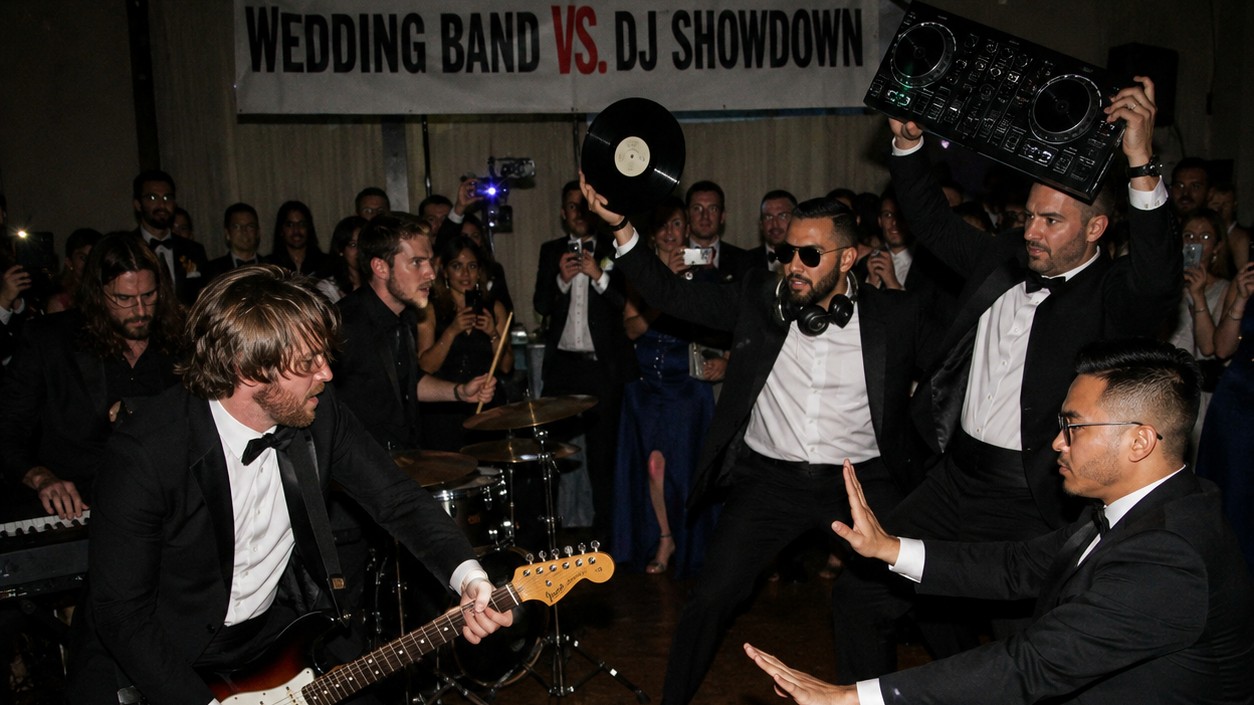
A separate question worth asking before booking either version of this format: does handing off to a DJ work the same way as handing off to a live band? Physically, yes. The mechanics of one vendor finishing and another starting are basically identical whether the second act is a DJ console or a five-piece band.
Timing is where the two versions diverge. A DJ is often already set up and running earlier in the day than a band would be, and DJs are frequently hired to handle emcee duties well before the reception starts, introductions, timeline calls, transitions between segments. A band, by contrast, rarely takes on emcee duties that early. It's far more common for a band to stay out of the picture entirely until the reception itself begins.
That makes the real variable in any two-vendor handoff whether, and when, the second act also runs the microphone, regardless of whether that act is a DJ or a band. A Lorton, Virginia wedding that Dylan Galvin Entertainment performed is one real example of the band version of this handoff: a solo musician covered the ceremony and cocktail hour, then a full band took the evening from there.
What Makes Either Format Possible in a DMV Venue
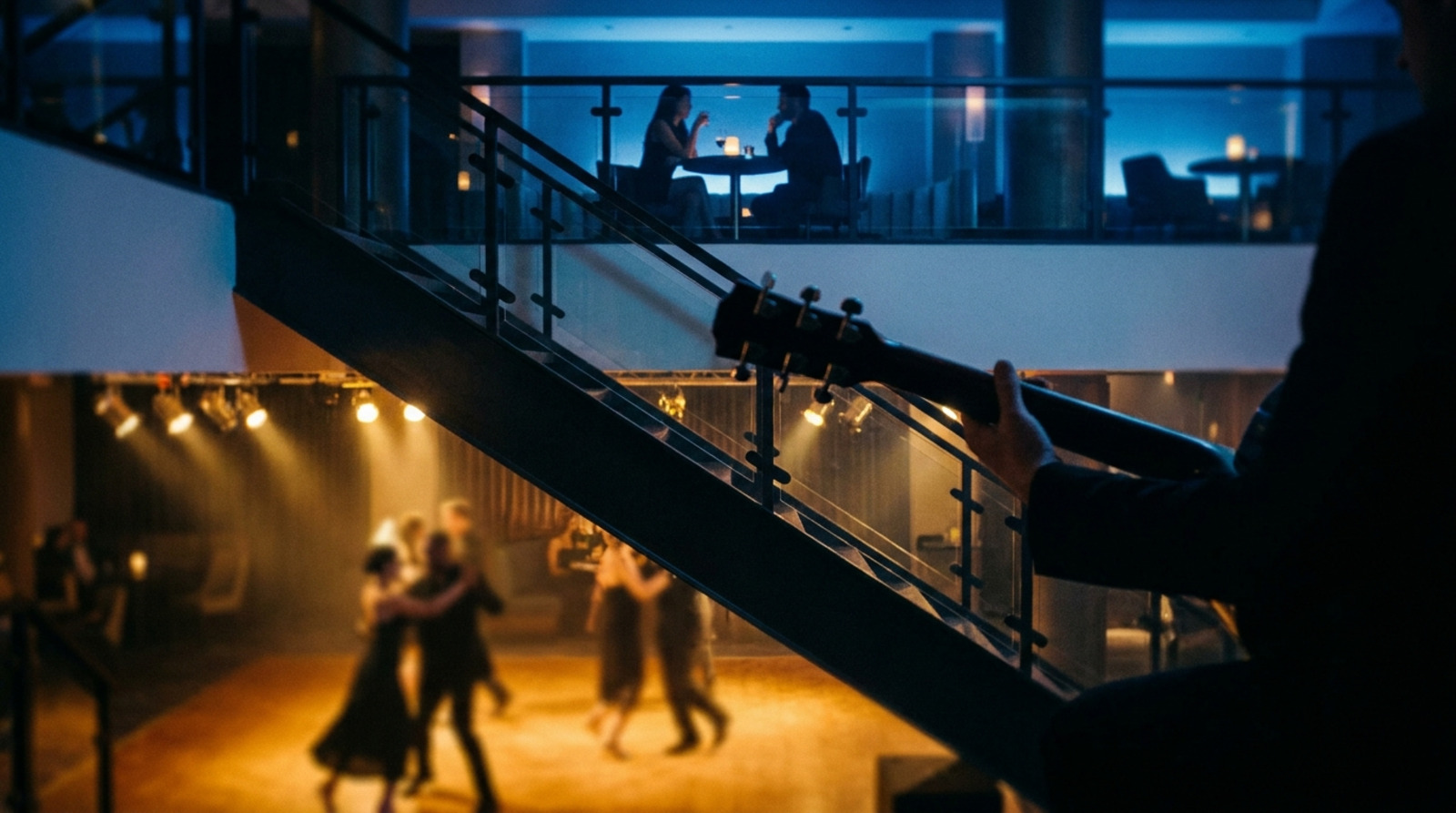
Many of the DMV's most-booked wedding venues weren't built with a full band in mind. Historic townhouses in Georgetown, waterfront rooms along the Wharf, museum spaces near the Mall, ballrooms like the Willard in downtown DC, private estates in Middleburg and the Maryland countryside, and boutique properties from Old Town Alexandria to the Inn at Perry Cabin on the Eastern Shore all get chosen for atmosphere over stage capacity. Many carry sound-limit rules, a cocktail hour with no real space for a full backline, or a load-in door that turns a multi-piece band into a two-hour logistics problem before a single note plays.
A solo musician with a wireless setup sidesteps most of that. Roaming performance lets one performer walk the aisle, then move table to table during cocktail hour without a cable in sight, and the same wireless rig is often paired with live looping to fill more of a room's sound than a single instrument alone would. That flexibility matters regardless of which side of the right-fit question above a couple lands on. A musician covering the whole day solo needs it just as much as one handing off to a DJ for the reception.
Frequently Asked Questions
Do a solo musician and a DJ need to know each other before the wedding?
Yes, in the sense that they should talk before the wedding day, even if they've never worked together before. A short coordination call, ideally about two weeks out, covers gear compatibility, an itinerary cross-check against what the planner sent each of them, who owns the wireless mic, and where each vendor will physically be set up. Vendors who skip this call are relying on figuring it out live, in front of the wedding party, which is exactly where handoffs go wrong.
Is solo + DJ always the best entertainment format for a wedding?
No. A couple who wants a full-service DJ experience, big sound system, DJ facade, lighting rig, a nightclub-style dance floor, is better served booking a full-service DJ outright. The format earns its place for a narrower group: couples who want live music for the emotional part of the day and a dedicated specialist running the reception dance floor.
What's the difference between handing off to a DJ versus a live band?
Physically, the handoff mechanics are the same either way: one act finishes, the other starts. The real difference is timing. A DJ is often already running and handling emcee duties earlier in the day, while a band typically doesn't take on any emcee role until the reception itself begins. Ask whether, and when, the second vendor takes on the microphone, since that's the detail that predicts how smooth the handoff feels.
Why do some couples who want this combo end up not booking it?
Budget is the usual reason, well ahead of any change of heart. Two high-end vendors, a musician and a DJ, cost more together than either one alone, and that adds up faster than couples expect once the rest of the wedding budget is accounted for. Managing two separate contracts and two vendors on the wedding day is also its own kind of friction, part of why a genuine hybrid performer, someone who both plays live and DJs, is worth asking about before ruling out the simpler, one-vendor option.
What should we ask before booking the solo-musician half of this combo?
Ask about gear and sound-system compatibility with whatever DJ or band is covering the rest of the day, and who's providing wireless mics. Also ask to see raw footage from a real ceremony or cocktail-hour set, and confirm the musician cross-checks their itinerary against the planner's copy. A performer who brings up coordination unprompted is usually the one who's done this handoff before.
The Job You're Hiring Your Wedding Entertainment For
Two paths work, and which one is right always comes down to what a couple wants out of the day. Format alone doesn't decide it.
With enough budget and room, a musician for the ceremony and cocktail hour, then a full band for the reception, covers the whole day at full production. Swapping the band for a DJ gets close to the same result, just leaning further toward club-style dance music. A band can generally cover the same pop, rock, and Top 40 requests a DJ would play, but live bands just naturally lean less toward that club-style genre than a DJ does. Either way, the room dances. It comes down to musical taste more than which format wins on paper.
For a couple who wants the day to stay efficient and low-key, the hybrid version, one person covering the emotional stretch of the day before handing off, or covering all of it solo, is usually the better move: less coordinating for the couple and the planner, one contract instead of two, and no need to feed and schedule a second full vendor team.
Neither path is the universally right answer. The right format is the one that matches the job a couple is hiring their entertainment to do.
Questions about music for your own wedding day? The contact page is here.
Blog Categories
Latest Blogs