Wedding Events
How to Hire a Wedding Singer: A Real Performer's Guide
Most guides to hiring a wedding singer open with genre and price, as if picking the wrong sound were the biggest risk. Ask a couple what they're afraid of, and the answer is never about music. It's about the one moment nobody gets to redo.
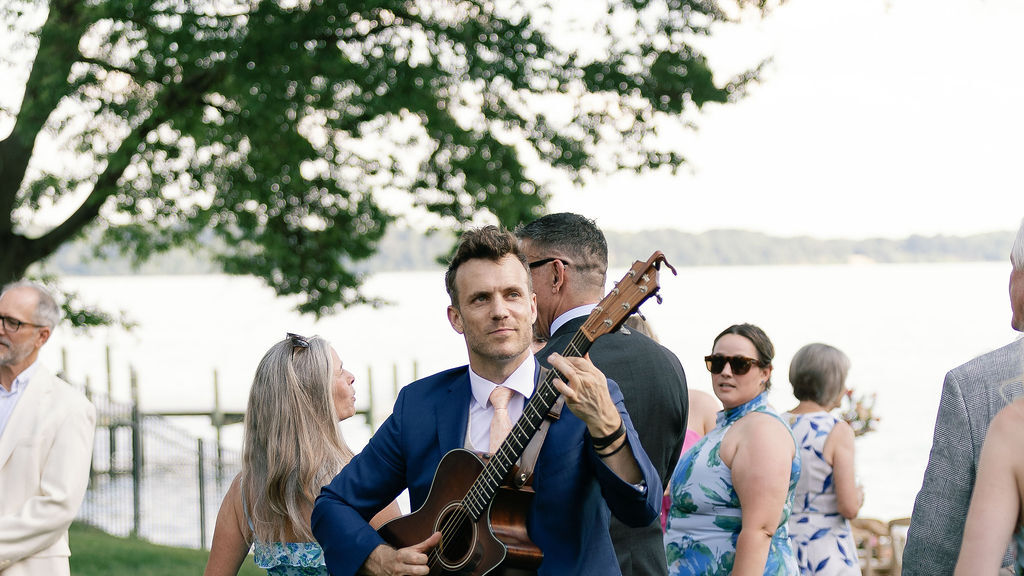
Dylan Galvin is a Berklee College of Music graduate, mentored by music legends John Mayer, Paul Simon and Livingston Taylor. Performing across the United States since 2009, now based in the DMV (Washington DC, Maryland, and Virginia), more than 1,500 events, including work for Coca-Cola, Wells Fargo, Lincoln, and CBRE.
Reliability Is the Real Skill You're Hiring For
Ask engaged couples what worries them about hiring music for their wedding, and the same specific bad memory comes up, unprompted, again and again: a DJ who missed the moment that mattered, or a band that barely played. Couples describe exactly what a performer showing up unprepared costs a day, and exactly what it looks like when someone stops carrying the room long before the booking is over.
The Knot Worldwide's 2026 Real Weddings Study, based on responses from 10,474 U.S. couples married in 2025, found personality was a top deciding factor for 53% of couples hiring a DJ and 50% choosing a planner, while 52% named responsiveness as key to building trust. Couples are already vetting for the two or three moments in a wedding where a miss can't be undone, and for whether a performer stays fully engaged from the first song to the last. Two real booking conversations below show what that vetting looks like.
Genre and price matter. Reliability is what decides whether the day goes well.
How Booking Works, Briefly
Booking a wedding singer usually follows the same shape regardless of who you hire: an inquiry, a check on date and venue availability, a planning call to talk through the timeline and any must-play or do-not-play songs, a signed contract with a deposit, and a final-details conversation a few weeks out to lock the day-of schedule. The full step-by-step version of this process is covered here. This guide focuses on what a performer does inside that process, the timing, the follow-through, the moments that can't be redone. For wedding music decisions beyond just this one hire, the broader planning guide is here.
Two Real Stories About What Goes Wrong
A couple planning a wedding at Barns of Kanak, a barn venue in Hopewell, Virginia, for around 115 guests, brought up their biggest fear before anyone asked. At a previous wedding they'd attended, the DJ missed the cue for the processional and overlapped two songs, one still playing as the next one started, right as the wedding party walked in.
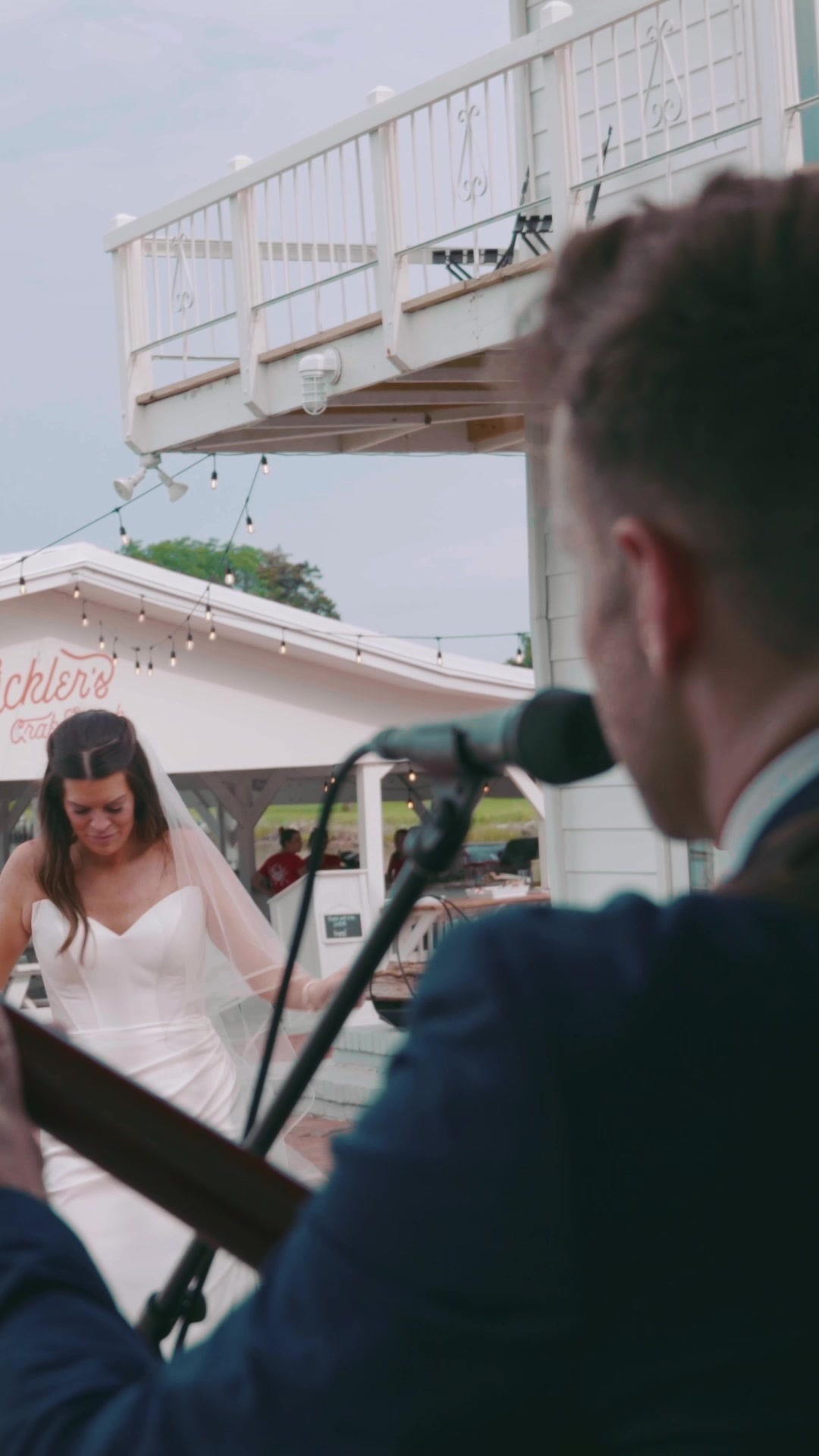
A processional or a first dance each has an exact moment it needs to start. Ask any performer you're considering how they've handled that kind of moment before. The specifics of the answer tell you whether they've run it many times or are guessing.
The second story came from a different kind of booking: the owner of an interior design gallery in Georgetown, booking live music for a combined 40th birthday and 15-year business anniversary for around 40 to 65 guests. She'd once hired a band for an event where the musicians took what she described as constant cigarette breaks and, by her count, played five songs the entire night. Going into this booking, she wanted one specific assurance: that the performer she hired would play for the full length of the event. She got that assurance in writing and sent a deposit to hold the date the same week.
Both stories point to the same two things worth checking before booking anyone: how a performer handles a fixed, unrepeatable moment, and whether they stay engaged for the whole booking.
What to Ask Before You Book
These three questions turn the two stories above into a practical checklist.

- Ask specifically how they handle ceremony cues. Ask how they've handled the moment-to-moment timing of a processional or a planned pause before, that's the exact failure the Barns of Kanak couple had witnessed. A performer who describes actively watching for the wedding party's cue in real time has done this before.
- Ask what happens between sets or during a scheduled break. Who covers the room, whether there's dead air, whether something like five songs and a lot of empty stage time could happen at your event. This is the direct question the Georgetown gallery owner's story raises, and any performer confident in their own set should welcome it.
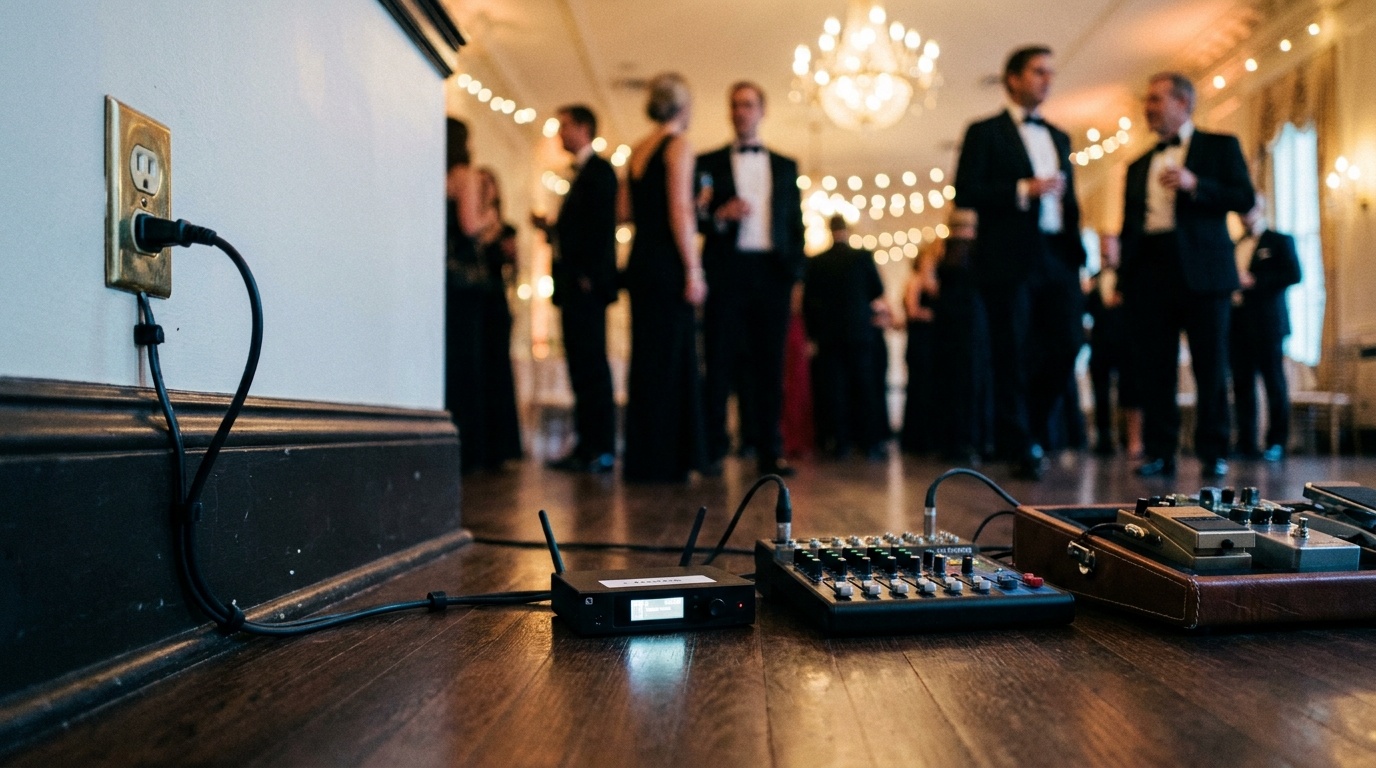
- Ask directly whether there's a formal rehearsal, and what replaces it if there isn't one. Plenty of solid performers skip the on-site walkthrough and substitute a real planning call plus a confirmed song list, locked in a few weeks out. Ask the specific performer you're considering to walk you through that actual process.
A few other questions belong on this list. Each one is covered in more depth elsewhere on this site: whether a performer will learn a song outside their existing repertoire, why a written contract and deposit matter, and what happens if a performer gets sick or can't perform. Those three are covered in full here. For the sick-or-can't-perform question specifically, this covers what a real backup plan should look like.
What Should a Wedding Singer Cost?
The number moves for real reasons: how many hours and songs are requested, how large the event is, how far the performer has to travel to reach the venue, and how many parts of the day they're covering. A one-hour ceremony booking sits at a different point on the scale than a full-day booking that spans a first look, ceremony, cocktail hour, and reception.
A quote shaped by those specific factors reflects your event. A flat number pulled from a generic rate sheet does not.
FAQ
Do wedding singers usually rehearse before the wedding?
Rarely as a full walkthrough at the venue. Most professional performers substitute a planning call and a confirmed song list, finalized a few weeks out, which covers the same ground a rehearsal would. Listen for real, concrete detail when a performer describes how that call works.
What should I ask about how a performer handles ceremony cues?
Ask how they've handled timing for a ceremony moment, a processional start or a scripted pause, in the past. This is one of the most concrete things to verify before booking, because it's a moment a wedding can't redo if it goes wrong. For how a vocalist manages that timing specifically, this covers it in more depth.
What happens between sets, or during a scheduled break?
Ask directly. A reasonable performer can tell you who covers the room during a break and how long it runs, without hesitating over the question. That specificity is worth paying attention to on its own.
Should I worry more about genre fit or professionalism?
Professionalism, by a wide margin. Genre fit affects how the night feels. Reliability determines whether cues land, breaks get covered, and the night runs on schedule.
How far in advance should you book a wedding singer?
Booking early is what locks in the date, through a signed contract and deposit, while the calendar is still open. What that contract and deposit should include is covered here.
The Bottom Line
Genre and price are worth checking. So is reliability. Check it the way you'd check references for any vendor trusted with a day that doesn't get a second take. Ask how a performer handles the moments that can't be redone. Ask what happens during a break. Ask what replaces a rehearsal.
If you're ready to talk through what your own wedding day needs, get in touch.
Blog Categories
Latest Blogs