Gala & Nonprofit Event Entertainment in DC: A Planner's Booking Guide
Dylan Galvin is a Berklee College of Music graduate, mentored by music legends John Mayer, Paul Simon and Livingston Taylor. Performing across the United States since 2009, now based in the DMV (Washington DC, Maryland, and Virginia), more than 1,500 events, including work for Coca-Cola, Wells Fargo, Lincoln, and CBRE.
Washington has more nonprofits and associations per capita than any other city in the country. More than 10,000 public charities call DC home, and nonprofits make up close to a quarter of the private-sector workforce here (Urban Institute, 2026). That density shows up every fall and spring in the same way: a run of galas, benefit dinners, and donor receptions competing for the same ballrooms, the same caterers, and the same short list of vendors who know how to work a program built around speeches and a live auction, not just a dance floor.
Entertainment for a gala is a different problem than entertainment for a wedding or an office holiday party. The room has a script. Here is how to plan for it.
Why a Gala's Entertainment Brief Is Different
A wedding reception builds toward one moment. A corporate holiday party is pure celebration from the first note. A gala has neither luxury. It runs on a schedule built around fundraising, not music: a cocktail reception, a seated dinner, a program with remarks and often a live auction, and only then, if the night allows it, a stretch of open dancing.
The data backs up why the program matters more than the entertainment for most guests, and why that is not actually bad news for a musician. In OneCause's 2025 State of Nonprofit Auctions Report, live entertainment was rated "very engaging" by 51% of gala and auction attendees, behind testimonials (63%), the silent auction (61%), and the live auction (59%). Entertainment is not the top draw at a fundraiser. It is the atmosphere the fundraising happens inside of, and a performer who understands that difference plays the room instead of competing with it.
The DC Gala Calendar Books Early
Nonprofits plan further ahead than most private hosts, because a gala is not just an event. It is a revenue target with a board watching it. OneCause's research found 89% of nonprofits began promoting their event at least 61 days before it happened, and 68% start selling tickets within 90 days of the date. Entertainment has to be locked before that promotion starts, not after, because a printed invitation naming a headline act or a "live music by" line is part of what sells the ticket.
For smaller nonprofits, the stakes are higher than they look from the outside. Two-thirds of nonprofits with under $1 million in annual revenue raised more than a fifth of that revenue from events and online fundraising combined in 2024 (OneCause, 2024 Fundraising Outlook Report). A gala that underdelivers on atmosphere is not just a disappointing night. It is a measurable hit to the budget.
A realistic booking window for a DC-area gala:
- 4 to 6 months out: Set the entertainment budget and format alongside the venue and caterer. Confirm your top choice before the invitation goes to print.
- 90 days out: Contract and deposit signed. This is when most nonprofits start ticket sales, and the "live entertainment by" line needs to already be true.
- 60 days out: Finalize the program timeline with your entertainer: cocktail arrival, dinner sets, program breaks, and the transition into dancing if the night has one.
- 2 weeks out: Confirm load-in, sound restrictions for the venue, and any moments the performer needs to leave space for, like a paddle raise or a video tribute.
Matching the Format to the Program
Galas run through three distinct moods in one night, and the entertainment format that wins is not the one with the most energy. It is the one that can move through all three without a costume change.
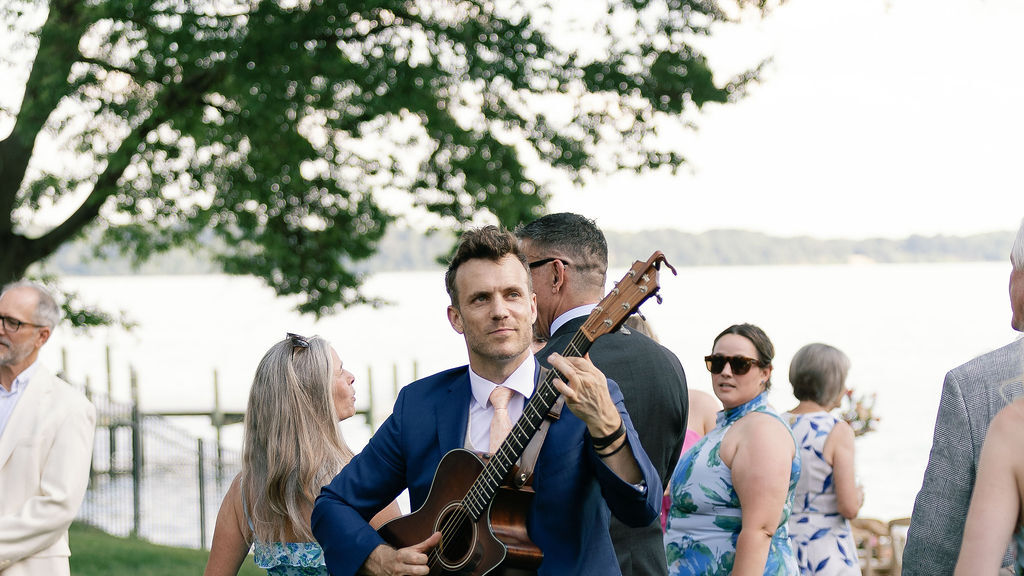
Cocktail reception. Guests are arriving, bidding on silent auction items, and finding their seats. The room needs warmth, not volume. A solo guitarist or a small string setup reads as elegant without pulling focus from conversation, which is where the early giving conversations actually happen.
Dinner and program. This is the part a DJ or a full band struggles with most. Remarks, a mission video, and a live auction need a room that can hear the auctioneer and feel emotionally present for a testimonial, not one working around a sound system built for dancing. Live music built for this stretch stays soft, reads the room's energy in real time, and goes silent instantly the moment the microphone needs the floor. A pre-programmed playlist cannot do that. A performer who is watching the room can.
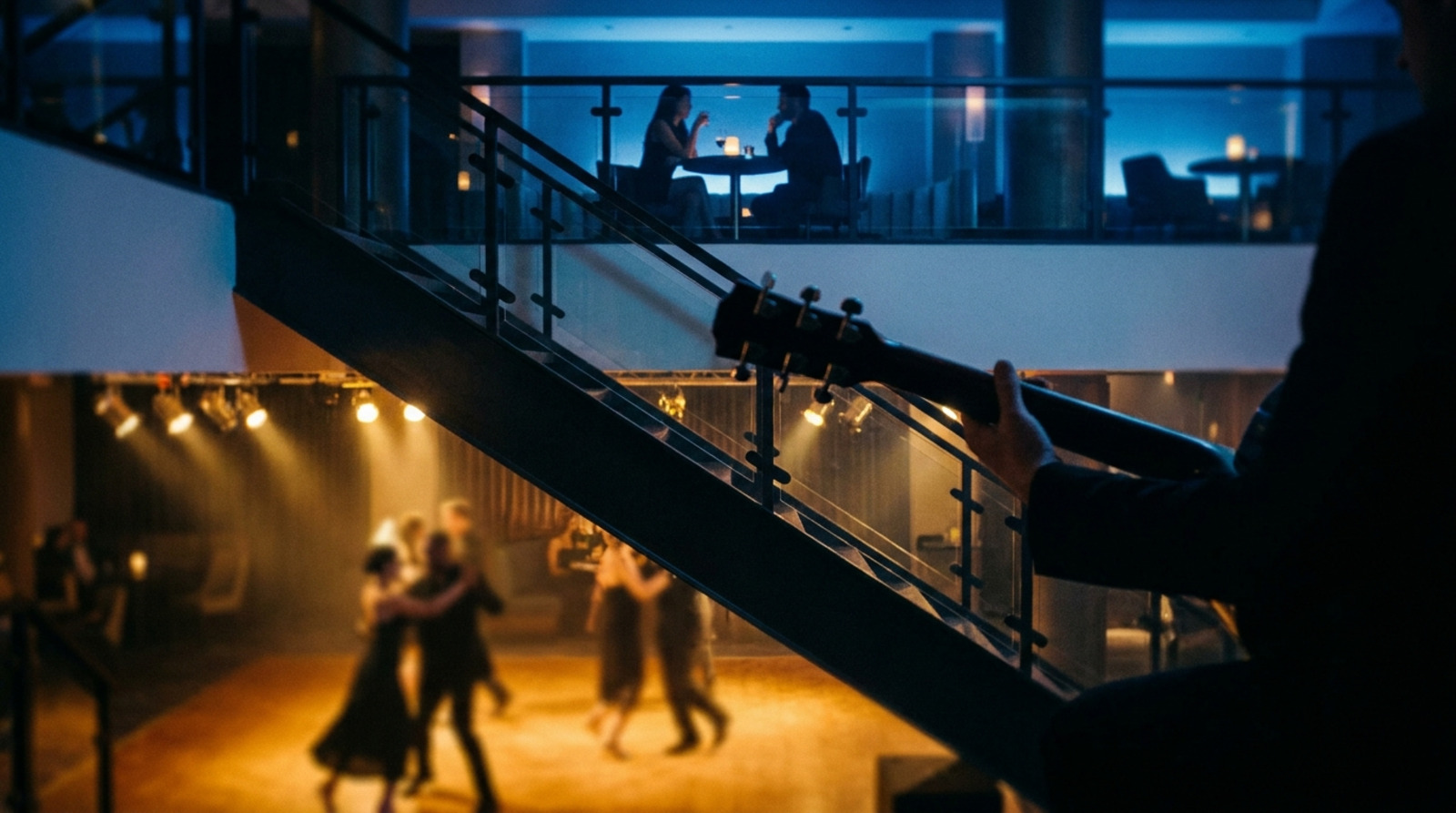
The turn to dancing. If the program allows it, the last 45 minutes to an hour is where the night can open up. Some hosts bring in a DJ for this stretch specifically, which works well when the shift needs to feel like a clear change of gears. Others prefer continuity, a single performer who can move from an acoustic dinner set into something more upbeat without a scene change. Both are legitimate choices; the right one depends on how sharp a break the room wants between "program" and "party."
For most galas, entertainment is a smaller line item than catering or the venue rental, and it is one of the few line items guests remember by name the next morning.
Five Questions to Ask Before You Book
- "Have you performed a program with a live auction or remarks built in?" A performer who has worked fundraisers knows how to hold a soft dinner set and drop to silence the instant a microphone comes up, without being told twice.
- "Can you cover cocktail hour through dancing without a second vendor?" Fewer handoffs means fewer things that can go wrong on the night your board is watching.
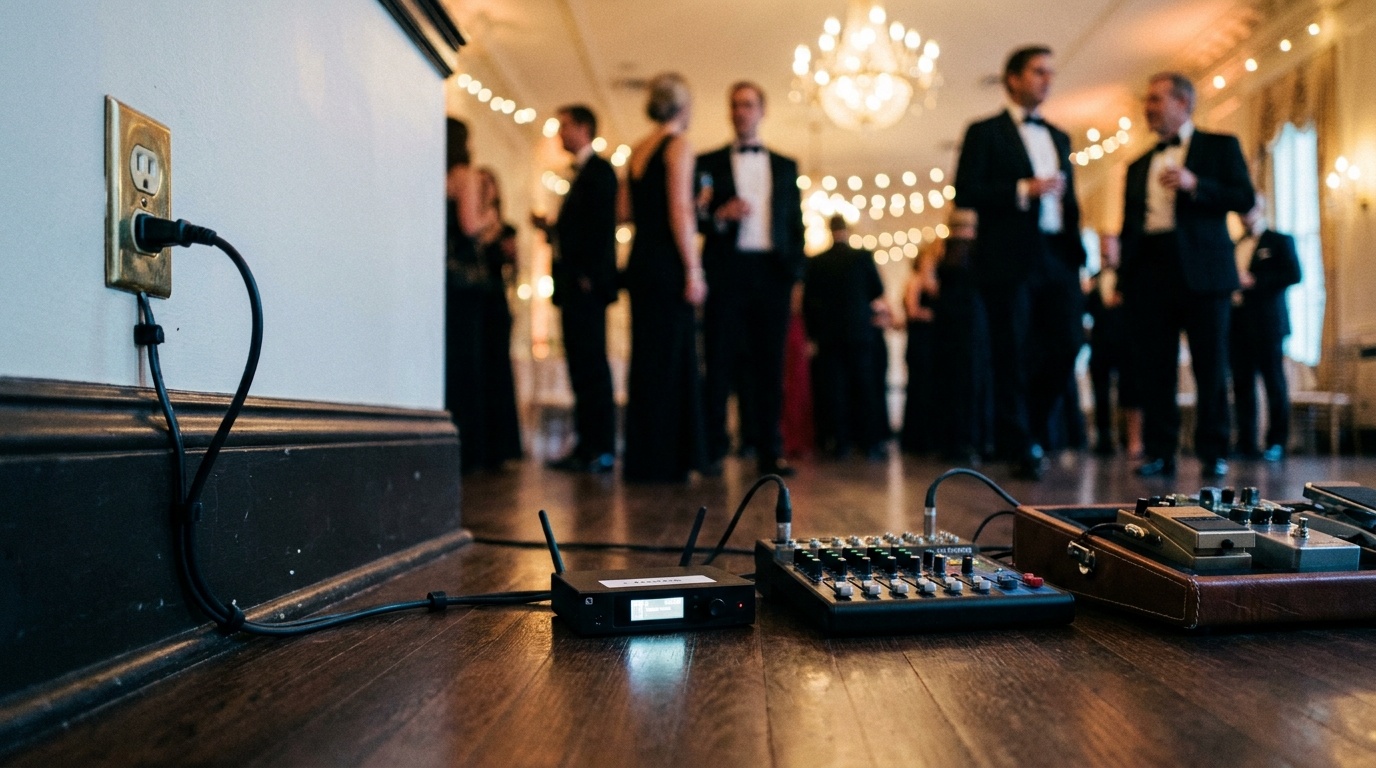
- "What's your sound footprint in a formal or historic room?" Museums, embassies, and older ballrooms often carry hard volume limits that rule out a full band.
- "Can we build a moment around a paddle raise or tribute video?" Ask how the performer handles a program pause. The honest answer should be immediate and specific, not vague.
- "What happens if the program runs long?" Galas run behind schedule more often than any other event type. A professional's contract should already account for it.
FAQ: Gala & Nonprofit Event Entertainment in DC
What kind of entertainment works best for a nonprofit gala?
A solo musician or small ensemble that can shift between soft background music during dinner and higher-energy material once the program ends works best for most galas. The entertainment has to serve a printed program with remarks and often a live auction, so a performer who reads the room and adjusts volume and energy in real time fits better than a fixed-format band or DJ.
How much does gala entertainment cost in Washington DC?
In the DC market, a solo musician for a gala typically runs $2,500 to $5,000, a string duo or quartet runs $2,500 to $6,000, a DJ runs $2,500 to $3,500, and a full band for a large ballroom gala runs $5,000 or more. Cost depends most on guest count, whether the performer covers the full night or one segment, and venue sound requirements.
When should a nonprofit book entertainment for a gala?
Book gala entertainment 4 to 6 months before the event, and have a signed contract in place at least 90 days out, which is when most nonprofits begin ticket sales. DC's fall and spring gala seasons are dense with events competing for the same short list of proven vendors, and the strongest performers book up first.
Can one performer cover both dinner music and dancing at a gala?
Yes. A performer with a live looping or hybrid DJ setup can move from soft acoustic music during cocktail hour and dinner into a higher-energy set once the formal program ends, without a second vendor or a break in the room's momentum. This also simplifies logistics to one contract and one point of contact for the whole night. For how the looping format works, see the live looping musician guide.
Does entertainment actually affect how much a gala raises?
Indirectly, yes. Entertainment sets the atmosphere the fundraising happens inside of. In nonprofit sector research, live entertainment is rated as one of the more engaging elements of a gala program, and 75% of nonprofits that held in-person events met or exceeded their fundraising goals (OneCause, 2025 Fundraising Outlook Report). A gala that feels flat costs more than an awkward night. It affects whether guests come back next year.
The Bottom Line
A gala is a fundraising event that happens to have music in it, not a party that happens to have a cause. The entertainment that works is the entertainment that understands that order: present during cocktail hour, quiet and responsive during the program, and ready to open the room up once the mission has been served. Book early, and ask how a performer actually handles a live auction or a tribute video before you sign anything.
For more on matching format to venue, the complete corporate event entertainment guide covers the decision framework in more depth.
See how private and corporate event live music works across cocktail hour, dinner, and program transitions like this one.
Sources
- OneCause, 2025 Fundraising Outlook Report (Dec 12, 2024, survey of 977 fundraising professionals)
- OneCause, 2025 State of Nonprofit Auctions Report
- Candid, How to plan successful fundraising galas, even in difficult times (Oct 30, 2025)
- Double the Donation, Nonprofit Fundraising Statistics (updated May 2026)
- Urban Institute, Three Things DC's New Mayor and Council Need to Know About Nonprofits (June 11, 2026)
Blog Categories
Latest Blogs