Wedding Events
First Dance Wedding Songs: How to Actually Choose Yours
Dylan Galvin is a Berklee College of Music graduate, mentored by John Mayer, Paul Simon and Livingston Taylor. Performing across the United States since 2009, now based in the DMV (Washington DC, Maryland, and Virginia), more than 1,500 events, including work for Coca-Cola, Wells Fargo, Lincoln, and CBRE.
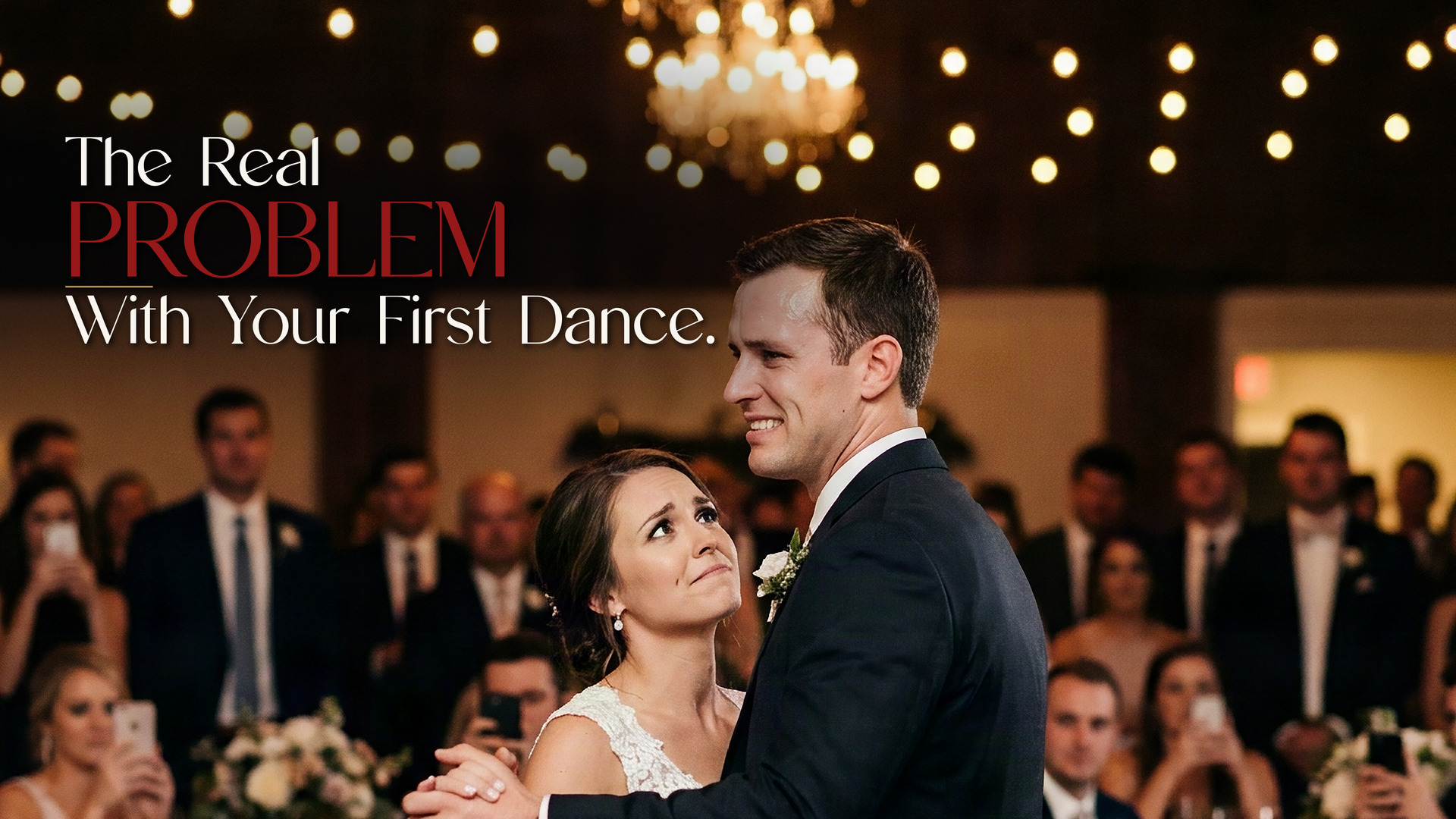
Most couples spend weeks agonizing over their first dance song and almost no time preparing for what actually makes that thirty seconds work. That's backwards. The song rarely makes or breaks a first dance. What makes or breaks it is whether the person less comfortable being watched, usually the groom or the bride's father, is actually present in the moment instead of distracted by nerves.
In roughly three or four out of every ten weddings, someone on the dance floor for a spotlight moment (first dance, father-daughter, mother-son) is visibly less at ease than the person dancing with them. It's rarely about the song. It's about the gap between rehearsing a dance in a living room and performing it in front of eighty or a hundred people watching, phones up, waiting for the moment. That shift in energy is what catches people off guard, not the choice between a ballad and a pop song.
Key Takeaways: Choosing Reception Songs
- The song you pick for a first dance or spotlight dance matters far less than most couples think. What matters more is making sure both people are actually in the moment when it happens, not distracted by nerves.
- If either dancer is uneasy about being watched, a DJ'd recording or a live rendition that matches the tempo they rehearsed to is often the safer call than a fresh live arrangement.
- A musician who roams over and performs alongside a spotlight dance can take some of the pressure off the person who's nervous, without changing the song.
- For the open dance floor, the usual list of go-to songs (Motown, Soul, 80s and 90s classics, artists like Whitney Houston or The Killers) works across almost any age group and background. Not everyone dancing at once isn't a failure. Forced energy from a DJ or band tends to read worse than a quieter room.
- A few must-plays are fine, but it's okay to let the dance floor speak for itself instead of trying to preemptively choose every song that gets played throughout the night.
Why the Song Choice Isn't the Real Risk
Couples researching first dance songs tend to land on the same lists everywhere: this year's popular picks, a genre breakdown, a handful of "unique" alternatives to the obvious choices. None of it addresses the actual thing that goes wrong at real weddings.
The pattern shows up across enough weddings to be predictable (the ceremony-music side of this same lesson covers a related version of it): the real risk shows up when a couple rehearses a dance to a studio recording, memorizes the exact tempo and phrasing, and then dances to a different version of that song on the day, whether that's a live arrangement or just a different recording than the one they practiced to. Add a room full of people watching and the anxiety compounds fast, often out of proportion to how much attention is actually being paid. Psychologists call this the spotlight effect: people consistently overestimate how closely a room is watching them, and a couple mid-dance is a textbook case. It has nothing to do with whether the song itself was a good pick.
If one half of a couple, or a father walking his daughter into a dance, is already unsure about being watched, the safer move is generally to DJ the recording they rehearsed to rather than have it performed live, or to have a musician match that exact tempo if they want it live. A version that drifts even slightly from what someone practiced to can throw off an already nervous person. For more on how a live vocal performance actually differs from a recording, see what sets a live vocal performance apart.
What Actually Helps a Nervous Dancer
At one couple's wedding in Wilkes-Barre, Pennsylvania, the father-daughter dance was visibly the harder moment of the two for the father. The song, "I'm Already There" by Lonestar, was DJ'd rather than performed live, matching exactly what the two of them had rehearsed to. The other move that helped: rather than staying at a fixed setup, the musician walked over toward the dance and performed alongside it, which read less like a spotlight and more like company. It's a small signal, but it tells a nervous dancer someone else is doing this moment with them.
There's a second decision that matters just as much once the dance is underway: whether to let it run the full length of the song or cut it short. The instinct, especially for whoever's running the room, is to shorten an uncomfortable moment. That's the wrong call more often than not. Unless someone is showing real signs of distress, it's worth letting the dance run its course. Guests are taking photos and video during that exact window, and it's not something a couple gets to redo later. Most people who push through a nervous moment like this are glad afterward that they did, and the record of it (the photos, the video) is the part that lasts. The read has to be genuine, though. If someone is clearly panicking and wants out, that's the cue to cut it short, not push further.
Real Songs From Real First Dances
There isn't a formula that works for every couple, and a musician who's played enough of these will tell you the range is wider than any list suggests. Among first dances actually played:
- "Marry Me" by Train, performed live for a couple's first dance at a destination wedding.
- An instrumental version of "Here Comes the Sun" by The Beatles, performed live for a couple's first dance in Rhode Island.
Genre matters less than most couples assume. Country works. Slow songs and ballads work. 80s tracks work, once they're reworked into something two people can actually move to together. The real limit isn't genre so much as tempo and mood: a song built for a packed dance floor, not two people standing close for three minutes. Death metal and gangster rap are the real mismatches, and even those aren't technically off-limits. A couple can still pick either one. It just tends to make for an odd few minutes of slow dancing to a song that was never built for it.
Some couples want a note-for-note live version. Some want a specific instrumental arrangement. Some want the actual recording they've listened to a hundred times. All of it works, as long as the couple gets the version they actually rehearsed to, or is told upfront what to expect if it's going to sound different live.
Father-Daughter and Mother-Son Dances
The same nerves-over-song-choice principle applies to father-daughter and mother-son dances, with one added wrinkle: this is often the dance the couple has the least control over, since it's really the parent's moment to feel comfortable in. Ask directly whether the parent has danced in front of a crowd before, or whether they've mentioned feeling anxious about it. If the answer is yes, the same options apply: a DJ'd track, a tempo-matched live version, or a shorter cut if the parent genuinely wants it brief rather than full length. This is worth deciding before the wedding, not in the moment.
Building the Open Dance Floor Playlist
The spotlight dances are one thing. The open dance floor, where guests decide for themselves whether to get up, works on a different set of rules.
People listening on a dance floor aren't following a lyric or a storyline the way they might with a first dance song or an album played straight through. They're responding to energy. That's why certain songs cross lines that shouldn't logically cross: guests in their sixties and seventies dancing to the Cupid Shuffle, or younger guests filling the floor for an 80s rock ballad. The usual list works almost every time: Motown, Soul, 80s and 90s staples, artists like Whitney Houston or The Killers. These aren't unusual picks. They're the reliable, go-to catalog every mixed-age crowd already knows. That reliability tracks with what the streaming data shows more broadly. Luminate's 2021 U.S. Year-End Report found that catalog music (tracks more than 18 months old) made up about 70 percent of everything streamed in the US that year, overtaking new releases for the first time the company had measured it. Older songs aren't a fallback. They're what people actually want to hear.
The bigger mistake couples and planners make is treating an empty patch of dance floor as a sign something's going wrong. It isn't. Some crowds simply don't dance as much as others, and some guests who love dancing aren't in the mood that particular night. That's not a failed reception. The actual failure is a DJ or band that isn't reading the room, people who clearly want to dance but aren't being given the right song to get up for. That's a real problem. Forcing the issue with a hype-man mic, a foghorn, or nonstop calls to the dance floor when the room isn't responding tends to make things worse, not better. Plenty of couples specifically don't want that kind of high-pressure energy at their wedding, and it's worth telling your musician or DJ that directly if that's you.
What to Actually Hand Your Musician
Couples often think the job is to build an airtight, song-by-song plan for the entire night. A few must-plays are worth handing over, especially for the spotlight moments, but there's no need to preemptively script every song that gets played. Add a short do-not-play list too (songs tied to a bad memory, a genre nobody in the family can stand, anything that just feels wrong for the room, including a few genuine landmines covered in songs to leave off your wedding playlist). For everything else, it's worth letting the dance floor speak for itself. A musician who's actually read a lot of rooms will build the rest of the set live, based on who's on the floor and how they're responding, which does more for the night than a pre-built fifty-song list ever will. If guests will also be walking up with their own requests, how wedding song requests with a live musician get handled is worth agreeing on before the night. The same read-the-room approach shapes music earlier in the engagement, too — how an engagement party's set actually gets built runs on the identical mix of a vibe brief, live requests, and a do-not-play veto instead of a locked-in list.
Frequently Asked Questions
How far in advance should we finalize our first dance and reception songs?
Songs already in a musician's regular repertoire can usually be confirmed a few weeks out. A custom arrangement, a specific instrumental version, or anything outside the ordinary song list needs more lead time, often a couple of months, to get right.
What if the groom or a parent really doesn't want to dance in front of everyone?
Say so ahead of time. A DJ'd track, a shorter cut, or a musician who joins them for the moment instead of standing off to the side are all real options. The point isn't to force a full performance if it's going to make someone miserable.
Can our musician learn a song that isn't already in their set list?
Most working wedding musicians can, with enough notice. The tighter the timeline or the more custom the arrangement, the earlier that request needs to go in.
Do we need everyone dancing all night for the reception to feel successful?
No. Some crowds dance less than others, and that's not a reflection on the couple or the entertainment. The real problem is a DJ or band failing to respond when the room does want to dance, not a quiet stretch here and there.
Is DJing part of a live musician's job, or does that require a separate DJ?
Many live musicians who also DJ can cover both roles for a single moment like a first dance, playing the recorded track a couple rehearsed to instead of performing it live. It's worth asking directly whether that's something your musician offers.
The Bottom Line
The song you pick for your first dance is not the decision that will make or break the moment. The real work is figuring out who's nervous, why, and what setup (live, DJ'd, full length, or shortened) actually helps that person get through it comfortably. The same logic carries into the open dance floor: read the room instead of forcing it, and don't mistake a quiet stretch for a failed reception. For more on how ceremony music decisions work, see the guide to choosing ceremony songs. For the broader question of live music versus a DJ across the day, see live versus DJ for your ceremony and reception. Details on booking a full band for the reception are in the guide to hiring a wedding band. Questions about your own reception songs can go straight to the wedding music page.
Blog Categories
Latest Blogs