Wedding Events
How to Find and Hire a Band for Your Event
By Dylan Galvin. Berklee College of Music, magna cum laude. Mentored by music legends John Mayer, Paul Simon and Livingston Taylor. Performing across the United States since 2009, now based in the DMV (Washington DC, Maryland, and Virginia), more than 1,500 events, including work for Coca-Cola, Wells Fargo, Lincoln, and CBRE.
You type “hire a band” into a search bar, and results come back by the dozen. What doesn’t come back is any sense of whether the person behind any of them is actually any good, because nobody in this business has to prove that first.
What you actually mean by “band,” the questions a real booking conversation should ask you before recommending a format, what standard vetting advice leaves out, how often a search like yours turns into an actual booking, and why the search itself produces so many disappointing results in the first place. That’s what this page covers.
The questions below apply whether you’re planning a wedding reception, a corporate party, or a milestone birthday. The format changes each time. The discovery-stage problem (working out what your event needs before you compare specific acts) does not.
The Word You're Using vs. the Thing You Actually Need
Search terms flatten intent, and yours is no different. When you type “hire a band,” you might be an event planner who’s booked a dozen of them and knows exactly what you want. Or you might be someone who thought “it would be nice to have a band” a few weeks before your event, without having worked out anything beyond that feeling yet.
The tell shows up fast, usually in your first message to a performer or band. If you come in with specific language, like a preferred lineup size, a firm date, a clear sense of the room, that signals you’ve done this before or done real homework. If you come in vague, with no real sense of logistics or budget, that’s the opposite signal: the idea has arrived, but you haven’t worked out what’s behind it yet. Vague language is the single biggest tell there is, and it’s worth noticing in your own message before you start calling around.
The clearest place that gap shows up is price. If your request is still vague and early-stage, you’re probably expecting to pay far less than a band actually costs. A number near $500 comes up often as a guess for what a full band should run. It hasn’t been realistic in years. Even a starter-tier band runs into the thousands, and Northeast markets that include DC price a 5-to-6-piece band between $5,000 and $12,000, against a $4,000 to $7,500 national baseline for that size and $6,000 to $12,000 for a larger, 7-to-9-piece band with horns. For a fuller breakdown of what live music runs across formats in this market, see DMV wedding music costs, band versus DJ.
That price gap is a knowledge gap wearing a dollar sign. If you’re still picturing “a band” as one simple line item, you haven’t priced out what the word actually buys: five or six professionals, a truck of gear, a rider, a load-in crew. Once that picture is accurate, the rest of your search gets much easier to run.
What Happens When You Ask for a Band
If you reach out and say “I’m looking for a band,” that inquiry doesn’t always end with a band. A good performer will tell you so plainly, without blurring the line just to close the sale.
Solo and hybrid performers who also work with a rhythm section can offer several formats: solo, duo, trio, or a four-piece. What they can’t offer you is a full eight-piece band with a horn section, and a performer worth booking will say exactly that up front rather than let you discover the mismatch later. The honest version of this conversation sounds less like a sales pitch and more like a short filtering process: a few questions to confirm whether the format you have in mind fits what you’re planning, and if it doesn’t, a direct pointer toward whoever can deliver it for you.
That last part matters more than it sounds. The goal of that first conversation is to get you what you actually want, whether or not that ends up being a booking at all. Getting quietly redirected to a better-fitting act puts you ahead of booking the wrong format and finding out on the day that it doesn’t work.

If you’re not sure what a solo or hybrid live-looping performer actually sounds like next to a full band, live looping, the technique that makes one guitarist sound like a band breaks down how that sound gets built. What a roaming musician does and live looping in Washington DC cover the format and the local market in more depth.
The Questions That Come Before You Get a Format Recommendation
Before any format gets recommended, a real booking conversation needs to ask you a specific, ordered set of questions. Skipping them is how you end up locked into the wrong format before anyone has looked at what your day actually requires.
- Where is your venue? A specific address changes what is even physically possible.
- Public or private? A public park and a private estate carry entirely different sound and permitting realities.
- Indoor or outdoor? Acoustics, power access, and weather contingencies all follow from this answer.
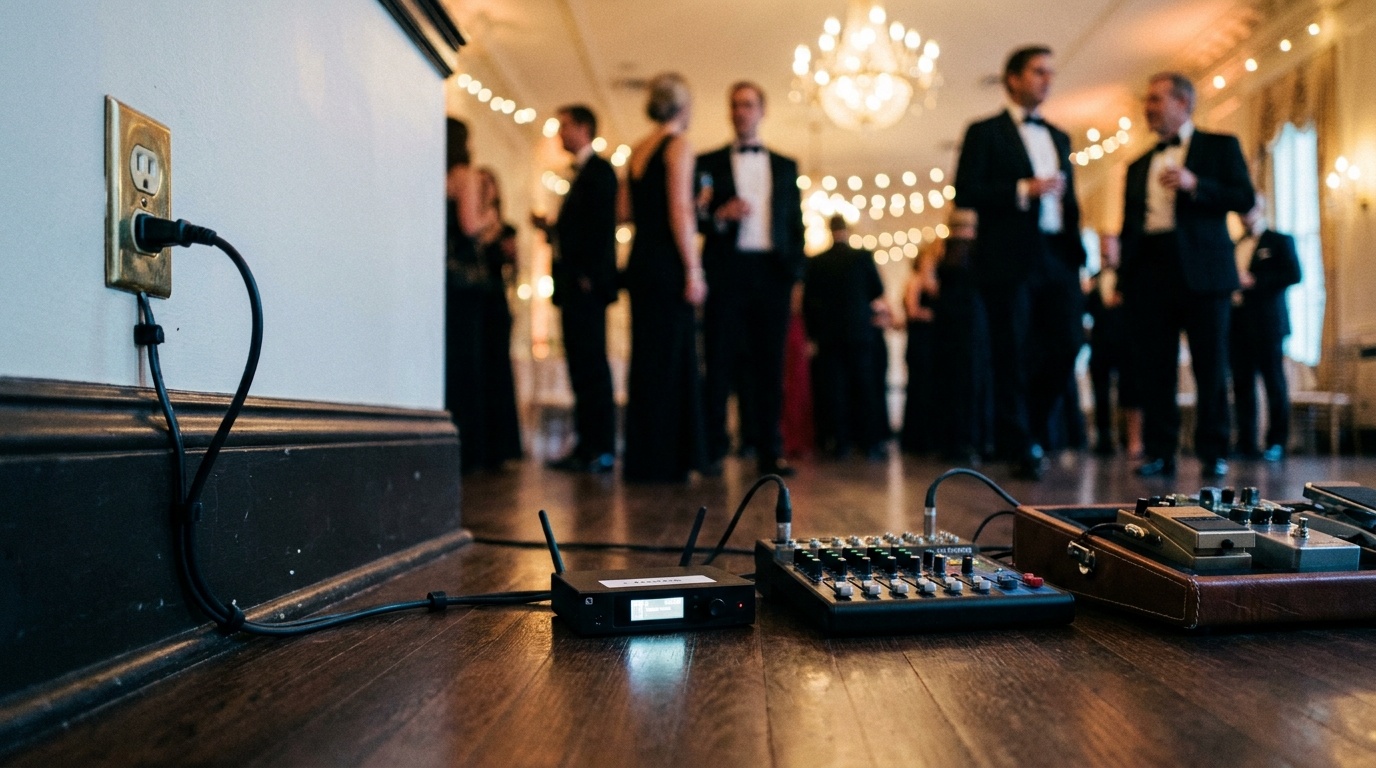
- Is power available, and how much? A full band needs real electrical capacity. A venue without it changes your format conversation immediately.
- What does your performance area look like? Square footage, ceiling height, and whether there is a stage all matter.
- How many guests? A five-piece band in a room built for forty people creates a volume and space problem before a single note plays.
- What do you and your guests want to be doing during the music? This is the deciding question. If you want to talk and still hear each other, a full band usually won't serve you well, because five or six amplified instruments make conversation difficult by design. A band earns its place when your room is built for one purpose: everyone dancing, together, for most of the night. Take that dance floor away, and a full band stops being the answer to what your event is actually asking for.
One scenario is worth naming on its own, since it comes up often enough at corporate parties and milestone events: if you're hosting near a televised game, your music and the game end up competing for the same attention, splitting a room that would otherwise focus on one thing. Guests watching the game get frustrated by the volume of the band, and guests there for the music get frustrated competing with the game for airtime and space. Booking the act as a distinct segment, like a halftime, pre-show, or post-show set, keeps both experiences intact without either one crowding out the other.

If you're planning a wedding built around a formal ceremony and a seated dinner, you need something different than a corporate event built around networking and conversation, and the format that fits one rarely fits the other by accident. Working through these questions before you compare specific acts is what separates a booking that fits your room from one that fights it.
Why "Watch the Video, Check the References" Isn't the First Question for You to Ask
Standard advice you'll find for hiring a band reads the same everywhere: watch a video, check references, get a contract, confirm insurance. The Knot's own guide to vetting wedding vendors covers the same ground, sound as far as it goes, but it assumes your format decision is already settled.
Before any of that vetting is useful, your venue has to be able to physically hold a band. A typical five- to seven-piece band needs a performance area in the neighborhood of 12 by 20 feet, and understanding a band's stage plot and rider matters just as much as reading its reviews. Plenty of venues, including some that look spacious in photos, can't house that footprint once the stage, the mix position, and your guest seating all have to share the same floor.
The question you're most likely to overlook is your room's electrical capacity and its acoustics: whether a large, amplified sound system will run cleanly off the power that's there, and whether your space will carry that sound or turn it into a muffled mess once the band starts playing. A full band's PA system typically needs a couple of dedicated 20-amp circuits of its own, drawing far more power and taking up far more floor space than a solo performer's amp, so power and layout that work fine for one can fall short for the other. Ask any act you're considering which equipment they plan to bring, and settle that question during your initial booking conversation, long before load-in day. A gorgeous venue with the wrong power setup or the wrong acoustic profile can undo a booking that looked perfect on paper.
Feeding the band is the other line item you're likely to forget until the invoice arrives. More musicians on stage means more meals for you to provide, and vendor meals typically run somewhere around $30 a person as a general market rate once your caterer adds them to the order. Working it into your budget early prevents a last-minute scramble as your date approaches.
Timing follows its own logistics. A typical band booking runs around four hours, built around two breaks of twenty to twenty-five minutes apiece so the band can rest, reset gear, and hand your room to recorded music or a DJ for a few minutes at a stretch. Most bands price that block of hours upfront. Extending past it for an additional rate is common and often available, so ask about that flexibility and its cost when you sign the contract. Eleven-thirty with a room full of your guests still on the floor is the wrong moment to find out you can't.
A stage plot, a breaker panel, and a floor plan carry these details. Get them checked before you ask a single vetting question.
How Often Looking for a Band Turns Into Booking One
It's not often that you'll start out looking for a band and end up booking a solo or hybrid performer instead. Most people who reach out asking for a band want exactly that: a full band.
Two real, practical constraints shape that outcome for you. The first is footage. If a performer doesn't have much video of themselves playing in a full band arrangement, that's a hard thing for you to get comfortable with before booking, even if they have plenty of footage in other formats: roaming sets, instrumental work, vocals and guitar together. Strong footage in one format won't transfer your trust to a different one, and it shouldn't have to. The second is scheduling. A band booking depends on every bandmate's date being open, and if it's not, there's nothing to be done about it for your date.
Both of those constraints point to the same honest outcome for you. If you want a full production show, with backup singers, full lighting, a dancing-all-night set with every seat filled, the right move is getting pointed toward whoever can actually deliver that, quickly and without friction. That's worth more to you than a maybe-it-will-work booking in the wrong format.
Reading which way your conversation is headed isn't guesswork on either end. If you come in with specific requests, thought through in advance, that usually means you've already pictured something a solo or hybrid format can't match. If you're loose, laid-back, and open to suggestion, that usually means there's real room to talk through the fit together.
Why Your "Hire a Band" Search Is So Often Disappointing
"Hire a band" is a vague question, and a vague question gets you what a vague question deserves: an answer with no real filter behind it. Ask a restaurant to describe its menu as just "food," and the vagueness itself is the warning sign. Search for "a band" and you run into the same problem: the lower the specificity in what you're asking for, the wider and less reliable the pool of results you get back.
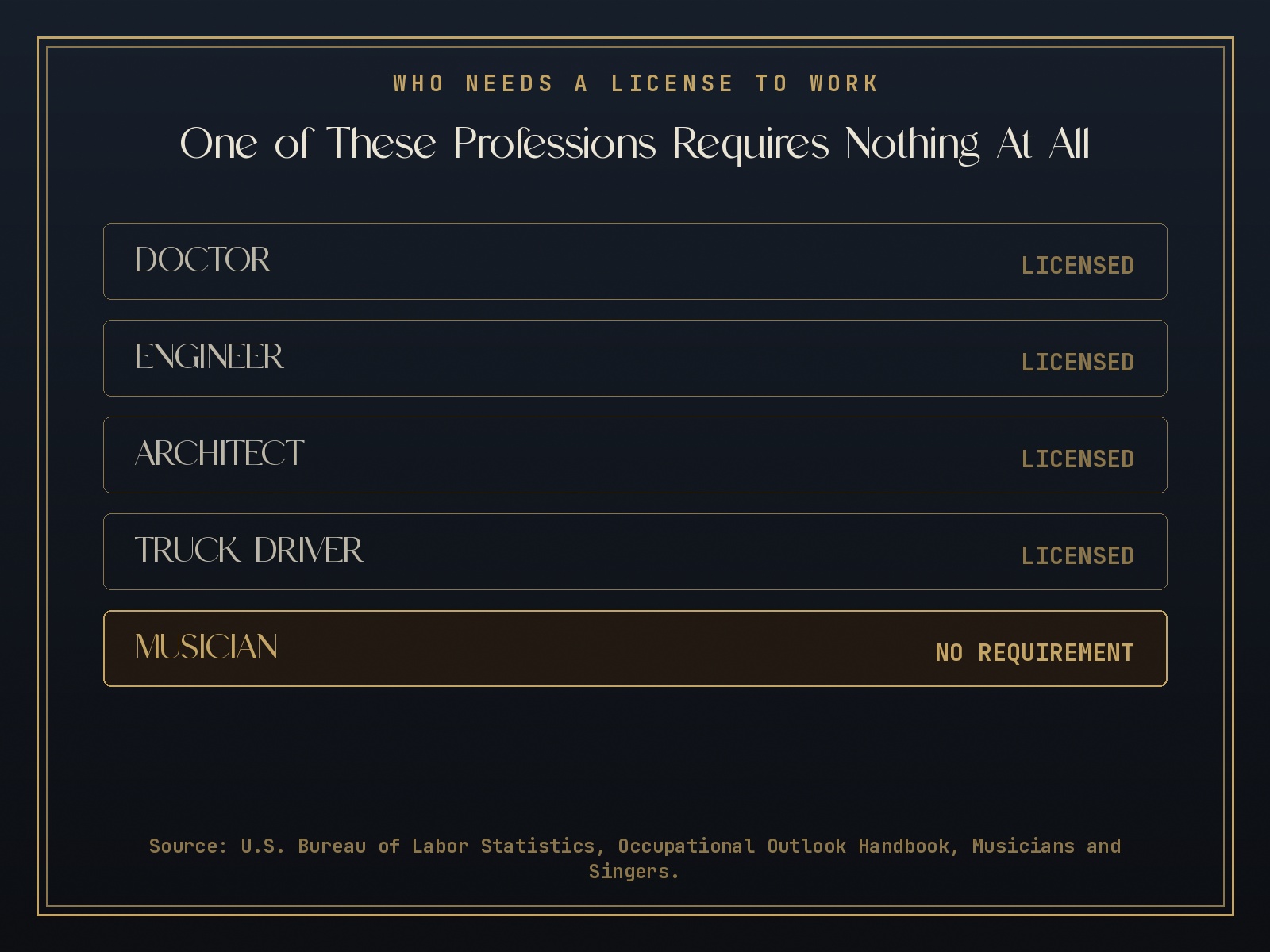
The deeper reason your search is disappointing comes down to the industry itself: there is no licensing, no certification, no formal qualification required to call yourself a musician and book paying work. A doctor, an engineer, an architect, even a truck driver, has to clear some kind of credentialing process before taking on paying clients. The U.S. Bureau of Labor Statistics confirms musicians carry no such requirement at all, typically needing no formal postsecondary education to enter the field. Anyone can build a website, post a few polished clips, and call themselves a band. Nothing filters the scam artist from the mediocre from the excellent, and a vague search pulls all three into your results at once with no way to tell them apart from the results page.
That's exactly where the vague-language tell from earlier on this page and the licensing gap connect. A vague, underspecified search drops you straight into an unregulated market with no way to sort the real acts from the rest. The fix is a real conversation. A phone call, or better, a video call, gets you past the polish. You'll see how a performer talks about their own process, handles a direct question, and describes what they can and can't deliver for you, the kind of detail no photo, review, or demo reel is built to carry.
You'll read trustworthiness more accurately in a live interaction than any static page can give you. A short call before any deposit changes hands puts that instinct to use: listen to tone, watch how someone responds to a pointed question, and notice what they volunteer without you having to ask.
Frequently Asked Questions
Is it presumptuous to ask a solo or hybrid performer whether you need a full band?No, even when you sound certain already. A performer who skips the question is either assuming you already know the answer or avoiding anything that could complicate an easy sale, and both instincts protect the performer more than you. The same scope-check happens in other trades too: a caterer still asks about dietary needs and a photographer still asks about a venue's lighting before finalizing a package, regardless of how confident you sound.
How do you know if "a band" is what your event needs, or just the word that came to mind?There's one useful test: picture your event without a live band in the room and name exactly what would be missing. If the honest answer is the sound and physical presence of five or six musicians playing together, the word fits and your search should stay focused on bands. If the honest answer is something looser, live music in general, some energy in the room, one specific song done well, a smaller format can usually deliver that same feeling with less setup and lower cost.
What does hiring a full band typically cost?The dollar range depends heavily on band size, covered in full at DMV wedding music costs, band versus DJ. Whatever number that page shows covers the band itself only. Budgeting also means planning for a vendor meal per musician and for the overtime rate if your reception runs past the contracted length, both separate line items on the final invoice.
Is it safe to book a band through a directory, marketplace, or a site like Craigslist?It can be a reasonable place for you to start looking, but it should never be your last step before booking. A directory or marketplace listing is only as reliable as the profile behind it, and nothing on a listing page replaces a live phone or video call with the person or act you're considering. Scout wherever is convenient for you. Book only after a real conversation confirms the fit, and book the act directly whenever that option exists.
What's the difference between a full band and a solo or hybrid performer who loops?A full band uses multiple musicians playing at the same time. A solo or hybrid performer using live looping builds the same layered sound in real time, one part at a time, off a single stage plot and a fraction of the setup. Both can fill your room, and the tradeoffs, in cost, crew, and flexibility, are real. Live looping, the technique that makes one guitarist sound like a band covers exactly how that sound gets built and where a full band still wins.
What's the best way for you to vet a live performer before booking?The single most revealing question to ask is what happens if the performer or a bandmate becomes unavailable close to your date. The answer shows whether there's an actual contingency plan, a named backup, or nothing beyond hoping the date stays clear, one of the few things a polished website rarely states outright. A phone or video call remains the most reliable way for you to get a straight answer to that specific question.
A Vague Question Gets You a Vague Answer
When you ask "hire a band" or "find a band," you're really asking a version of a restaurant menu that just says "food." A vague version of that question gets you a vague, unfiltered field of results: some excellent, some mediocre, some outright scams, with no way to sort one from another from the results page alone.
Ask a specific version of the same question instead, and you get the opposite. What kind of event are you planning: a wedding reception, a corporate party, a milestone birthday? How many guests? What's the vibe and the energy you're going for? What genres fit your room? What's your real budget? Working through those questions before you compare a single act does more to guarantee a good outcome for you than any amount of scrolling, and it turns your search from "I want a band" into a decision built on what your event actually needs, whether that turns out to be a full band, a smaller lineup, or a solo or hybrid performer covering the same ground with a fraction of the setup.
Ask yourself the specific version of the question first. The answer you get back will be worth something.
Questions about music for your own event? The contact page is here.
Blog Categories
Latest Blogs