Your Marriage Is More Important Than Your Wedding
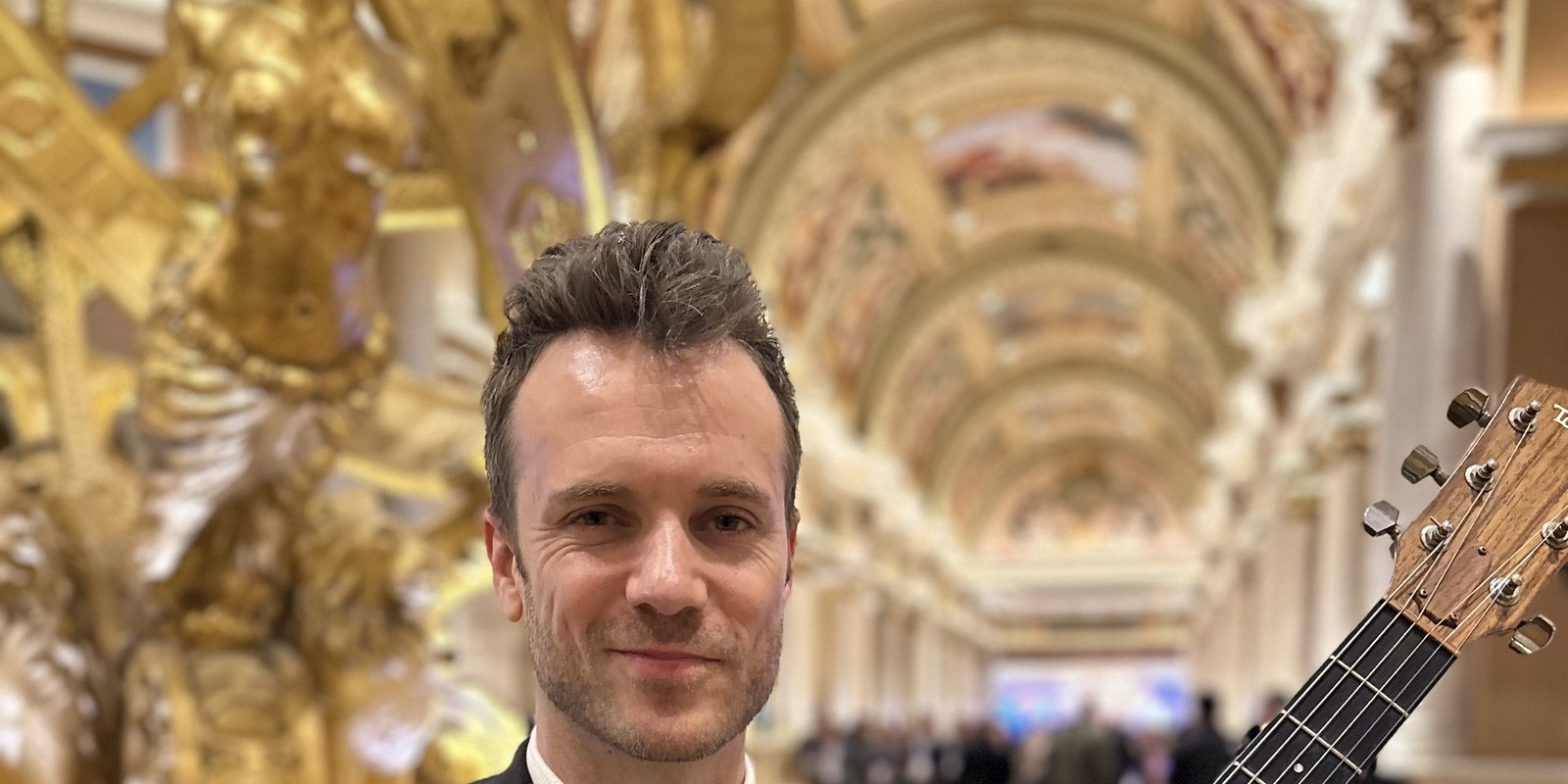
By Dylan Galvin. Berklee College of Music, magna cum laude. Mentored by music legends John Mayer, Paul Simon, and Livingston Taylor. Performing weddings across the United States since 2009, now based in the DMV (Washington DC, Maryland, and Virginia), more than 1,500 events.
I have played more than 1,500 events, and I can tell you the exact moment a wedding becomes real. It is never when the linens match the invitations. It is never the reveal of a five-figure floral installation. It is a look between two people during a song, when everyone else in the room disappears for a second. I have watched that happen at weddings that cost a fortune and at weddings held in a backyard with forty people. The look is identical.
So here is the thing almost no one in this industry will say out loud. Your wedding day is a celebration. That is all it is, and that is a beautiful thing to be. But it is not the marriage. Your union to each other is the thing that actually matters, and it is infinitely more important than the single day that kicks it off. If planning this one day is quietly wrecking you, that is worth pausing on, because the pressure you are feeling is almost entirely manufactured.
What Wedding Planning Stress Is Actually Telling You
Wedding planning stress is not a personal failing. It is the predictable result of being sold a standard you never agreed to. The numbers back this up. In a Zola survey of 500 engaged and newlywed couples, 47 percent were so stressed by planning that they considered eloping or heading to city hall instead, and another 16 percent thought about postponing entirely (Zola survey, via Bustle). Nearly half of couples wanted to skip the whole production. Sit with that.
Social media pours fuel on it. Zola's 2025 First Look Report found that social media inspires 91 percent of couples, but 48 percent struggle with the gap between the picture-perfect feed and their real budget, and 41 percent of Gen Z say social media has actively added stress to their planning (Zola, 2025). Here is the detail I love from that same report: only 3 percent of couples actually want a wedding that looks like it was designed for online clout. Almost nobody wants the performance. Most people just feel trapped into it.
The stress is a signal. It is telling you that you are optimizing for the wrong audience.
The Research the Wedding Industry Would Rather You Not See
This is the part that should genuinely take weight off your shoulders. Economists Andrew Francis-Tan and Hugo Mialon studied more than 3,000 married people in the United States and published the results in the journal Economic Inquiry. They found that how much you spend on the wedding is inversely associated with how long the marriage lasts (Francis-Tan and Mialon, 2014). Couples who spent 20,000 dollars or more on the wedding were associated with a notably higher likelihood of divorce than couples who spent between 5,000 and 10,000.
Two honest caveats, because I will not oversell a statistic. This is a correlation, not proof that a big check causes a breakup. And the same research found the marriages that fared best were relatively inexpensive but well attended, so this is not an argument for a joyless, empty room. The point is narrower and freeing: spending more to impress does not buy you a stronger marriage.
Here is the angle I actually care about, and I will be clear that it is my interpretation rather than something the study set out to measure. The dollar figure is not the villain. The motivation behind it can be. When a couple spends heavily mostly to look a certain way in front of other people, the spending may quietly reveal that they care more about how the day appears to an audience than about the two of them. That mindset, not the price tag, is the thing that tends to follow a couple around. So spend generously on what genuinely matters to you and on the experience your guests will actually feel in the room. That is not the spending the research warns about. The spending that correlates with trouble is the spending aimed at people whose opinions will not matter a year from now. Invest in your day. Just invest in it for you, not for the audience.
For context on what "the standard" now costs, The Knot's 2026 Real Weddings Study, which surveyed 10,474 US couples married in 2025, put the average wedding at 34,200 dollars, or about 292 dollars per guest (The Knot, 2026). That is the number you are being measured against. The research says that number is not measuring anything that matters to your actual marriage.
Do You Need a Big Wedding?
No. You do not need a big wedding, and you do not need a small one either. You need the one that fits you.
The whole country is quietly figuring this out. Weddings with 50 guests or fewer made up 18 percent of celebrations recently, up from 10 percent in 2013, and the average guest count has drifted down from 131 in 2019 to roughly 117 (Axios, 2025). Couples are not shrinking their weddings because they care less. They are doing it because they finally feel allowed to build the day around what they actually value instead of a guest list they inherited from expectation.
If you have always dreamed of 200 people and a full band, have that, and have it proudly. If what you want is 30 people, great food, and one musician who knows your story, that is not a lesser wedding. It is a wedding with better aim. Size is not the point. Fit is the point.
You Do Not Owe This Day to Anyone But Each Other
Let me be direct, because someone needs to be. You do not owe a performance to your mother-in-law. You do not owe it to the wedding industry that profits from your insecurity. You do not owe it to the couple whose reception you saw on Instagram last spring. Comparison is the fastest way to ruin something that was supposed to be yours.
The couples who look back happiest are the ones who chose on purpose. The Knot's 2026 study found that 95 percent of couples say a wedding should feel authentic and personal to who they are, and 63 percent rank personalization as one of the most important factors in the entire planning process (The Knot, 2026). Zola put it perfectly when they described the new era of weddings as part tradition and part personal rebellion. You are allowed to keep the parts of tradition that move you and quietly retire the parts that do not. A tradition you cannot explain the meaning of is not an obligation. It is just inertia.
Permission to Make It Yours
So customize it. Cut the thing you have been dreading. Keep the two things you actually cannot wait for. You are not behind, you are not doing it wrong, and there is no committee grading your choices against what has been done before.
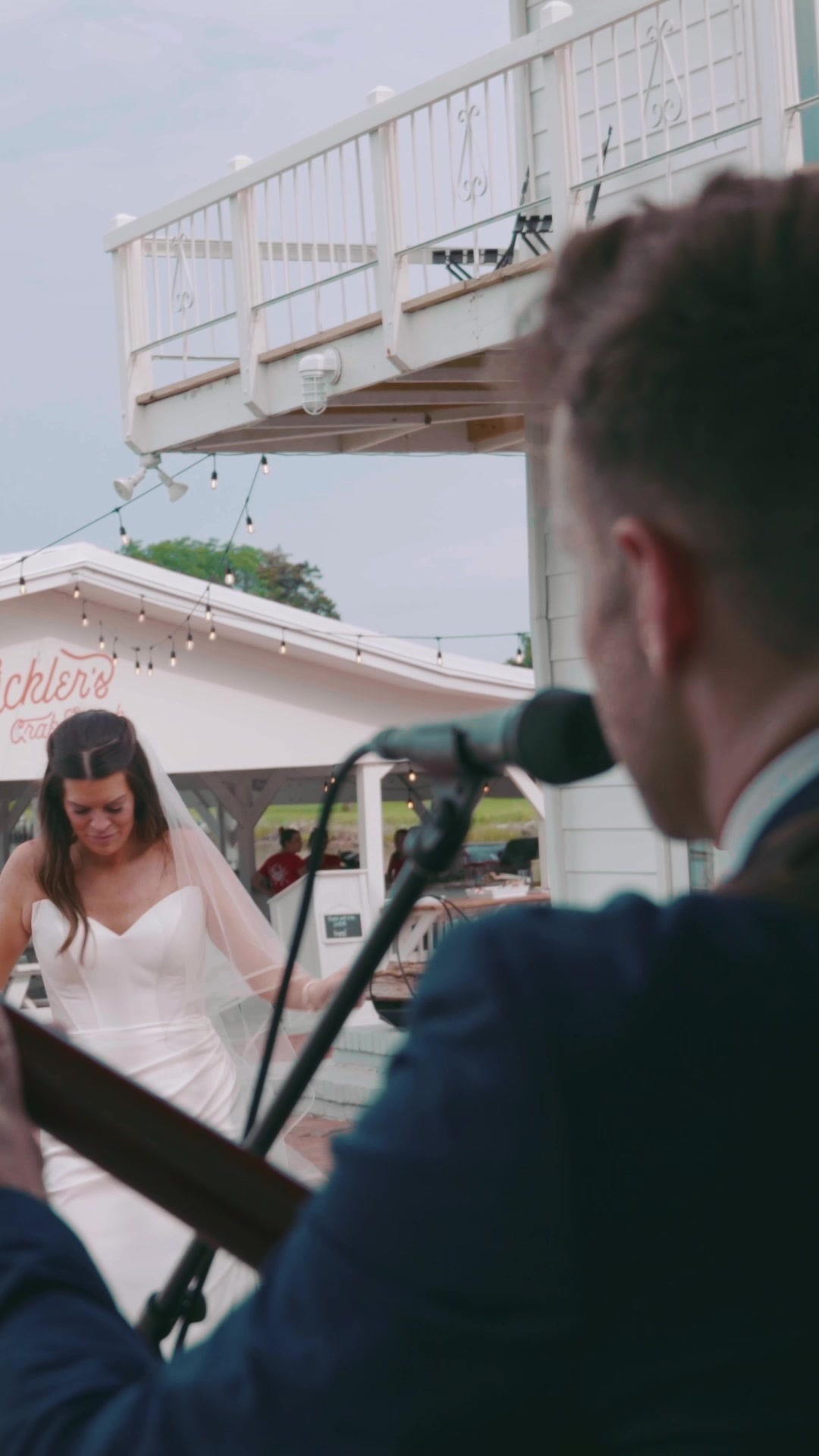
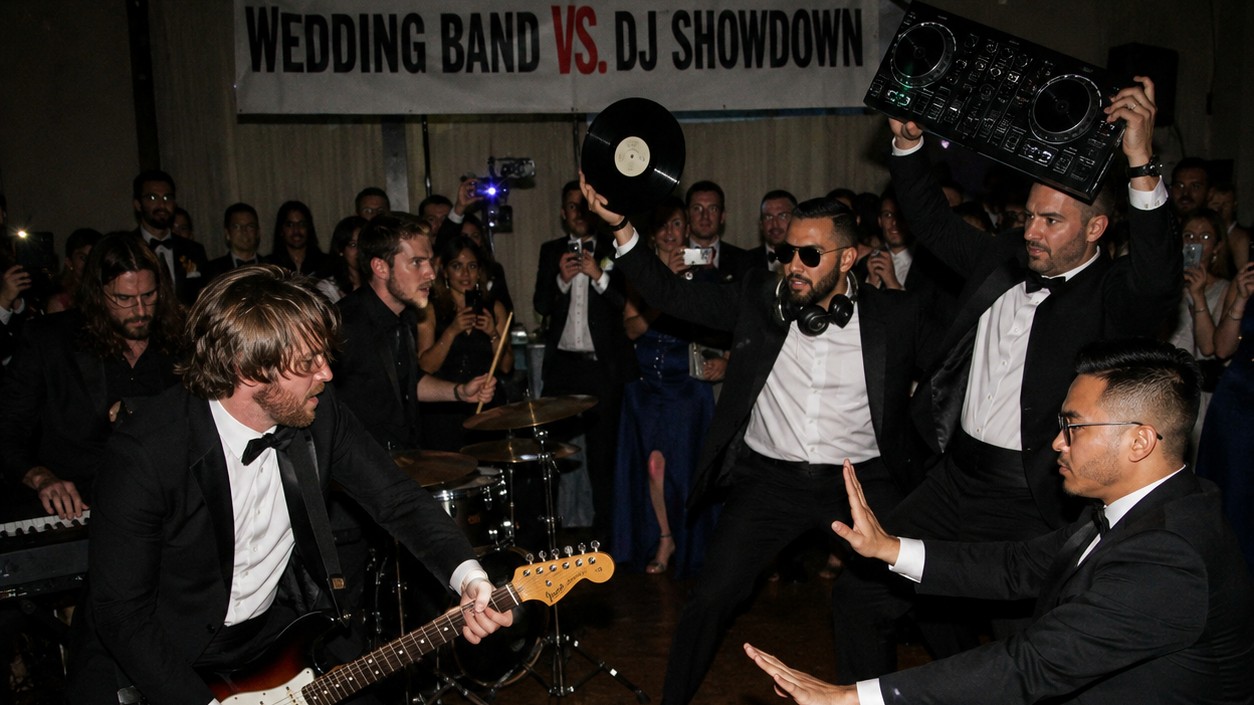
This is genuinely how I think about my own role at a wedding, and it is why I do the work the way I do. My job is not to hand you a package and tell you how a ceremony is supposed to sound. My job is to build the music around the two of you, whether that means a fully live sung version of the song you fell in love to, fingerstyle guitar under your vows, or a seamless move into a DJ set once the dancing starts. I perform as a wireless roaming musician who can move with your celebration rather than stay pinned to a stage, precisely so the day bends to you instead of the other way around. If you want a sense of how to think through that one choice, I wrote a full guide to choosing a wedding ceremony musician, and you can see the range of what live wedding music across DC, Maryland, and Virginia can look like. The right vendors are the ones who ask what you want before they tell you what is standard.
Frequently Asked Questions
Does spending more on a wedding lead to a happier or longer marriage?
No. Research in the journal Economic Inquiry found that higher wedding spending is actually associated with a higher likelihood of divorce, not a lower one (Francis-Tan and Mialon, 2014). It is a correlation, not proof of cause. What likely matters is motivation: money spent to impress others reflects a different mindset than money invested in what genuinely matters to you and the experience your guests will feel.
Do you need a big wedding to have a meaningful one?
No. The average wedding has shrunk from 131 guests in 2019 to about 117, and small celebrations of 50 or fewer nearly doubled their share of weddings over the last decade (Axios, 2025). Meaning comes from fit and intention, not headcount.
How do I deal with wedding planning stress?
Start by naming what is actually yours to care about and letting the rest go. Nearly half of couples in a Zola survey were stressed enough to consider skipping the big wedding entirely, which tells you the pressure is common and largely external. Decide what matters to the two of you, then measure choices against that, not against other people's weddings.
How do I stop comparing my wedding to what I see online?
Remember that only 3 percent of couples actually want a wedding built for online clout, even though social media influences most of them (Zola, 2025). The feed is a highlight reel with a marketing budget. Your wedding answers to you, not to an algorithm.
Is it okay to skip or change wedding traditions?
Yes. 95 percent of couples now say their wedding should feel authentic to who they are (The Knot, 2026). Keep the traditions that carry real meaning for you and retire the ones you are only doing out of obligation.
What should I actually spend my wedding budget on?
Spend on the things your guests experience and remember, and on the moments that matter to you as a couple, rather than on details that exist mainly for photos. The research consistently points toward well-attended, personal celebrations over expensive displays.
The Bottom Line
Your wedding is one day. Your marriage is the rest of your life. Plan the day so it honors the thing it is celebrating, and give yourself full permission to ignore the pressure, the comparison, and the expectations that were never yours to carry. Make it smaller or bigger, traditional or unconventional, quiet or loud. Just make it true. That is the only standard worth meeting, and it happens to be the one that the research, and 1,500 events of watching couples up close, both point to.
Blog Categories
Latest Blogs