Wedding Events
Wedding Cocktail Hour Music: The Complete Guide
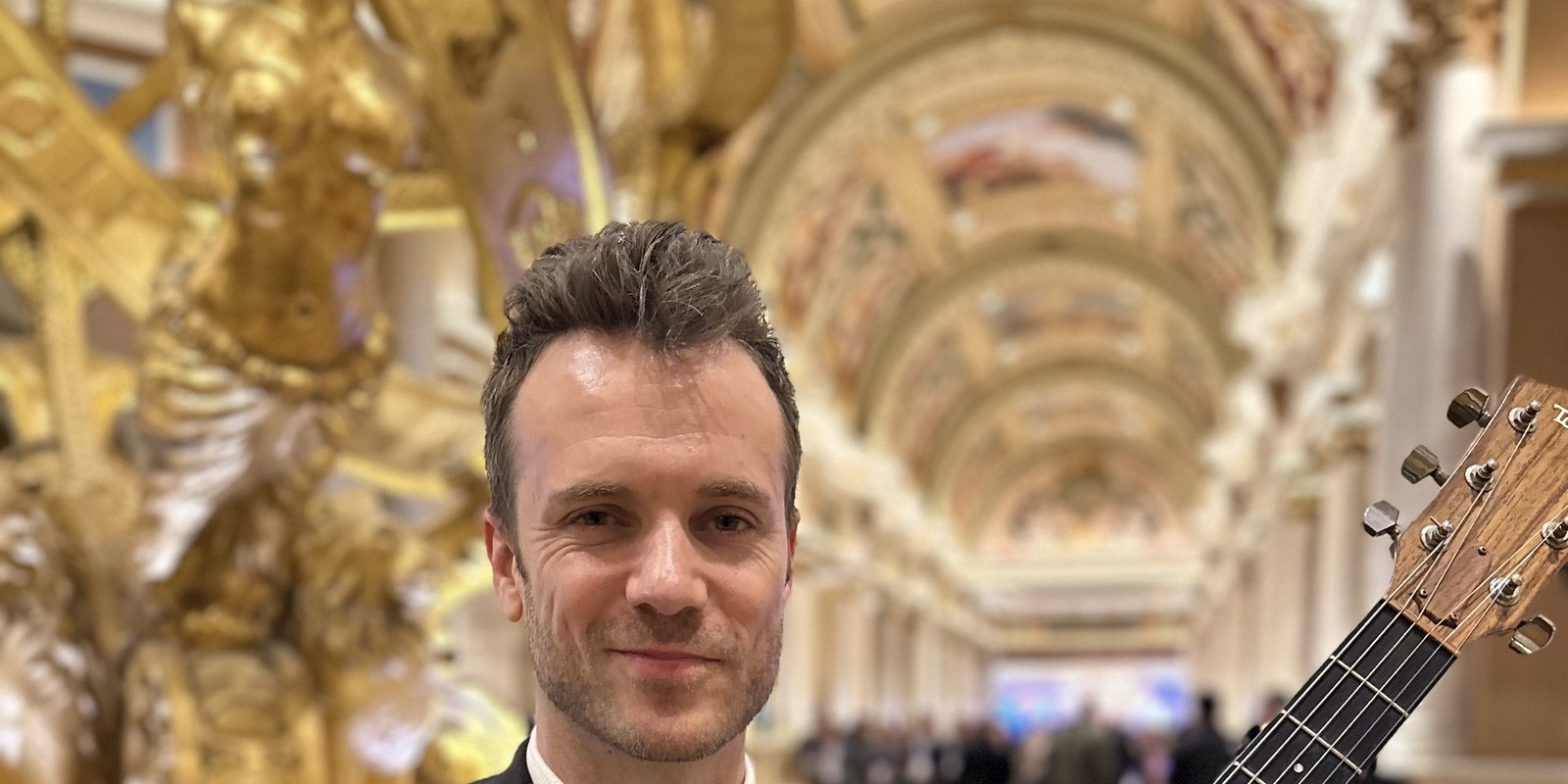
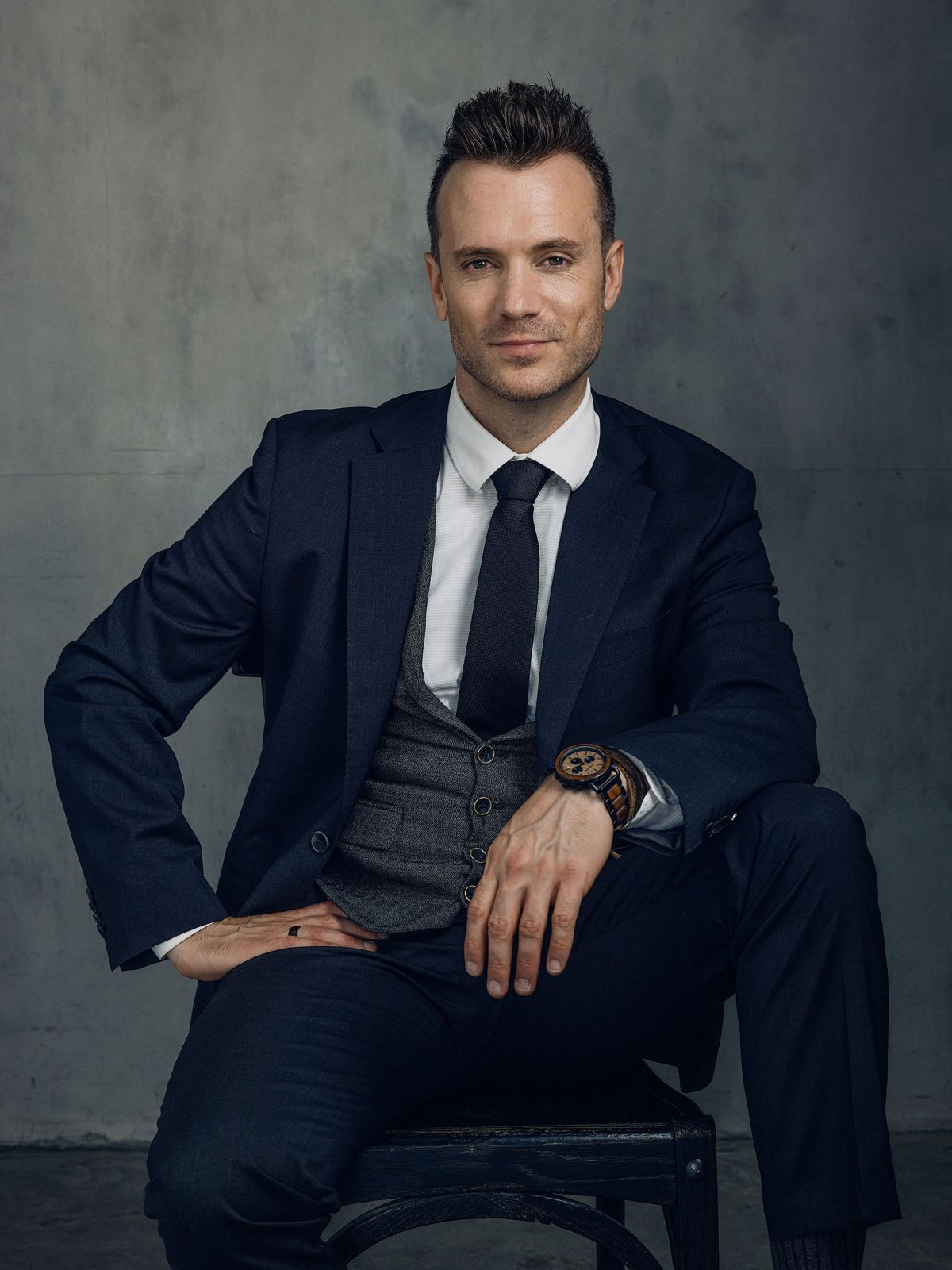
Dylan Galvin is a Berklee College of Music graduate, mentored by music legends John Mayer, Paul Simon and Livingston Taylor. Performing across the United States since 2009, now based in the DMV (Washington DC, Maryland, and Virginia), more than 1,500 events, including work for Coca-Cola, Wells Fargo, Lincoln, and CBRE.
There's a reason a room full of strangers starts to feel like a party exactly when the guitar starts playing.
Two couples can spend the same amount on a wedding, book the same caterer, and hire the same photographer, and still end up with completely different nights. The difference often comes down to the one hour nobody really plans for. Cocktail hour has no host and no program running it. Left alone, it either turns a room of strangers into a party before dinner starts, or it leaves them standing in small clusters, checking their phones, waiting for something to happen.
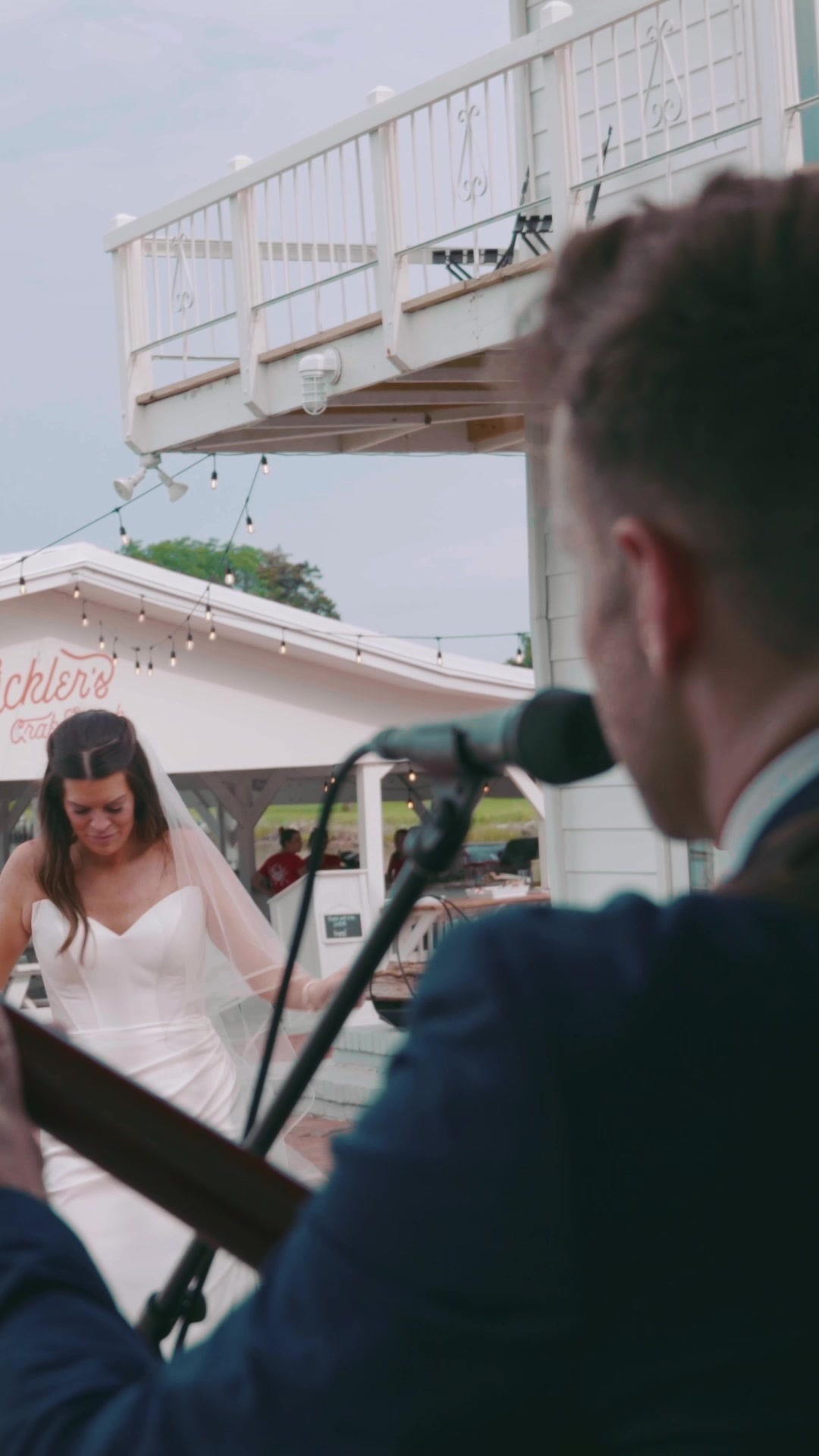
Live acoustic performance, ideally from a musician who moves through the room rather than staying planted in one spot, gives that hour its highest ceiling. It warms the room socially, creates a real first impression instead of an accidental one, and produces the kind of moment guests reach for their phones to capture. A well-curated playlist can hold the floor, but it cannot do those things. Here is what that actually looks like in practice, and why it matters more than most planning guides let on.
Psychologists at Princeton found that people form a snap judgment about a stranger in as little as one tenth of a second, and that giving them more time barely changes that first read. The same thing happens the moment your guests walk into cocktail hour. Whatever they hear in that first minute becomes the lens they view the rest of your event through, whether anyone planned it that way or not.
Key Takeaways
Cocktail hour is not a minor detail to fill in later. It is the first extended stretch of time guests spend together, and it quietly sets the tone for everything that follows.
Live acoustic music consistently outperforms a playlist for guest engagement, because a musician reads the room and adjusts in real time. A playlist cannot.
Volume matters more than song choice. Music that is too loud is the single most common cocktail hour complaint from guests.
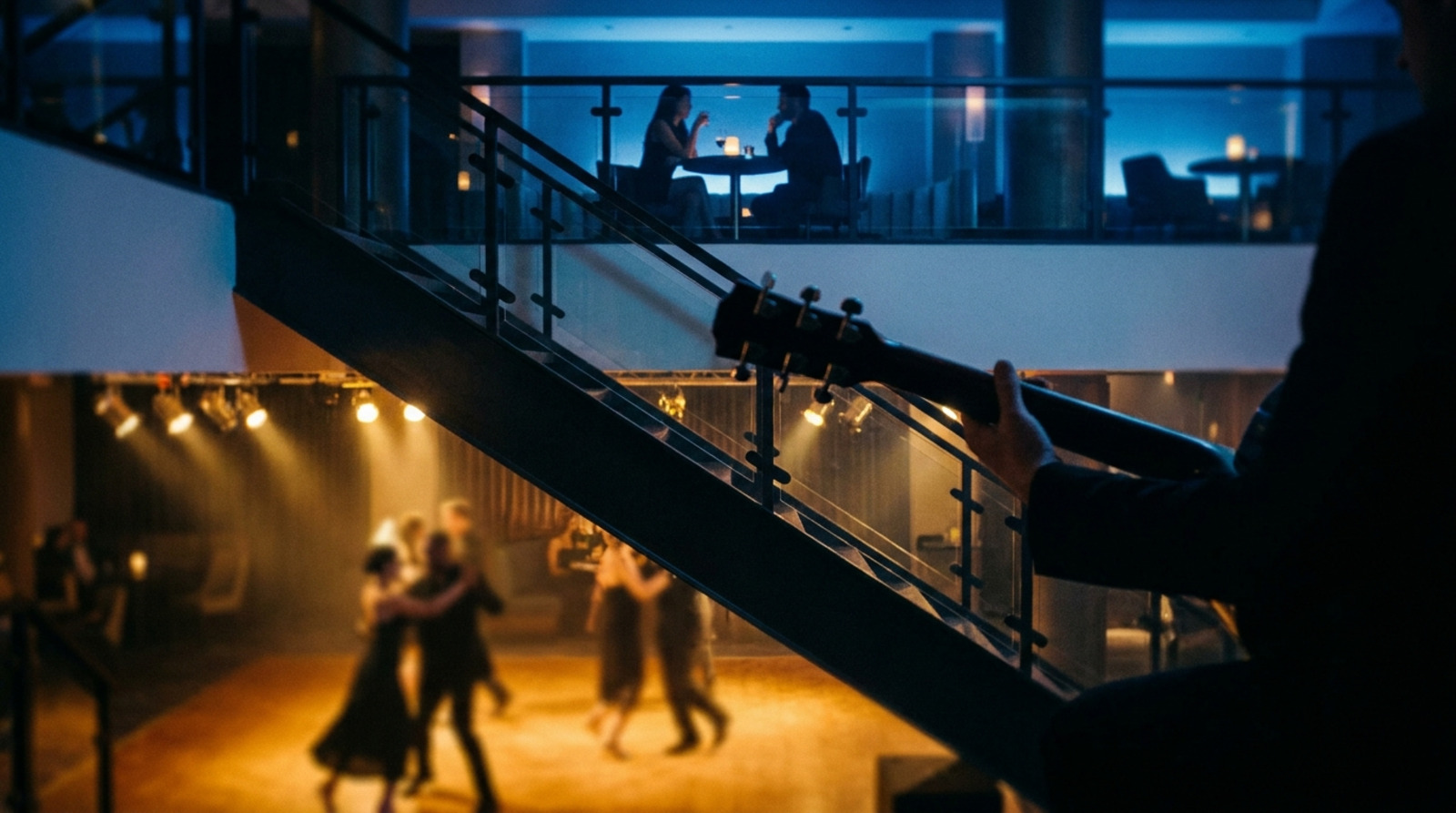
A roaming musician, wireless guitar, single tower speaker, brings the music to guests instead of making guests come to the music, which matters most at venues where people are spread across multiple rooms or floors.
A hybrid format, live music layered with DJ playback, gives you the warmth of a live performer during key moments alongside the wall-to-wall coverage a DJ provides the rest of the night.
The best cocktail hours produce a moment guests actually stop and film. That's not an accident, it's what a live performer creates that a playlist can't.
Book 6 to 12 months out for peak wedding season dates, spring and fall weekends.
What Actually Happens When a Room Warms Up
Fundraisers run on this whether organizers realize it or not. A guest who has already had one good conversation during cocktail hour bids differently than a guest who spent that same hour standing quietly near the bar. Planners who work galas and benefit dinners have learned to treat cocktail hour as part of the ask, not just the warm-up before it.
The same logic holds at a wedding. A guest who has already laughed with someone new during cocktail hour walks into the reception already primed to enjoy it, instead of watching from the edge of the room. Cocktail hour is the only part of the event built entirely around a room of people who mostly don't know each other yet. Get it right, and the reception already feels like a party before the first course arrives. Get it wrong, and no amount of decor in the next room fully closes the gap.
Live Music vs. Playlist: An Honest Comparison
A playlist is consistent and low-risk. A carefully curated set on a quality speaker system is a perfectly respectable choice for a small or informal gathering. The ceiling is just lower.
A live musician responds to the actual room in real time. When ten more people arrive than expected and the energy shifts, a musician reads that and adjusts, a slightly quicker tempo, a song with more lift. A playlist plays the same thing regardless of what's happening in front of it.
Live music also creates something a playlist cannot: a shared reference point. Did you hear what he just did with that chord becomes a conversation opener between two strangers standing near the music. That's not a coincidence, it's the entire mechanism behind why cocktail hour music works when it's done well.
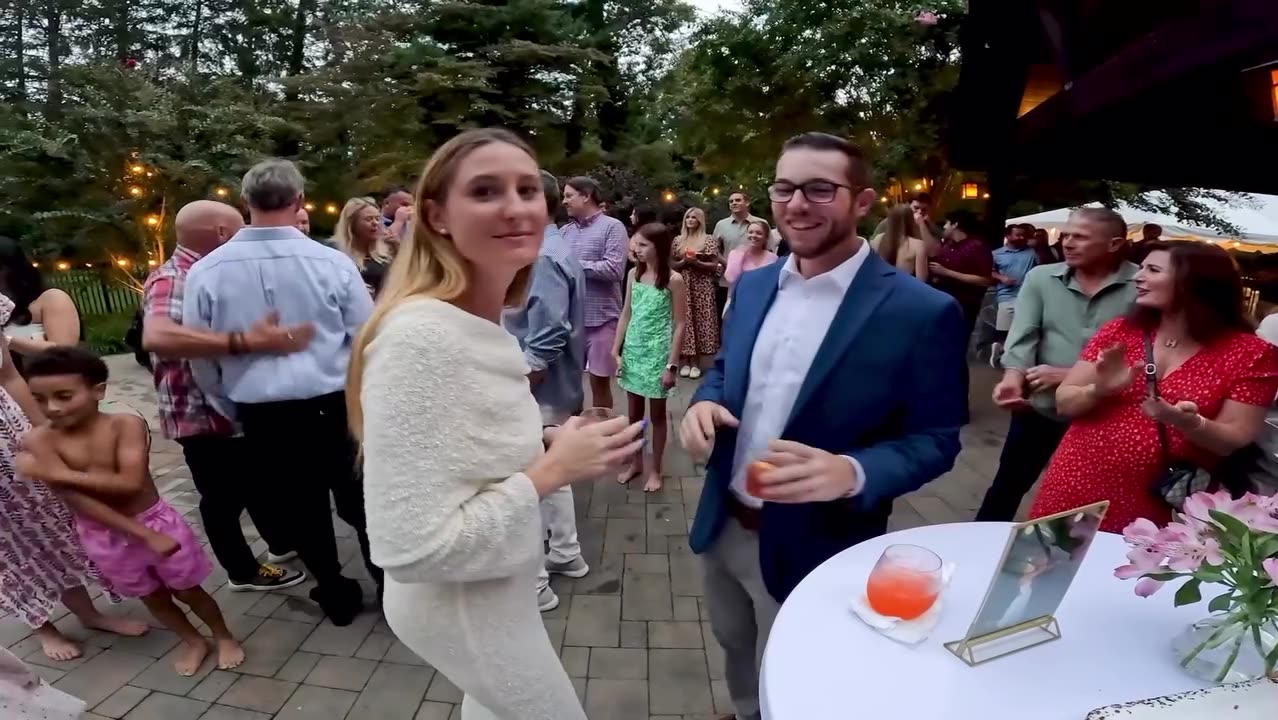
There's a specific moment worth naming directly: at some point during a good cocktail hour, a guest holds up their phone. When that happens because a live musician is doing something worth capturing, fingerstyle guitar, a live looping performance, a roaming set that comes right up to a small group, that clip becomes part of the event's story after the fact. A playlist never produces that moment. It can't.
The Roaming Musician Advantage
A roaming setup, a musician with a single professional tower speaker and a wireless guitar signal, changes that. Instead of guests coming to the music, the music comes to the guests. No stage or riser required. Setup takes about forty-five minutes.
This format is especially effective in:
Multi-space venues, hotel hallways, estates, museums, or venues with indoor and outdoor flow, where guests naturally spread across areas
Outdoor cocktail hours, gardens, waterfront venues, terrace setups, where sound coverage is inherently uneven
Smaller guest counts, under 80, where a roaming set feels personal instead of performative
Mixed-age groups, where the musician can read different clusters and adjust repertoire on the fly
Curious how one guitarist builds that full sound without a band? See how live looping works in practice.
A Genre Framework for Cocktail Hour Music
The genre of music matters less than the energy and responsiveness of the performer. That said, certain genres are better adapted to cocktail hour dynamics than others.
Jazz / Bossa Nova | Timeless, conversation-friendly volume, universally appropriate, ages well | Formal receptions, galas, mixed-age crowds | Fly Me to the Moon, The Girl from Ipanema, Autumn Leaves, Misty
Acoustic Pop / Singer-Songwriter | Familiar melodies elevated by live treatment; creates the phone-camera moment | Weddings, milestone birthdays, 25 to 45 demographic | John Mayer, Jack Johnson, Ed Sheeran
Oldies / Motown / Soul | Warm, nostalgic, cross-generational: the rare genre that lands with 25-year-olds and 75-year-olds simultaneously | Mixed-age weddings, anniversary parties | My Girl, What a Wonderful World, Can't Help Falling in Love
Modern Acoustic Covers | Current without being aggressive, guests recognize songs but aren't tired of them | Weddings, corporate receptions with younger guests | Acoustic fingerstyle treatments of current chart hits
Classical / Instrumental | Safe, elegant, ambient; creates refinement without personality | Formal galas, museum events, elevated corporate dinners | Bach, Debussy, Satie, classical guitar standards
A note on classical: it's the lowest-risk and lowest-ceiling choice. It rarely lands badly, but it also rarely produces the shared reference point or the arrival wow that other genres create.
GigSalad's 2025 booking data confirms the appetite: cocktail parties were one of its top five event categories that year, alongside weddings, birthday parties, and corporate events, and jazz bands were among its most-booked genres, right alongside violinists, DJs, cover bands, and mariachi bands. The demand wasn't limited to one style. It was broad, and it was growing.
The broader event industry context supports this. Amex Global Business Travel's 2026 Meetings and Events Forecast found that improving attendee experience with more memorable events is meeting professionals' top priority for the second year running, and that "more personalized experiences" is one of the ways attendee expectations have shifted the most over the last five years. A musician who shows up with context and plays to your specific room is personalization. A playlist is not.
How Loud Should Cocktail Hour Music Be?
Two people standing three feet apart should be able to talk normally without raising their voices. That's the benchmark. The single biggest mistake hosts make is leaving volume entirely to a venue's house system or an unsupervised playlist, the level creeps up, and conversation becomes impossible.
An experienced live musician manages volume actively throughout the hour, lowering it as the space fills with more guests and conversation, raising it slightly during natural lulls. That kind of real-time mixing is one of the most underrated benefits of hiring a professional over a fixed playlist or an unmonitored house system.
How to Brief a Musician for Cocktail Hour
This is the step most hosts skip, and it's where cocktail hour music most often underperforms. A musician with no context plays a generic set. A musician who's been properly briefed plays your event.
Guest demographics. Age range matters more than you'd expect, the choices that land for a crowd averaging 35 differ from those that land for a crowd averaging 60. Cultural background is also relevant: a crowd with a strong Latin music tradition, a Jewish family celebration, or a multigenerational Asian American guest list each have musical touchstones a prepared musician can honor. Share what you know.
Vibe goal. Warm and intimate and lively and celebratory call for different tempo and volume choices. Be specific.
Event timeline. When does cocktail hour start, and when does the transition to dinner happen? The musician needs to know whether they have 45 minutes or 75.
Indoor/outdoor and acoustics. Outdoor spaces with ambient sound (wind, traffic, water features) require more volume than a carpeted ballroom. Hard surfaces like marble floors, high ceilings, and brick walls create reverberation that requires a different EQ approach.
Energy arc. Arrival, first 15 to 20 minutes: relaxed and conversational. Mid-hour, next 25 to 30 minutes: slightly more lift as the room fills. Pre-transition, final 10 minutes: settle back to conversational warmth ahead of the dinner announcement.
Requests and favorites. If you have a few songs you'd love to hear, share them in advance, not as a demand but as a compass. Day-of requests from guests are fine too, telling guests "feel free to ask" turns the request process into part of the guest experience.
What not to ask for: concert-style volume that competes with conversation, a rigid set list with no room to read the room, or silence during setup and transitions.
Venue and Logistics (DMV Context)
Music should begin 5 to 10 minutes before the first guest arrives, the arrival experience starts the moment someone walks in. Cocktail hours in the DMV typically run 45 to 75 minutes, with a five-minute buffer built in on each end.
Dylan has performed cocktail hour and reception sets at venues including the Smithsonian Institution, the JW Marriott Reston Station, the Willard InterContinental Washington DC, and the rooftop of the Old Ebbitt Grill in Northwest DC. The DMV's spring and fall seasons make outdoor cocktail hours common, rooftop terraces, waterfront venues on the Potomac and Chesapeake, estate gardens, vineyard lawns, so confirm noise ordinances, power access, and plan for an outdoor level check before guests arrive.
For outdoor setups specifically, confirm the musician's power source, generator, venue outlet, or battery PA, in writing ahead of time, not day-of. For a stationary setup, plan for a small footprint, roughly 6 by 8 feet, with access to a standard outlet; a roaming setup needs no dedicated footprint at all, since the musician moves freely through the space.
The Transition to Dinner
The moment cocktail hour music ends is the last impression that music makes. Three common approaches:
Final song into announcement: the musician plays a natural closing song, lands the final note, and a coordinator or MC makes the dinner announcement into the silence that follows.
Fade and announce: music gradually lowers while the coordinator begins speaking.
Music continues through seating: ambient music plays softly while guests find their seats, stopping once everyone is settled.
Brief the musician on which approach you want. A musician who knows the plan will set it up perfectly.
Common Mistakes to Avoid
Assuming a Bluetooth speaker and a phone playlist is a safe, no-risk choice. Dead air, awkward transitions, and connectivity issues are common problems hosts don't anticipate.
Believing louder music equals a better party. During cocktail hour, guests want to talk and reconnect, not shout over the music.
Choosing songs based only on personal favorites without considering how they translate to an acoustic, background setting.
Waiting until a few weeks before the event to book. Popular musicians are often booked out many months in advance.
Treating cocktail hour as an afterthought compared to the reception, when it's often the first true impression guests form of the event's tone.
Expert Tips
Share your must-play and do-not-play lists ahead of time, but leave room for the musician's professional judgment on pacing and transitions.
Ask any musician you're considering for a video or audio sample specifically from a cocktail hour set, not just a reception dance set.
Coordinate timing with your photographer or planner so music cues, guests seated, wedding party arriving, are seamless.
If your ceremony and cocktail hour are in different locations, confirm setup and travel time so there's no gap in music when guests arrive.
Watch full-length performance clips rather than short highlight reels to judge how a musician actually holds a room for a full hour.
Before You Book: More Resources
For the full picture on vetting musicians, reviewing contracts, and understanding what a professional live entertainment engagement should include, see the musician hiring and vetting guide.
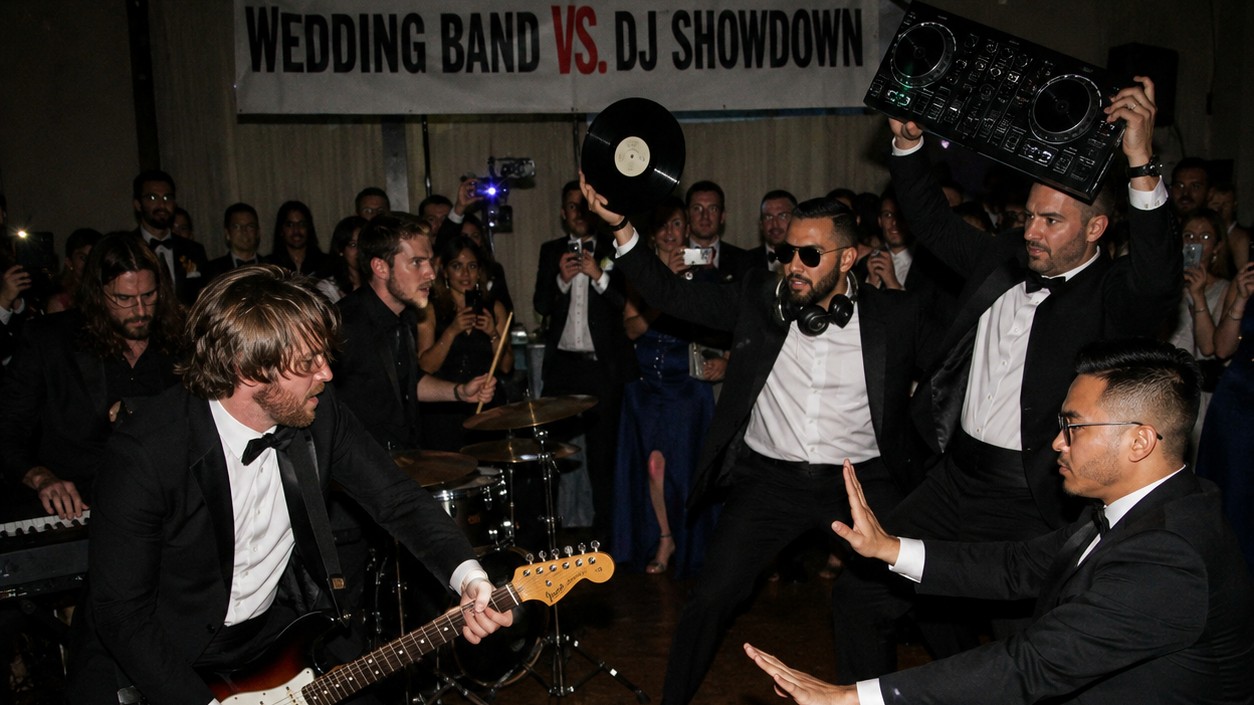
If you're still weighing cocktail hour entertainment against DJ coverage or a full band for later in the evening, the event entertainment format guide covers that decision with a head-to-head comparison and a third-option framework most planning guides miss.
See the Event Type Matching Guide on the Complete Event Entertainment Guide to map your specific event type to the right entertainment format.
Frequently Asked Questions
Do we need a separate musician for cocktail hour if we already have a DJ or band for the reception?
Not always, but many couples choose the same acoustic musician for both the ceremony and cocktail hour because it creates a consistent atmosphere throughout the day. Instrumental guitar naturally complements the ceremony, while live vocals during cocktail hour help guests relax into the transition.
Can cocktail hour music include songs with lyrics, or does it have to be instrumental?
Both. Most cocktail hour sets blend instrumental pieces with lightly sung, familiar songs. The key is choosing arrangements and volume levels that support conversation rather than compete with it.
How far in advance should we book cocktail hour music?
Six to twelve months out is a safe timeline, especially for weekend dates in spring, summer, and fall. Popular musicians in high-demand markets book up quickly.
What if it rains or the venue changes location last minute?
Experienced musicians build flexibility into their equipment and setup, including portable, weather-appropriate sound systems, so a location change or weather shift doesn't have to disrupt the music.
Can we request specific songs or a custom arrangement for cocktail hour?
Yes. Most professional musicians welcome specific requests and can often learn a meaningful song or create a custom acoustic arrangement with enough advance notice.
Conclusion
Cocktail hour music is not a minor detail to fill in later. It's the first extended stretch of time guests spend together, and it quietly shapes how the rest of the event feels, whether that's a wedding reception, a corporate reception, or a room full of strangers about to be asked to open their wallets for a good cause. Choosing the right musician, the right volume, and the right pacing turns an easily overlooked hour into one of the most talked-about parts of the day.
Dylan Galvin brings Berklee-trained musicianship and 1,500+ live performances across Washington, DC, Virginia, and Maryland to every cocktail hour. Learn more about Dylan's background and training, explore wedding music services, and browse more insights on the blog.
Planning cocktail hour for your event? Get in touch to check availability for your date.
Blog Categories
Latest Blogs