Live Entertainment for Anniversary Parties: How to Choose the Format That Fits
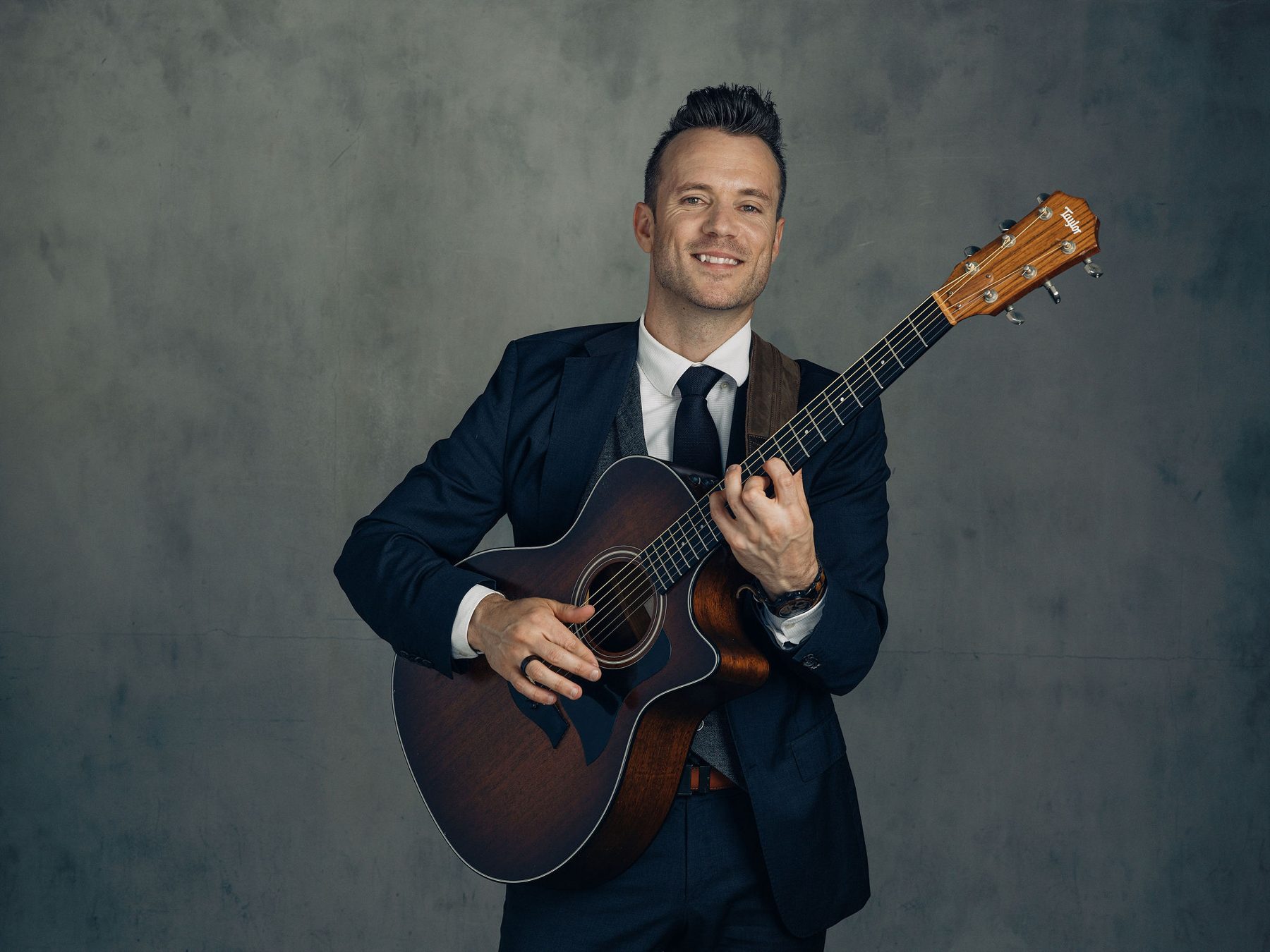
Dylan Galvin is a Berklee College of Music graduate, mentored by music legends John Mayer, Paul Simon and Livingston Taylor. Performing across the United States since 2009, now based in the DMV (Washington DC, Maryland, and Virginia), more than 1,500 events, including work for Coca-Cola, Wells Fargo, Lincoln, and CBRE.
Here's a mistake I see more often than I should: someone books a four-piece band for a 55-person anniversary dinner, and by 8:30 the couple of honor is leaning across the table trying to have a conversation they've been waiting years to have. The band sounds great. The room is just wrong for it.
Live entertainment that's too big for a space doesn't become the memorable part of the evening. It becomes the part guests tactfully don't mention afterward.
Anniversary parties have specific needs that most entertainment guides overlook, not because the topic is complicated, but because most guides are written for weddings and corporate galas, which have different dynamics entirely. This one is specifically for milestone celebrations: 25th anniversaries, 40th, 50th, company milestones, landmark birthdays that deserve the same treatment.
What Makes Anniversary Parties Different from Other Private Events
The obvious answer is sentiment. Anniversary celebrations mark a milestone that actually means something to the people in the room. But from an entertainment standpoint, the more relevant differences are structural.
Anniversary guest lists tend to be multigenerational in ways most events aren't. A 30th wedding anniversary draws people who shared a dorm room with the couple and people who met them for the first time at their kids' soccer games. A corporate anniversary gala might seat a 28-year-old junior associate next to a board member who was there at the company's founding. The entertainment has to move through that range without landing awkwardly at either end.
The vibe goal is also different. Most anniversary parties are built around connection and reflection: people catching up, couples enjoying a moment that doesn't happen every day, a genuine celebration of something that lasted. High-energy dance programming can work, but it usually competes with that goal rather than supporting it. The music should make the room feel warmer, not louder.
And the scale is smaller than people often plan for. Most anniversary celebrations run 40 to 120 guests, a size that changes the entertainment equation in ways that matter.
DJ, Live Band, or Solo Musician: The Honest Comparison
A DJ is the safest choice if your primary goal is musical range and flexibility. Every decade, every genre, every tempo, a good DJ handles it without issue. The downside isn't quality, it's presence. A DJ at an anniversary party is functionally ambient. Guests are aware music is playing, but they're not engaged with a performer. For some events that's exactly right. For others, it's a ceiling.
A live band raises that ceiling considerably. Four or five musicians create undeniable energy and a visual anchor for the evening. If you're planning a 200-person anniversary gala with a dance floor as the main event, a live band is probably your answer. The complications are logistical: bands need stage space, extended load-in windows, usually a venue coordinator who's done this before, and a budget to match. In the DC metro area, expect to start at $4,000 for a four-piece and go from there.
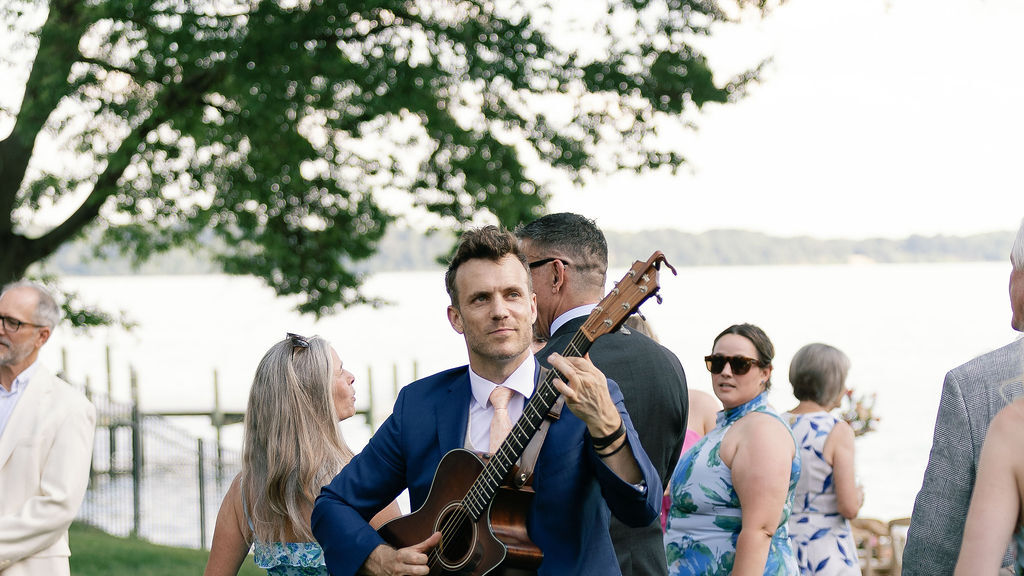
The most underrated option for anniversary parties specifically is a skilled solo musician. One performer, acoustic guitar, vocals, or both, fills a room with something a playlist cannot replicate: actual human presence. Guests who walk near the performance area notice. The couple of honor gets serenaded rather than sound-tracked. The format scales naturally to the size of most anniversary celebrations, sets up in under 20 minutes, and works in venues where a full band would be complicated or overwhelming.
The format question isn't really about quality. It's about fit. A band in a 60-person dining room is wrong. A playlist at an intimate anniversary dinner feels like a missed opportunity. A solo musician calibrated to the room is often exactly right.
Matching the Entertainment to Your Event
There's no formula, but there are useful starting points.
For 40 to 75 guests, a solo musician is the strongest choice for most anniversary celebrations at this size. The performance scale matches the intimacy of the room. Every guest has a chance to experience the music personally, not from across a ballroom. Setup is minimal and the evening flows around the performance rather than being reorganized for it.
75 to 150 guests opens up more options without necessarily requiring a full band. A guitar/violin duo, a pianist with a vocalist, or a jazz trio can fill the room with richer sound while keeping the setup manageable and the intimacy intact. This range also supports a solo musician comfortably if the venue has good acoustics.
Above 150 guests, especially if dancing is part of the plan, a live band makes more sense. The room has room for it, and the visual and sonic presence of a full ensemble fills the space appropriately.
Outdoor venues deserve special mention. Private estates in Northern Virginia, waterfront properties on the Chesapeake, vineyard venues in Loudoun County: these spaces are beautiful and acoustically complicated. Hard surfaces reflect sound unpredictably. Wind and ambient noise change throughout the evening. A musician who performs wirelessly and can adjust to the room in real time handles outdoor anniversaries very differently from one who shows up expecting a controlled indoor environment. Ask specifically about outdoor experience before booking anyone for a garden or terrace event.
What a Milestone Celebration Actually Looks Like
Standard event entertainment anchors the performer to a stage or a corner of the room. The music is good. Guests who walk near the performance area notice. Everyone else experiences it as background.
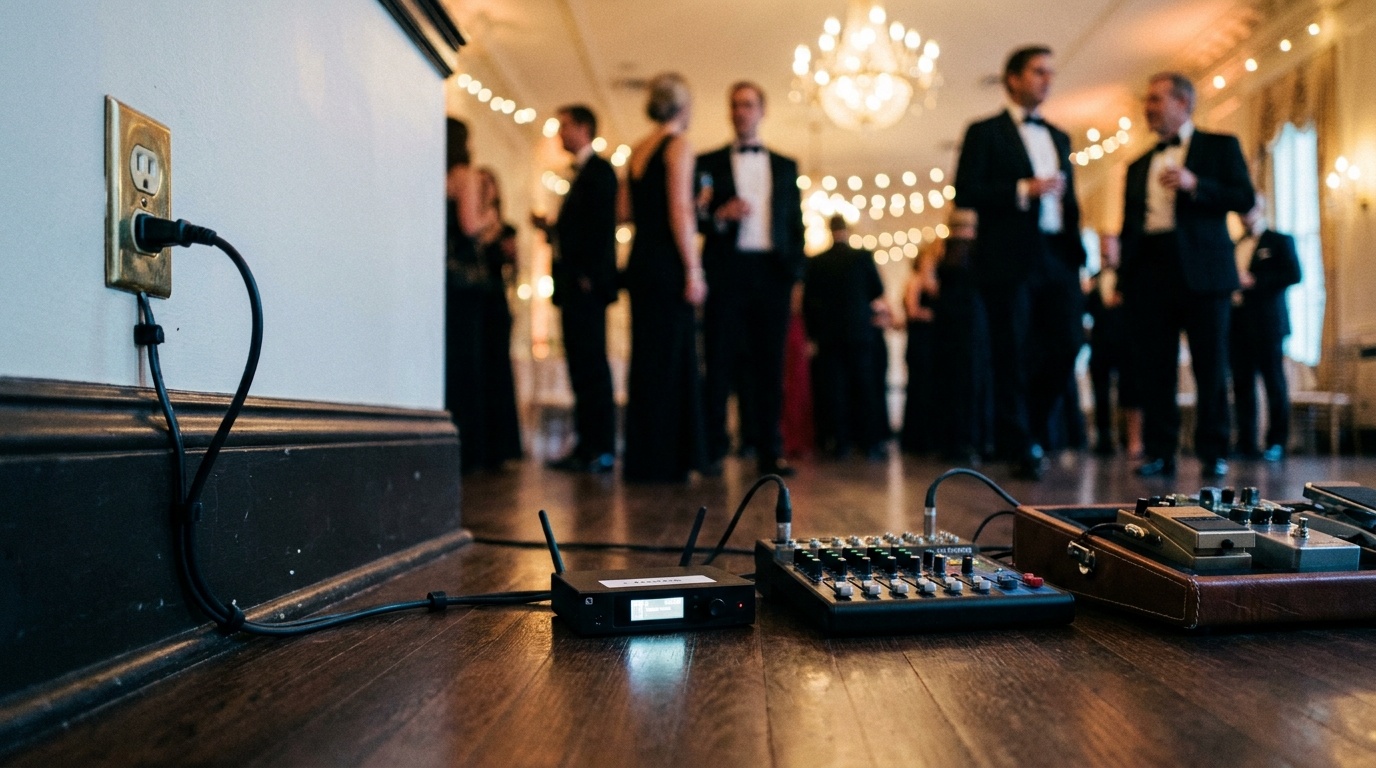
A roaming musician, using a wireless instrument rig and a battery-capable speaker, changes this in a way that's hard to fully appreciate until you've seen it happen.
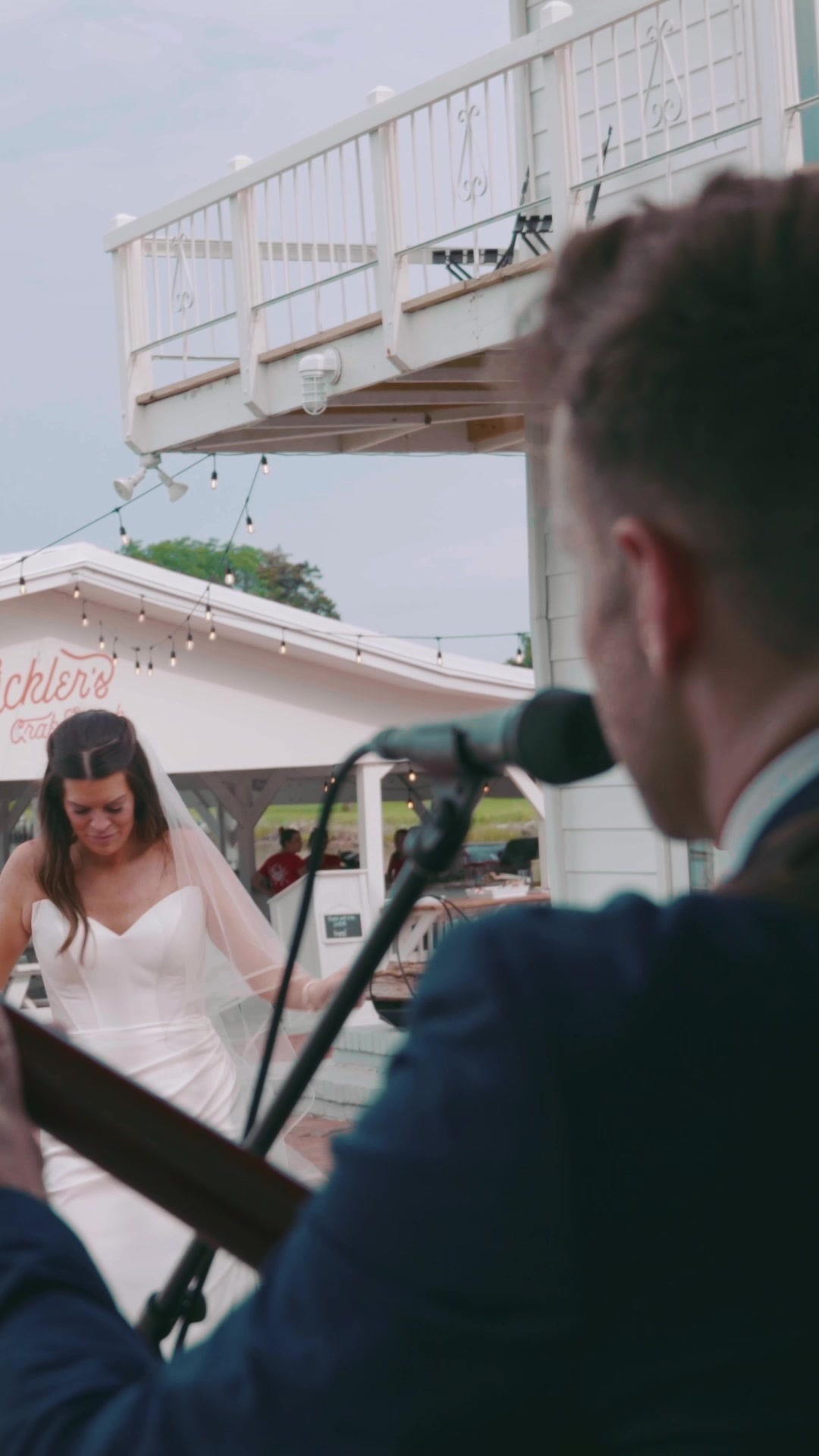
Dylan played a 49th anniversary dinner earlier this year at L'Auberge Chez Francois in Great Falls, Virginia, a French restaurant that's been family-owned since 1954 and consistently ranks among the most romantic restaurants in the DC area. The client arranged for Dylan to come strolling out from the background while the couple sat together on a small bench along the side of the property. He opened acoustically with "Al Di La," one of the couple's favorite old Italian songs, played close enough that it was just for them while they sat and reminisced. Then, as they stood and slow danced, he moved into "Can't Help Falling in Love with You." The whole thing was captured on video. It closed out the evening right around dessert, which is exactly the kind of moment that makes live performance worth building the timeline around.
That's the difference between a performer and a soundtrack. It doesn't happen from a stage across the room.
For a deeper look at how format affects event experience, including the psychology of live music in social settings, see the DJ vs. Live Band vs. Solo Musician comparison.
What Anniversary Party Entertainment Costs in the DC Metro Area
Real numbers for the DMV market, as of 2026:
Solo acoustic musician (guitar, vocals, or both): $2,500-$3,500 for 2-3 hours, depending on date, travel, and event complexity. Anniversary parties typically don't carry the same depth of planning (ceremony timing, processional cues, first-dance choreography) that drives wedding pricing higher, so the range runs lower than a typical wedding booking.
Guitar/violin or piano/vocal duo: $2,500-$5,500.
Jazz trio: $3,000-$6,500.
Four-piece live band: $4,000-$9,000+, not including production costs.
DJ: $1,500-$6,000 for an experienced professional; most quality DMV bookings land between $2,500 and $4,000. Anything under $1,500 is typically an entry-level or budget operator, not the tier you want for a milestone event.
Most event professionals suggest allocating 15-20% of total event spend on entertainment when it's meant to be a meaningful part of the occasion. The more common mistake is booking entertainment last with whatever remains after venue and catering. That almost always means compromising on the thing guests are most likely to remember six months later. Research from EventMB, cited in a 2026 uRequest Live industry analysis, found that entertainment is the first thing guests recall about a private event, ahead of the venue, the food, and the décor.
What to Actually Ask Before You Book
Most people planning their first milestone celebration don't know what a musician's quote is actually supposed to include, or how to tell a reliable booking from a risky one. A few questions cover most of the ground:
- What's actually included in the quote? A solo booking should be clear about hours, breaks, whether a PA system is provided, and how much repertoire flexibility is built in. Buyers are frequently surprised after the fact by add-ons they didn't know to ask about, whether it's extra time, a meal for the performer, or a narrower song list than expected.
- Can you adjust your volume for ambient performance? Anniversary parties aren't concerts. The music should support conversation, not compete with it. If a musician's experience is primarily bar gigs or festival stages, they may not know how to do this, and it's a harder adjustment than it sounds.
- What's your actual setup time, and what space do you need? A solo performer with a professional wireless rig should be ready in 20 minutes and require no dedicated stage area. If the answer involves 90-minute load-ins or platform requirements, you're dealing with band logistics priced as a solo musician.
- How do you prepare for meaningful songs? The right answer involves a pre-event conversation about songs significant to the couple or occasion, flexibility on the night, and judgment about when to play them. "I'll take requests" is not the same answer.
- What's your contingency plan if you're sick or your gear fails? Every professional has one. If the answer takes longer than 30 seconds to produce, that's information. This is also the single biggest source of buyer anxiety in hiring a musician for a one-time event, since there's no redo.
For the full pre-booking checklist and what to watch for in musician contracts, see the complete guide to hiring a musician.
A Note on DMV Venues
A few real venues where Dylan has performed, spanning the range of settings anniversary parties tend to land in:
The Willard InterContinental, downtown DC. A formal hotel setting where a solo musician with a self-contained wireless rig simplifies coordination considerably: no venue sound system required, no contract addendum for a band PA.
Old Ebbitt Grill, steps from the White House. Washington's oldest saloon (established 1856), a historic and lively setting for a smaller, more casual anniversary gathering.
Fleetwood Farm Winery, Loudoun County, Virginia. A working farm winery with the acoustics and noise-ordinance considerations typical of the region's vineyard venues. A solo acoustic performer generally clears local decibel limits without issue; a full band PA system often doesn't.
Inn at Perry Cabin, St. Michaels, Maryland. A waterfront property on Maryland's Eastern Shore where outdoor logistics (wireless power, battery speaker, weather contingency) matter as much as the performance itself.
Ask any musician directly how they handle outdoor and venue-specific logistics before booking, especially for a waterfront, garden, or historic property with its own AV rules.
For a complete overview of entertainment options by event type, see the Complete Guide to Live Entertainment for Events in DC, Maryland, and Virginia.
FAQ: Anniversary Party Entertainment
What type of entertainment is best for an anniversary party?
For most anniversary celebrations in the 40-to-100-guest range, a live solo musician (acoustic guitarist, vocalist, or both) is the strongest fit. The format is intimate, works in virtually any venue, and creates personal moments that guests remember long after the event. For larger celebrations where dancing is the primary activity, a live band becomes more appropriate.
How much does live entertainment cost for an anniversary party in DC?
A professional solo musician for a DC-area anniversary party typically runs $2,500-$3,500 for a 2-3 hour performance, lower than typical wedding pricing since anniversary events usually don't require the same depth of planning. A four-piece live band starts around $4,000 and increases from there. Industry planning benchmarks suggest 15-20% of total event spend on entertainment when it's meant to be a meaningful part of the evening.
What's actually included when you book a solo musician?
A clear quote should spell out performance hours, whether a PA system and setup are included, how breaks work, and how much say you get over the song list. This is the single most common source of confusion for first-time buyers: assuming things like MC duties, extended time, or full song customization are automatically included when they're not. Ask directly rather than assuming.
How do I find a musician I can actually trust for a milestone event?
Word-of-mouth referrals from a venue or planner are the most reliable filter, followed by real performance video (not just polished photos) and reviews you can verify are from actual clients. A musician who answers questions clearly and specifically, rather than in generic marketing language, is usually a good early signal.
What happens if the musician cancels or gets sick?
Ask this directly before you book. A professional should have a real backup plan, not a vague reassurance. See what actually happens if your musician doesn't show up.
How far in advance should I book a musician for an anniversary party?
For spring and fall dates, April through May, September through October, book at least 4-6 months out. These are peak months for private events in the DMV and the performers worth booking fill up quickly. Summer and winter dates generally allow more flexibility; 2-3 months is usually workable.
Can a solo musician fill a room of 80 guests?
Yes, comfortably. A professional solo musician with a quality wireless PA fills a room of 60-100 guests at ambient performance levels without difficulty. A roaming setup ensures every part of the room gets the performance, not just the area near the stage.
What songs can a live guitarist play at an anniversary party?
A professional performing guitarist covers a wide range of decades, 60s and 70s classics, 80s standards, 90s acoustic, and modern material, and prepares songs meaningful to the couple or occasion in advance. Sharing a list of 5-10 significant songs before the event is standard practice and is the single biggest factor in whether a performance feels personal or generic.
The Bottom Line
The format question, DJ, band, or solo musician, is really a fit question. What's the right scale for this room, this guest count, this vibe goal? For most anniversary celebrations in the 40-to-100-guest range, a skilled solo performer is the strongest available choice: intimate enough to feel personal, capable enough to carry a full evening, flexible enough to work in any venue without production complications. Done well, it's the kind of moment a couple describes years later as the part of the night they remember most.
See how private and corporate event live music works across formats and venue types, beyond the anniversary-specific breakdown above.
Dylan Galvin Entertainment serves anniversary parties, private dinners, and milestone celebrations across DC, Maryland, and Virginia. View private event entertainment.
Blog Categories
Latest Blogs