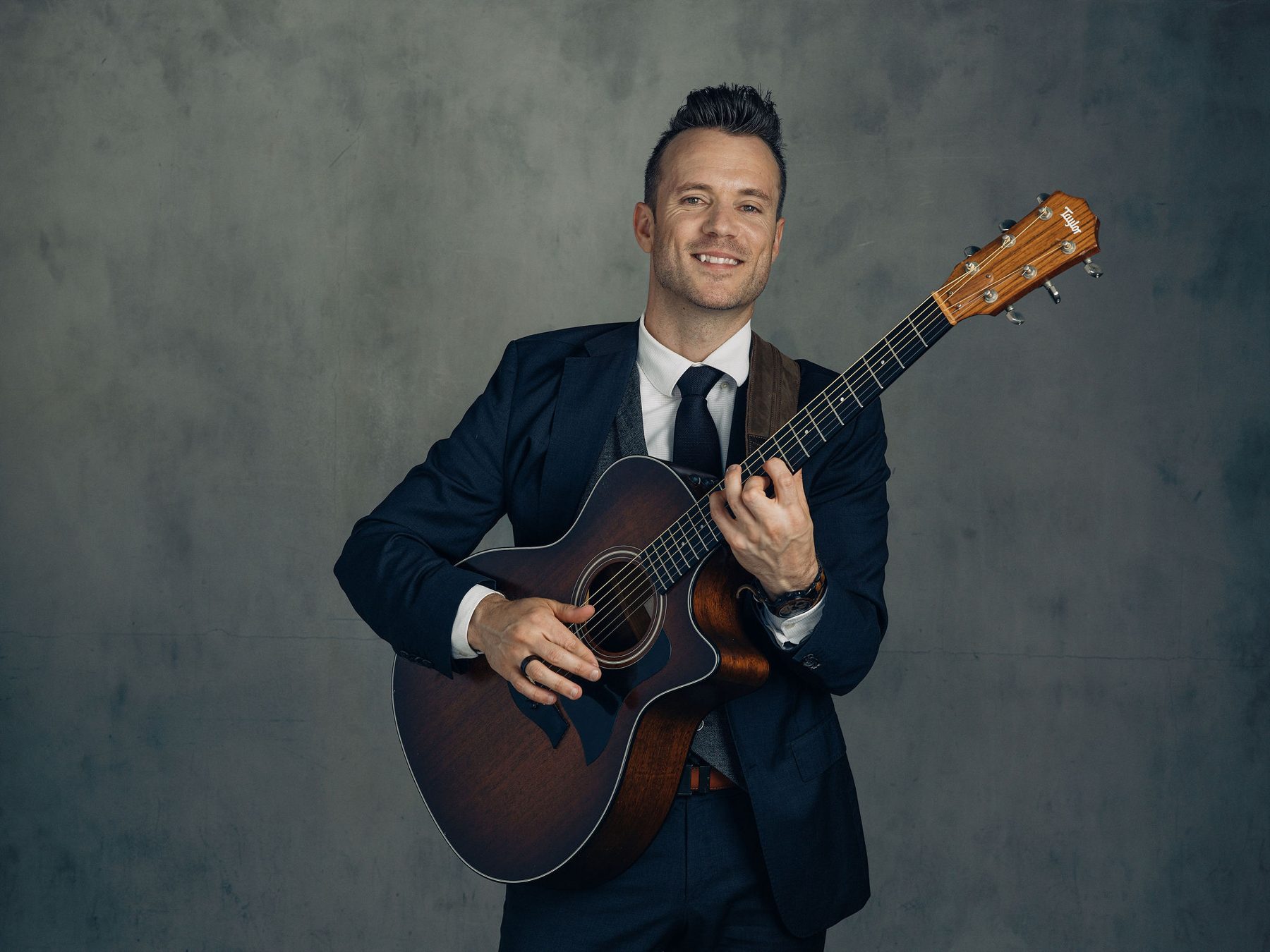
Live Music for Corporate Events: What to Know Before You Book a “Corporate Band”
Why Companies Invest in Live Music at Corporate Events
A corporate event playlist does the job. Live music changes the job entirely.
The difference is not about volume or song selection. It is about the signal that live entertainment sends to everyone in the room. When a company books a live musician for a corporate event, guests register it immediately — as an investment in the experience, a deliberate choice about how the evening should feel, and evidence that the organization values the people it has invited.
Event planners who work with corporate clients consistently report the same pattern: the post-event feedback for events with live music centers on atmosphere, energy, and how the event felt. Playlist events receive feedback about food, logistics, and venue. The entertainment is invisible when it is ambient and noticed only when it is live.
This article covers what corporate event planners need to know about booking live music, including which event types benefit most, what to expect from a professional musician, and how the booking process works for DC-area corporate events.
Which Corporate Events Benefit Most from Live Music
Holiday Parties and Year-End Celebrations
Holiday parties are the highest-stakes social event in a company's calendar. Attendance matters. Atmosphere matters. The event is often the only time employees from different departments, locations, or levels of seniority share the same space in a social context. A live musician anchors the room, fills the space between conversations, and gives guests something to notice and respond to beyond the food and the open bar.
For companies that want their holiday party to land as a genuine celebration rather than an obligatory gathering, live music is the single highest-leverage investment in atmosphere.
Client Appreciation Events and Private Dinners
Client-facing events carry specific risk. The experience reflects directly on the company’s brand, values, and attention to detail. A playlist at a client dinner is functional. Live acoustic guitar creates a different category of experience — sophisticated, curated, and clearly intentional.
Private dinners with live music benefit particularly from a solo acoustic musician, whose volume and presence complement conversation without competing with it. The goal of a client dinner is relationship-building, which requires guests to be able to talk. Live acoustic performance occupies exactly the right register: present enough to establish atmosphere, restrained enough to allow conversation to move freely.
Product Launches and Brand Activations
Live entertainment at product launches and brand activations serves a different function. Here, the music is part of the brand experience — it shapes how guests feel about the product or service being introduced, and it creates the kind of ambient energy that makes a launch feel like an event rather than a presentation.
The specific playlist selection and performance style can be calibrated to the brand identity: contemporary and polished for a technology launch, warm and classic for a luxury goods unveiling, upbeat and celebratory for a consumer product debut.
Conferences, Summits, and Awards Ceremonies
Live music at conferences typically serves transition moments: the pre-conference cocktail reception, the dinner that follows a day of sessions, or the awards ceremony that closes the event. These moments benefit from a performer who can read the energy of the room — tired professionals at the end of a full day need a different approach than the same group celebrating after an awards presentation.
A professional corporate event musician adapts in real time. The tempo, volume, and energy shift as the room shifts, without requiring a sound engineer to receive and implement feedback.
Networking Events and Executive Receptions
Networking events have a specific challenge: guests need to be comfortable enough to initiate conversations with strangers. Live music reduces social friction in a way that silence or ambient background noise does not. The presence of a performer gives guests something to acknowledge to each other — a natural opening — and creates a social environment that feels managed and intentional rather than awkward.
What Live Music Delivers That a Playlist Cannot
A Human Presence in the Room
The most significant difference between a live musician and a playlist is not sonic — it is human. A live performer is a person making decisions in real time, responding to the energy of the room, noticing when the atmosphere shifts, and adjusting accordingly. That responsiveness is invisible to most guests but felt by everyone.
Playlists are static. A professional musician is interactive, even when they are not speaking a word.
Roaming Performance, Not a Fixed Stage.
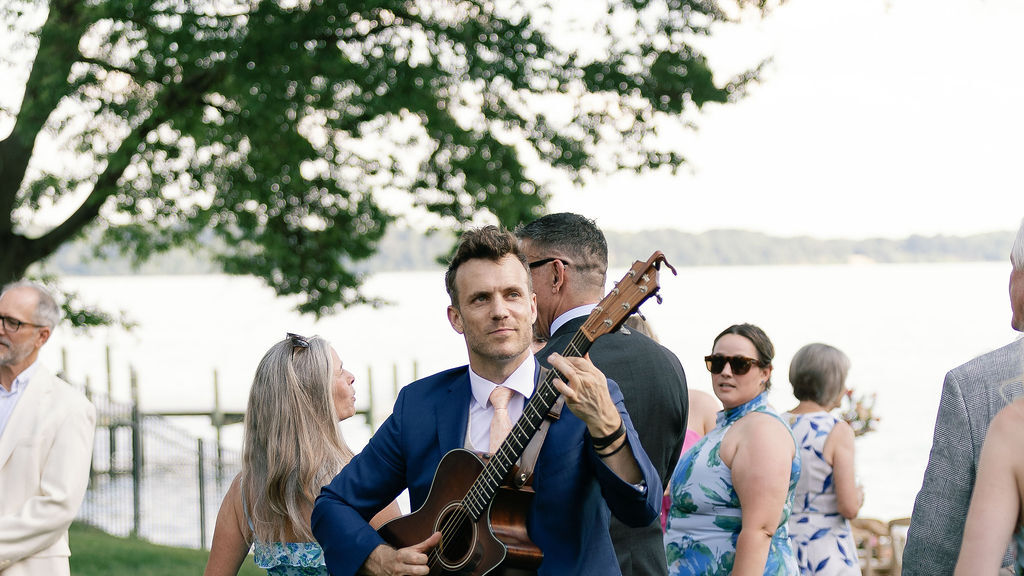
Dylan's corporate performances are built around wireless guitar and vocals, moving through the room rather than staying planted on a stage. Guests interact with the performer directly instead of orienting toward a fixed point, conversations form naturally around wherever he is in the room, and the event feels dynamic throughout instead of concentrating energy in one spot. This format works especially well for cocktail receptions, networking events, and any portion of a program where guests are mingling rather than seated.
Brand-Level Signal Quality
Every element of a corporate event communicates something about the organization behind it. Live music communicates investment, sophistication, and care. It is a detail that guests notice and remember, and it travels outward in the conversations guests have about the event after it ends.
For companies managing brand perception — whether with clients, recruits, or employees — live entertainment is one of the most efficient ways to elevate the signal quality of an event.
Flexibility and Real-Time Adjustment
Corporate events rarely run exactly to schedule. A live musician can hold a moment, fill an unexpected gap, or shift energy when the program requires it. A playlist cannot. When the keynote speaker runs long and the dinner start is pushed back twenty minutes, the performer fills that time naturally. When the awards presentation finishes earlier than expected, the music transitions without an awkward pause.
What to Expect When Booking Live Music for a Corporate Event
Setup and Logistics
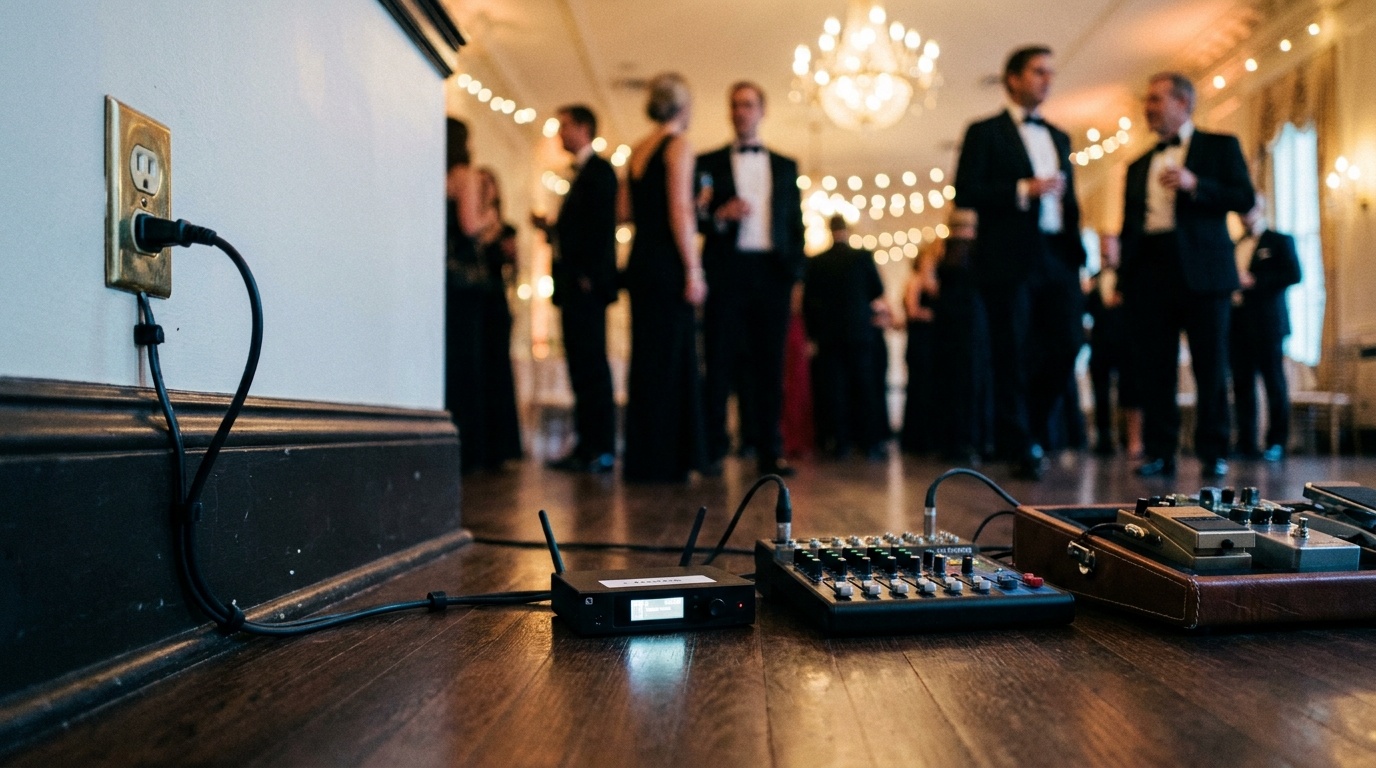
A professional solo musician for a corporate event brings their own sound system and requires approximately 45 to 60 minutes for setup and sound check before the event begins. The setup footprint for a solo acoustic performer is modest: a small PA system, a microphone stand, and a performance area of roughly 6 to 8 feet square. Most corporate event venues accommodate this without difficulty.
For outdoor events or unusual venue configurations, a brief conversation with the performer before booking ensures that the logistics are feasible and that the sound equipment is appropriate for the space. For events where a full four- to seven-piece band feels like the right call, that investment typically runs $8,000 to $25,000 or more and requires substantially more stage space and load-in time. That cost and footprint difference is one of the main reasons solo acoustic performance remains the standard choice for most corporate bookings.
Set Length and Structure
Corporate event performances are typically structured around the event’s timeline rather than a fixed set length. A cocktail reception might call for 60 to 90 minutes of ambient background performance. A dinner might require two to three hours, potentially with a short break between sets. An awards ceremony might need 30 minutes of pre-show performance and 15 minutes of post-ceremony celebration.
A professional musician works from the event’s schedule, not the other way around.
Repertoire and Customization
The repertoire for a corporate event draws from a different brief than a wedding. Classics, jazz standards, Motown, soft rock from the 1970s through the 1990s, and contemporary easy listening form the core of most corporate event setlists. The performer calibrates the selection to the company’s culture, the demographic of the guests, and the intended atmosphere of each phase of the event.
For branded events, some clients request that specific songs or musical themes be woven into the performance to reinforce a product message or company identity. A professional performer builds that into the set with advance notice.
Live Corporate Event Music in Washington DC, Maryland, and Virginia
The DMV corporate event market has specific characteristics that affect entertainment choices. Government contractors, lobbying organizations, law firms, financial services companies, and technology companies all entertain clients and employees in the DC area, often in venues that carry their own prestige: the Willard InterContinental, the JW Marriott National Harbor, the Smithsonian Institution venues, and a range of private clubs and rooftop spaces across the region.
These venues and the companies that use them expect a level of professionalism that goes beyond musical competence. The performer needs to be appropriately dressed, precisely punctual, easy to coordinate with in advance, and capable of reading the room in a context where the guests include senior executives, government officials, and high-value clients.
For corporate event planners sourcing live entertainment in the DC area, the question is not just whether a musician can play well. It is whether they can operate professionally in a high-stakes corporate environment, communicate clearly with event coordinators, and be trusted to represent the organization well.
How to Hire a Musician for a Corporate Event
What to Ask Before Booking
Before booking live music for a corporate event, the questions that matter most are operational rather than musical. How does the performer communicate with event coordinators in advance? What is their process for confirming logistics, arrival time, and setup requirements? What happens if there is a schedule change on the day? Do they carry liability insurance, and can they provide a certificate of insurance if the venue requires it? How do they handle requests for specific songs or styles that are outside their standard repertoire?
A professional musician answers these questions clearly and without hesitation, because they have answered them before.
What Information to Provide When Inquiring
When reaching out to a musician for a corporate event inquiry, the most useful information to provide upfront includes the event date and approximate times, the venue name and location, the approximate number of guests, the type of event (cocktail reception, dinner, awards, conference), and any specific brand or tone requirements. This allows the performer to assess fit and respond with relevant information rather than a generic rate card.
About Dylan Galvin Entertainment
Dylan Galvin Entertainment provides live acoustic music and DJ services for corporate events, private parties, and weddings across Washington DC, Maryland, and Virginia. Dylan holds a degree in Professional Music from Berklee College of Music and was personally mentored by music legends John Mayer, Paul Simon, and Livingston Taylor. He has performed at the Ritz-Carlton, Four Seasons, Willard InterContinental, and a range of premier corporate and private event venues across the DMV.
His corporate event services include acoustic guitar with vocals, instrumental-only ambient performance, and DJ capability for high-energy receptions — all within a single booking. Event planners working on DMV corporate events are welcome to reach out directly to discuss availability and logistics.
Frequently Asked Questions
How much does live music cost for a corporate event?
Live music for a corporate event in the Washington DC area typically ranges from $2,500 to $6,000 or more for a solo performer, depending on the length of the engagement, the scope of the performance (acoustic only vs. acoustic plus DJ capability), and the specific logistics of the event. Corporate events with formal setup requirements, outdoor locations, or extended performance windows fall toward the higher end of that range. The investment is typically modest relative to other line items in a corporate event budget and carries a disproportionate impact on how the event is remembered.
What kind of music works best at corporate events?
The most versatile repertoire for corporate events draws from recognizable, cross-generational material that works across a broad demographic: classic rock, Motown, soft pop from the 1970s through the 1990s, contemporary easy listening, and jazz standards. The goal is music that guests recognize and respond to positively without it being so specific in genre or era that it alienates part of the room. A professional musician calibrates this to the specific client and guest demographic.
How do I hire a musician for a corporate event?
Start with an inquiry that includes the event date, venue, approximate guest count, type of event, and any brand or tone requirements. A professional musician responds with availability, a clear explanation of what their performance covers, and their process for coordinating logistics with your team. Request a certificate of liability insurance early in the conversation if your venue requires one, as professional performers carry this as standard.
Can a musician also provide DJ services for a corporate event?
Some acoustic musicians also offer DJ capability within the same booking, which provides flexibility across the arc of a corporate event — live acoustic performance for cocktail hour or dinner, transitioning into DJ-style entertainment for a high-energy reception or dance portion of the evening. This single-vendor approach simplifies coordination and ensures musical consistency across the full event.
How far in advance should I book live music for a corporate event?
For corporate events in the Washington DC area, booking two to six months in advance is typical for dates that are not in high-demand seasons. Holiday party season (November and December) books earlier — peak holiday dates can be unavailable as early as August or September. For events with flexible dates, there is generally more availability, but a professional performer’s calendar fills as confirmation requests come in, so earlier inquiry is always advisable.
Blog Categories
Latest Blogs