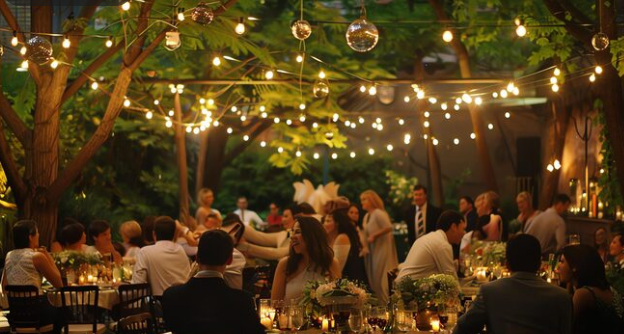
Backyard Parties to Luxury Events: When Live Acoustic Music Works Best
Dylan Galvin is a Berklee College of Music graduate, mentored by music legends John Mayer, Paul Simon and Livingston Taylor. Performing across the United States since 2009, now based in the DMV (Washington DC, Maryland, and Virginia), more than 1,500 events, including work for Coca-Cola, Wells Fargo, Lincoln, and CBRE.
Live acoustic music works best when an event needs entertainment that can hold a room by itself and adapt the moment something unplanned happens, a guest who wants to sit in, a program that runs long, a crowd that thins out and gathers somewhere new. That range is what separates a solo acoustic musician from a curated playlist, and it is why the format works across a much wider set of occasions than most hosts assume, from a backyard birthday party to a black tie wedding reception.
This guide covers the specific event types where live acoustic music makes the clearest difference, what to expect logistically in each one, and the one thing most planning guides on this topic leave out entirely.
What Live Acoustic Music Brings to an Event
The Difference Between a Playlist and a Live Performer
A playlist is consistent. The tempo never shifts, the volume never adjusts, and the music never responds to what is actually happening in the room. A live acoustic musician does the opposite of all three. The performer reads the crowd's energy, paces songs to match the moment, and brings a human presence into the room that recorded music cannot.
Guests notice quickly. Conversations start more easily. People stay longer. The event stops feeling assembled and starts feeling hosted.
Why Acoustic Works Where Other Formats Do Not
A full band needs real setup time, stage space, and a sound check that eats into the event's own schedule. A DJ needs equipment, booth space, and tends to anchor a room's energy in one direction for the whole night. A solo acoustic musician needs almost none of that. The natural, warm sound of an acoustic guitar sits comfortably under conversation and rises when the moment calls for it, which is why it works particularly well in residential spaces, outdoor settings, and venues where a full production would be too much.
House Parties and Backyard Gatherings
A Personal Gathering Deserves More Than Background Audio
A house party or backyard gathering is one of the most personal events a host will ever put together. The guests are friends, family, or close colleagues. The setting is intimate. Real effort has already gone into the food, the space, and the overall experience, which makes a digital playlist feel like the one part of the night nobody actually planned.
Dylan performed at a 70th birthday party in Springfield, Virginia, for a host who had retired from the military. The host had set up a small staged area with instruments because he wanted an actual jam session at some point in the night, not just background music, but he had struggled to find a musician willing to carry a full four hour set for the whole party and then hand part of the evening over to guests who wanted to play. His son and one of the son's friends both played music, and neither had ever met Dylan before that night.
Dylan opened with a long set spanning five decades, easy listening standards through 80s and 90s classics, before the son and his friend came up to join in. Together they played a genuinely wide range that night, from Zombie by the Cranberries to Wish You Were Here by Pink Floyd to Bob Marley, while family members gathered around and listened. Dylan sent the host a video of the moment afterward so the family would have it to keep.
The host left a five-star review afterward:
"From the get go in looking for exceptional music guitar entertainment Dylan stood out and did not disappoint! Reviewed his set list, curated a list of his songs for four sets, and played for 4 hours and he was phenomenal! Guests at my birthday bash could not get enough of him, and kept asking how I found him, he was that good!! In fact, I asked him to play for another half hour! Impressive in feeling the guests and becoming the main event! He was awesome..., easy to accommodate and work with, and can play a commanding guitar, the ultimate music professional! Thank you Dylan! Highly recommend, and will not disappoint!"
Practical Considerations for a Home Setting
The most common worry about live music in a house party setting is space. In practice, a solo acoustic musician needs an instrument, a small amplifier if the space calls for it, and occasionally a microphone stand, a footprint comparable to a single piece of furniture. Volume is just as manageable. An experienced performer calibrates to the room and adjusts naturally as the crowd grows, thins out, or moves outside, which makes acoustic guitar particularly well suited to residential settings where a neighborly noise concern is a real, practical thing to plan around.
Outdoor Events and Garden Celebrations
Why Open Air Settings and Acoustic Sound Work Together
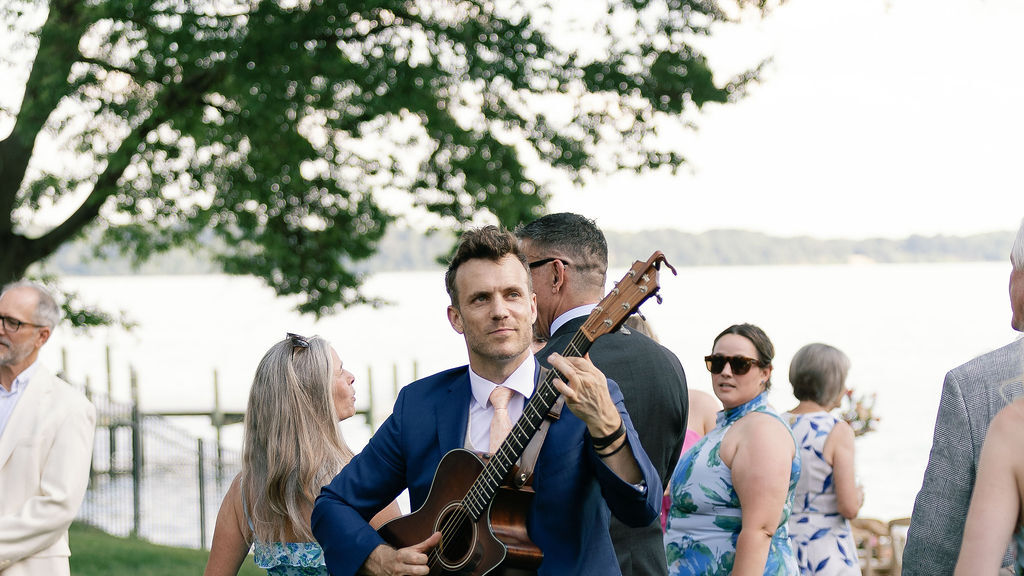
Outdoor events have their own acoustic character. Sound disperses more freely, ambient noise from wind or nearby activity fills in the background, and the setting itself carries a sensory quality indoor spaces do not have. A solo acoustic guitarist meets those conditions in a way amplified formats generally do not, creating a warm layer of sound that complements a garden birthday party, an anniversary celebration, or a summer gathering instead of competing with it.
Milestone Celebrations Outdoors
Birthday parties, anniversary dinners, graduations, and family reunions all carry more emotional weight than a playlist can reflect. A live performer can tailor the set to the occasion, work in songs that mean something specific to the guest of honor, and adjust the energy as the evening moves along, a level of responsiveness recorded music simply cannot offer.
Cocktail Hours and Pre-Dinner Receptions
Why the Arrival Moment Sets the Tone
Cocktail hour is often the highest-impact moment for live acoustic music at any event. Guests are arriving, forming first impressions, and setting their expectations for the rest of the night. What they encounter in those first few minutes shapes how they experience everything that follows, and a live performer signals a level of care a speaker system cannot replicate.
Managing the Transition Between Segments
Moving from cocktail hour into a seated dinner, or from dinner into a reception, can feel abrupt if the entertainment does not support the shift. An experienced acoustic musician handles that naturally, moving from soft instrumentals to mid-tempo songs as guests take their seats, then building energy again as the room shifts into its next phase.
Corporate Events and Professional Gatherings
Why Live Acoustic Music Works in a Professional Setting
Corporate planners often default to a DJ or a playlist because it feels safer or easier to control. In most professional formats, a solo acoustic musician actually serves the room better than either. Networking events, award dinners, product launches, and client appreciation evenings all need background entertainment that signals quality without demanding attention, and a well-calibrated acoustic performance does exactly that while avoiding the single-track mood swings a DJ can create.
What the Choice Communicates
The entertainment a company chooses says something about the organization hosting the event. A well-chosen live performer signals professionalism and attention to detail, the same qualities most companies are already trying to project everywhere else. A solo acoustic musician is also easier to fold into a corporate program than a band, with no large setup and no lengthy sound check to manage around the rest of the schedule.
Washington-area planners can find full details, including roaming performance and sound system specs, on Dylan's corporate and private event entertainment page.
Weddings and Luxury Private Events
Where Acoustic Performance Fits Into a Wedding Day
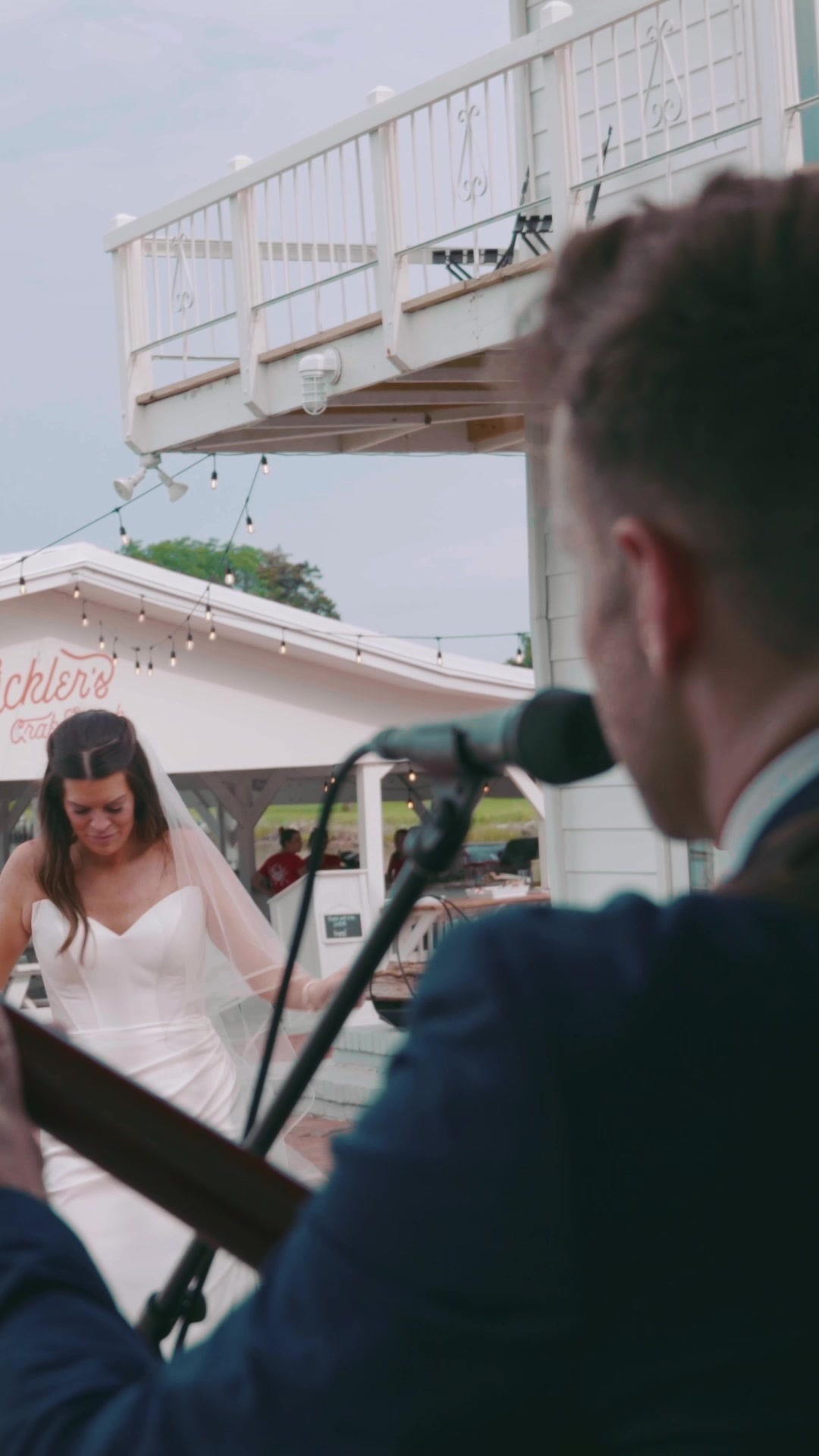
Weddings involve several distinct musical moments, the ceremony, the cocktail hour, and the dinner reception, each with its own emotional character and its own practical requirements. A versatile acoustic musician can cover all three without the host having to coordinate multiple vendors. During the ceremony especially, precision matters. Songs need to start and end at the right moment, and a live performer can adjust in real time if the processional runs long or the program shifts, something recorded music cannot do.
Dylan has performed at the Ritz-Carlton, Four Seasons, Waldorf Astoria, and the Beverly Hilton, alongside private residences and backyard celebrations across the DMV. The same professional standard applies at every scale, whether the setting is a five-star ballroom or a family's own backyard.
For weddings across DC, Virginia, and Maryland, see Dylan's dedicated wedding ceremony and reception music page for pricing, repertoire, and booking details.
Custom Arrangements and Personalized Repertoire
Weddings and luxury events frequently come with song requests that carry real personal meaning, a first dance song, a piece tied to a specific memory, a track that matters to the couple or the guest of honor. An accomplished acoustic musician can build a custom arrangement of a requested song instead of playing a generic cover, which is one of the clearest differences between a skilled professional and a standard act.
The One Thing Most Guides on This Topic Miss
Most articles about backyard and private party entertainment frame a solo acoustic musician as background music you book and leave alone for the night. That misses the actual flex. The flex is not whether a musician can hold a room alone or step aside and let guests play. The flex is whether he is willing to do whichever one actually gives the client the experience they want, without an ego about it.
At the Springfield birthday party above, Dylan could have simply played his set and called the night a success. Instead, when the host wanted his son and a family friend to join in and play, Dylan built part of the evening around that request instead of insisting on running the whole show himself. The performance mattered less than what the client actually wanted out of the night, and that willingness to put the client's wishes ahead of his own is the real difference between a musician worth hiring and one who just shows up to play.
How to Decide If Acoustic Music Is Right for Your Event
Questions to Ask Before Booking
A few practical questions help clarify whether a live acoustic musician fits a specific event.
• What is the primary atmosphere goal for the event, and does acoustic guitar serve that goal?
• How many guests are attending, and what is the venue's acoustic character?
• Does the event have multiple phases that would benefit from adaptive, responsive entertainment?
• Is there a desire to replace multiple vendors (ceremony musician, cocktail performer, reception DJ) with a single versatile performer?
• Are there specific song requests, or guests who might want to join in, that a live performer could accommodate in a way recorded music cannot?
What a Professional Acoustic Musician Offers
Not every acoustic musician offers the same scope of service. A professional brings a broad repertoire spanning multiple decades, the ability to move between instrumental and vocal performance, equipment appropriate to the venue, and real experience reading a room. Some also offer DJ capability within the same booking, a single vendor solution for hosts who want live music for part of the evening and higher-energy entertainment for the rest of it.
About Dylan Galvin Entertainment
Dylan Galvin is a Washington DC-based acoustic musician serving private events, corporate gatherings, and weddings across DC, Virginia, Maryland, and beyond. His repertoire spans timeless classics, easy listening, 80s and 90s favorites, and modern hits. He performs as an instrumental acoustic guitarist, as a vocalist with guitar, and offers DJ capability for events that call for it, giving hosts a single vendor who can cover multiple formats within one booking.
Conclusion
Live acoustic music works across a far wider range of occasions than most hosts assume going in. From a backyard birthday party to a five-star wedding reception, the defining quality of a skilled acoustic musician is adaptability, responding to the room, adjusting through each phase of the event, and creating a human presence a playlist fundamentally cannot.
To discuss availability and how live acoustic music can work for your next event, visit dylangalvin.com and submit an inquiry.
Frequently Asked Questions
Is live acoustic music suitable for small events and house parties?
Yes. Acoustic guitar produces warm, natural sound at a volume that complements conversation rather than competing with it. A solo acoustic musician needs minimal setup space and no large production infrastructure, which makes it a practical and effective choice for house parties.
Can a live musician perform with guests who also play instruments?
Yes, when the client wants it and the musician is willing to make room for it instead of insisting on running the whole show himself. At a recent 70th birthday party in Springfield, Virginia, the host wanted his son and a family friend to join in, so Dylan built part of the night around that request, playing everything from the Cranberries to Pink Floyd to Bob Marley together. If a host wants that option built in, it is worth flagging during booking so the set list and timing can accommodate it.
What does an outdoor acoustic music setup require?
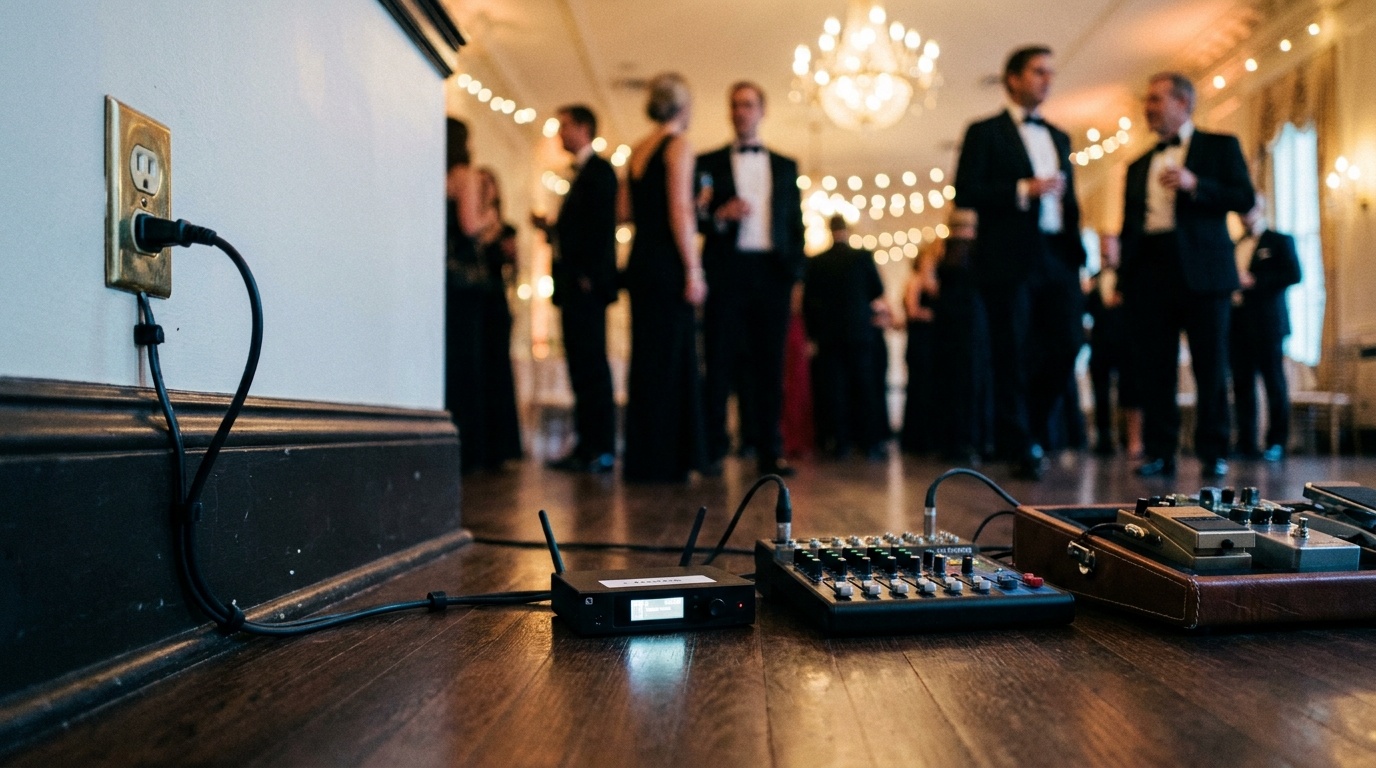
An outdoor acoustic performance typically needs a small amplifier once the guest count passes around thirty to forty people, a microphone and stand for vocal performances, and access to a standard power outlet. Setup time is short and the footprint is compact.
Can an acoustic musician perform different styles in one evening?
Yes. A skilled acoustic performer adapts repertoire and tempo across different phases of an event, soft instrumentals during cocktail hour, mid-tempo songs during dinner, and more energetic selections later in the evening. This flexibility is one of the main advantages of live acoustic music over a fixed playlist.
How far in advance should I book a live acoustic musician?
For weddings and large private events, three to six months in advance is advisable. For corporate gatherings and house parties, four to eight weeks is typically enough, though popular performers book up quickly around peak event seasons. Booking early leaves time for repertoire planning and any personalization.
What is the difference between hiring a solo acoustic musician and a full band?
A solo acoustic musician needs less setup time, less space, and a lower overall cost than a full band while still delivering a live performance. Solo performers are also more adaptable on volume and repertoire. For events where conversation and intimacy matter most, a solo acoustic performer typically serves the atmosphere better than a full band, which suits larger venues and audiences who want a primary entertainment focus rather than ambient accompaniment.
Blog Categories
Latest Blogs