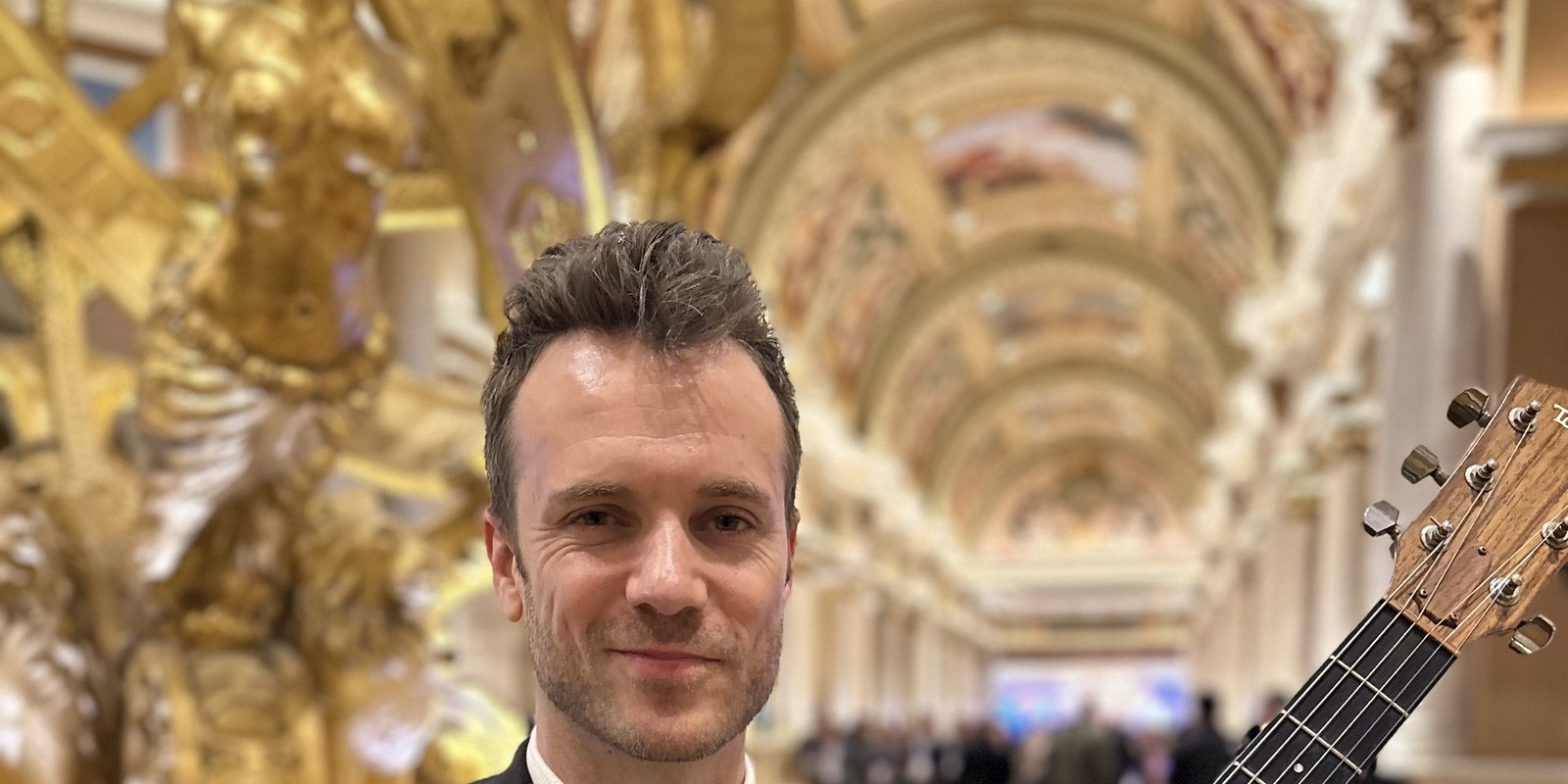
Hiring a Guitarist for Your Wedding: What to Actually Expect
Dylan Galvin is a Berklee College of Music graduate, mentored by music legends John Mayer, Paul Simon and Livingston Taylor. Performing across the United States since 2009, now based in the DMV (Washington DC, Maryland, and Virginia), more than 1,500 events, including work for Coca-Cola, Wells Fargo, Lincoln, and CBRE.
Most guides to hiring a wedding guitarist stop at the booking process: the inquiry, the contract, the deposit. That part matters, but it's the easier half. The harder half, and the one that actually determines how your day feels, is what happens with the music once the day starts. Your wedding isn't one performance. It's four distinct sections, each with a different job, and the gap between a guitarist who understands that and one who doesn't is the difference between music that disappears into the background exactly when it should and music that either goes unnoticed when it needs to carry the room or overwhelms a moment that needed to stay quiet.
The booking steps themselves (inquiry, availability check, planning call, contract, final details two to four weeks out) are well covered elsewhere and hold true across the industry. What's harder to find written down anywhere is what the music should actually sound like at each stage of your day, and what separates a guitarist built to run the whole thing from one who's really only built for one part of it.
The Four Parts of Your Wedding Day, and How the Music Should Change With Each
Before the Ceremony Starts
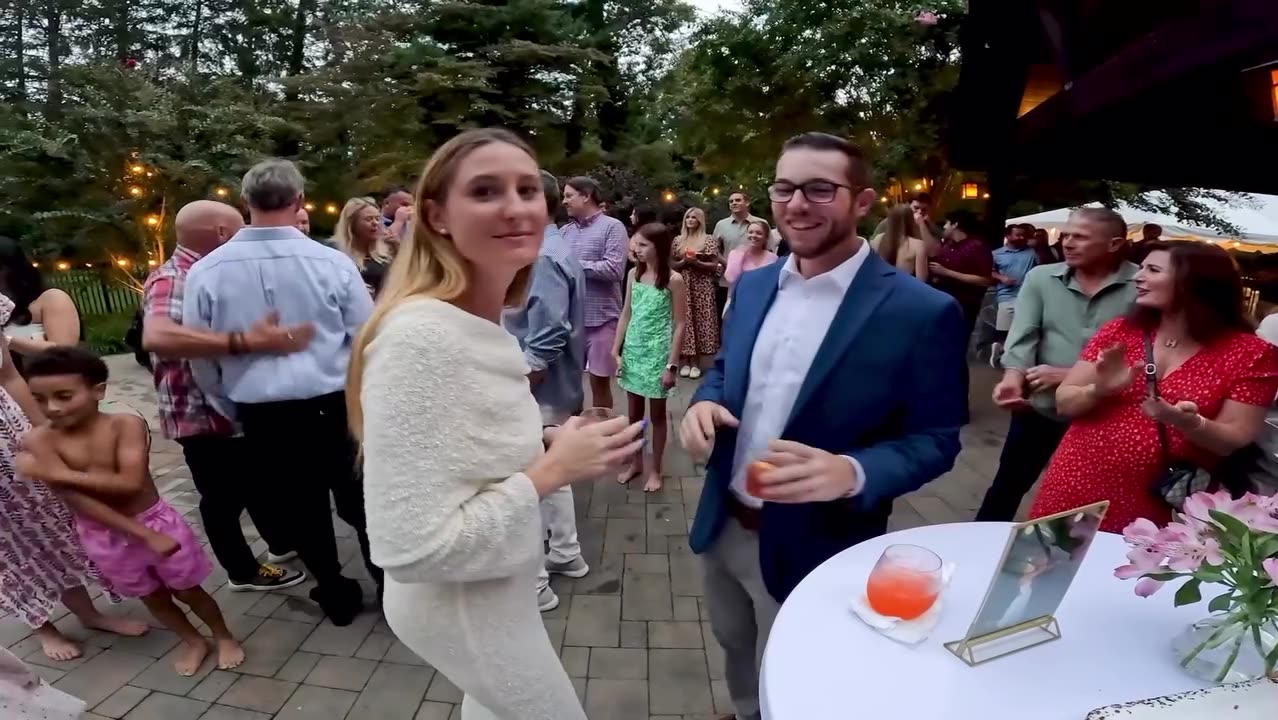
Your guests typically begin arriving thirty minutes to an hour before the ceremony. The music should already be playing before the first guest walks in, not starting once seats begin filling. This is what sets the tone that they've entered somewhere different from an ordinary day, somewhere that's already been taken care of. Instrumental music works best here: gentle, ambient renditions rather than a performance meant to be watched. The volume should sit low enough that arriving guests can still talk, present enough to be felt rather than heard directly.
The Ceremony
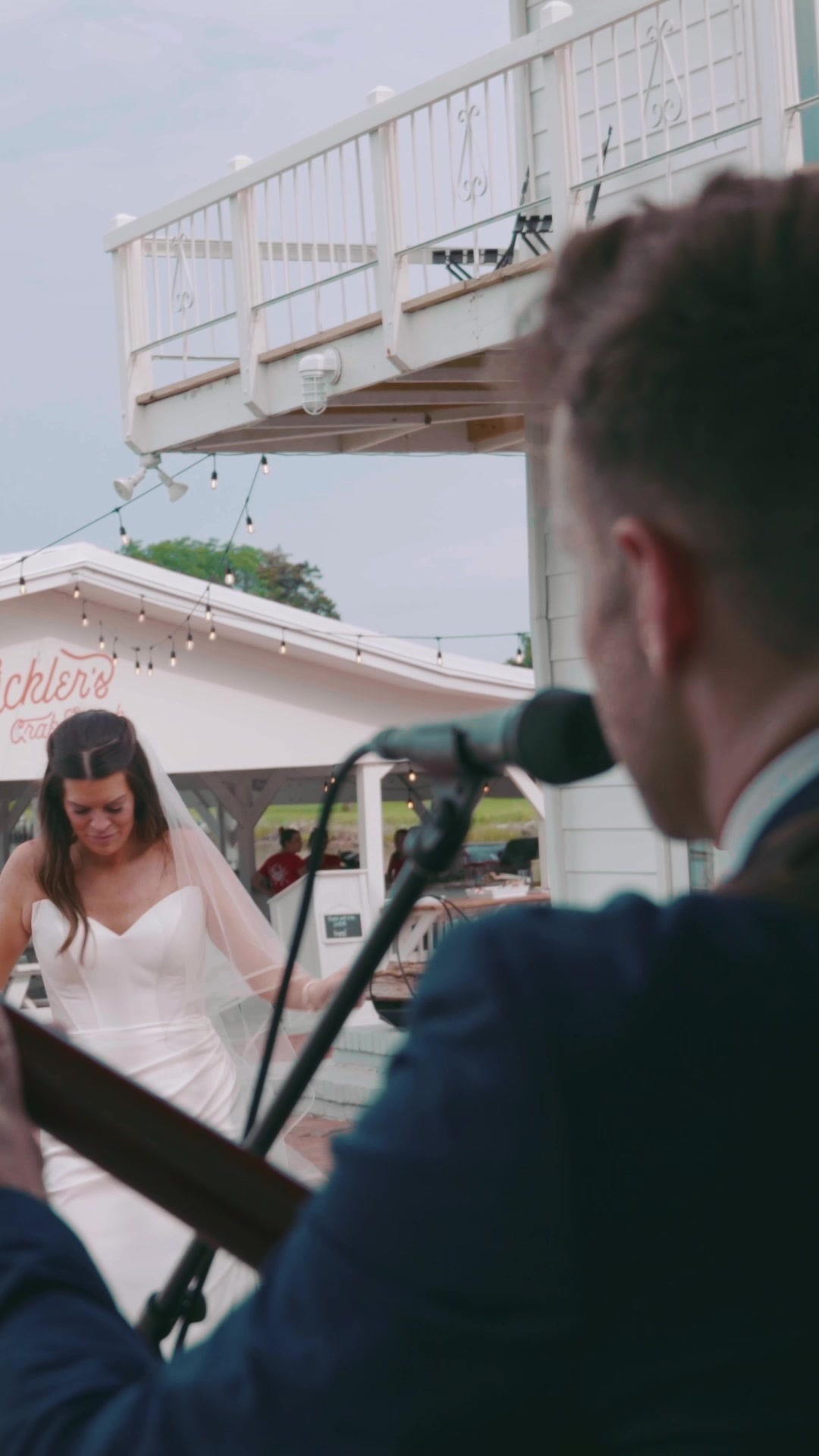
A typical ceremony has three musical moments. The processional, when your wedding party walks out to the altar, usually calls for something meaningful, and an instrumental rendition tends to work better than a vocal version. The next moment, when everyone stands as the bride enters, is the one place worth being strict about staying instrumental. Vocals draw human attention more powerfully than almost anything else onstage, which is exactly why televised singing competitions dominate over instrumental ones. That pull competes directly with the moment your guests should actually be watching. The recessional, once you've kissed and the ceremony is officially over, is where a song with vocals can work well. The tension has lifted, guests are already thinking about the cocktail hour, and something a little more upbeat can land without stealing focus from anything. Some guitarists will even get a full room singing along at this point. After a hushed ceremony, that shift in energy reads as welcome relief.
Cocktail Hour Is the Part Most Guides Skip
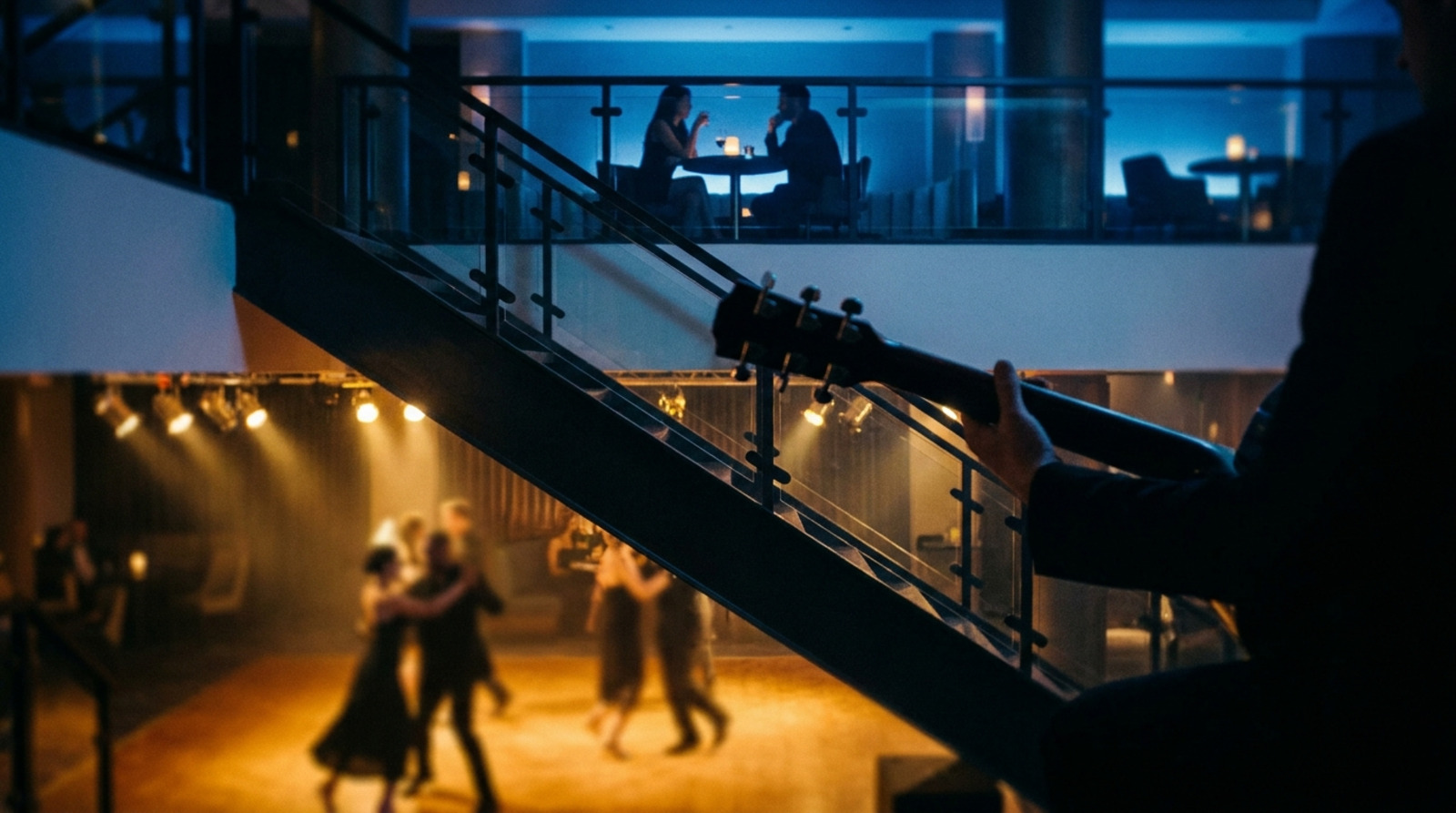
This is the most overlooked section of a wedding, and it's also where a genuinely experienced performer earns their fee. Your guests are talking, catching up, moving between conversations. The music needs to build atmosphere without becoming the center of attention and without going so subdued that the room starts to drag before the party has even started. That's a specific skill, distinct from performing at a ceremony or a reception, and not every guitarist who's good at those two is automatically good at this one. Getting cocktail hour right is what leaves your guests primed and ready when the reception officially begins.
The Reception, and What Happens During the Performer's Breaks
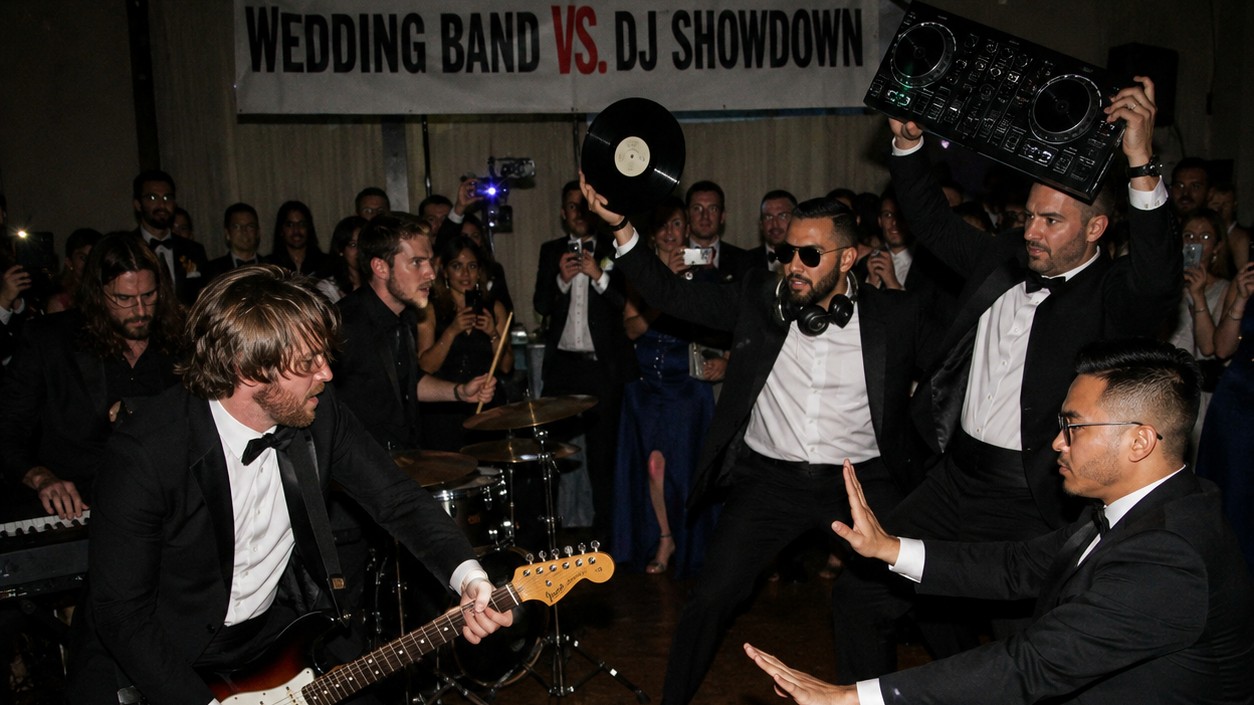
Reception energy runs from comfortably lively to full dance floor, and a solo performer, a duo, a full band, or a DJ can all fill that role well depending on what you want. If your guest list isn't especially eager to dance, a hybrid setup that includes DJ elements without making the dance floor mandatory tends to fit better than a traditional DJ who pushes everyone to dance the entire night. A newer variation gaining ground, particularly on the West Coast, pairs a DJ with a live instrumentalist such as a saxophonist, violinist, or guitarist for a fuller sound without a full band's footprint.
One detail that rarely gets mentioned: a well-run performance includes built-in moments for the musician to eat and step away, timed around ambient stretches of the evening so nobody notices they were gone. A performer worth hiring will have already coordinated this with your coordinator, along with every moment that needs someone managing sound, cueing microphones for speeches, and adjusting levels. None of that should be visible to your guests.
The Two Places Couples Most Often Steer the Song List Wrong
The first is requesting a vocal performance during the ceremony itself, most often for the moment the bride walks in. As covered above, this is generally worth reconsidering. A voice pulls attention away from the bride and onto the performer at the exact moment the room should be watching her, not listening to a singer.
The second is being highly specific about cocktail hour song choices. Song selection still matters here, but cocktail hour isn't a stage set list your guests are meant to sing along to. It's a laid-back backdrop that occasionally interjects into small pockets of conversation as people move around the room. The mood and energy matter more than any individual track, and couples who over-specify this hour often end up with a stiffer result than they wanted.
Why Arrival Time Says More About a Vendor Than Their Website Does
At a private wedding at Alila Marea in Southern California, the security and equipment transport process at the venue turned out to be far more time-consuming than expected. It worked out fine, because arriving several hours before the performance, well ahead of when it was strictly necessary, is standard practice for handling exactly this kind of surprise. A performer who shows up close to the wire is one venue complication away from being late to your wedding. It's one of the clearest, quietest signals of how seriously a vendor takes the job, and it's almost never something couples think to ask about until after they've already booked someone who didn't plan for it.
What a Performer Built to Run the Whole Day Actually Looks Like
Most guitarists booked for weddings are static performers. They bring a small amplifier, set up in a corner, and play through a fixed repertoire without adjusting to the room. For a straightforward, traditional wedding, there's nothing wrong with that approach. But couples increasingly want a day that feels curated rather than a repeat of the last wedding they attended. Pinterest's 2026 wedding trends research found that the top reason couples say an unconventional wedding appeals to them is that it lets the day reflect their own personalities, not a template.
A roaming, hybrid musician, one capable of collaborating with or filling in for a DJ in addition to standard ambient performance, gives you far more room to shape the day to your vision, or to simply hand it off and trust the performer to read the room. That balance (staying engaging without overwhelming a quieter crowd, or keeping energy up without ignoring a room that wants to talk) is genuinely hard to find. Most performers land clearly on one side or the other. Finding someone who can do both across a single evening is the real differentiator worth asking about.
Red Flags Worth Taking Seriously
Red Flag #1: Pricing Noticeably Below Market Rate
- Wedding planning groups are full of stories about vendors who cancel last minute, go unreachable, or cite a sudden emergency, sometimes the same excuse other couples report hearing from the same vendor
- The Knot Worldwide's 2026 Real Weddings Study found that 37 percent of couples had to contact more vendors than they originally planned to, a sign of how often a first choice falls through
- A bargain price on a ceremony or cocktail hour booking usually means one of two things: the performer is inexperienced and pricing accordingly, or they are not a strong performer and are staying in business by undercutting the market
Red Flag #2: The Franchise Band Model
- The brand and promotional material stay the same after the original lineup built a reputation, but the actual performers on any given night are a rotating cast hired to wear the name
- The booking looks identical to the one on the website, but the band that shows up often sounds nothing like it, since the business owners collect the same fee whether or not the original musicians are the ones playing
- A single band name can be booked at several weddings on the same night with wildly different quality at each one, which is why booking directly with an individual performer or an act's actual, named members avoids the risk entirely
- Personality matters more than couples often expect: The Knot Worldwide's 2026 Real Weddings Study found personality was a top deciding factor for 53 percent of couples hiring a DJ, and a rotating, unnamed lineup makes that impossible to vet in advance
Frequently Asked Questions
Should ceremony music include vocals?
For the processional and the moment the bride walks in, an instrumental version is generally the stronger choice, since vocals pull attention toward the performer at moments meant to be about the couple. The recessional, once the ceremony itself has concluded, is a better spot for a song with vocals if that's your preference.
Do wedding guitarists provide their own sound equipment?
Most solo guitarists bring a portable amp and microphone setup suited to small and mid-sized venues. For larger receptions or venues, confirm in advance whether additional sound equipment or a dedicated sound engineer will be needed.
Can one guitarist cover the ceremony, cocktail hour, and reception?
Yes, and many wedding guitarists offer multi-set packages spanning all three, usually with breaks built in between. Confirming total hours and how those breaks are handled is worth doing at the booking stage, not the week of.
Why does a bargain price on a wedding vendor carry more risk?
Consistently low pricing across a market usually signals either an inexperienced performer or a professional relying on volume and undercutting to stay booked, both of which raise the odds of cancellations, no-shows, or a mismatch between the promotional material and the actual performance quality.
What should we look for in a performer's portfolio?
Real footage from actual weddings matters more than a polished studio demo, since live performance quality, timing, and stage presence under real conditions is what will show up on your wedding day itself.
How far in advance should the song list be finalized?
It depends on the song. If it's already part of the repertoire, two to four weeks out is enough. A custom arrangement, especially one built from scratch for solo guitar, needs several months of lead time to arrange and rehearse properly.
The Bottom Line
The booking process for a wedding guitarist is the easy part to research. What actually separates a good hire from a forgettable one is everything that happens after the contract is signed: how the music shifts across four distinct parts of your day, how song choices are handled at the two moments couples most often overthink, and whether the performer is built to run the whole evening or only one slice of it.
See how wedding music works from the ceremony through the reception for a fuller look at how these pieces fit together across a full wedding day.
Blog Categories
Latest Blogs