Live vs DJ: What's Better for Your Wedding Ceremony & Reception?
Every couple planning a wedding eventually lands on the same question: live music or a DJ? It sounds like a simple choice, but the decision shapes the entire atmosphere of your day from the moment guests arrive to the last song of the night.
Both options have genuine merits. A DJ brings versatility, a deep catalog, and reliable volume control. Live music brings something a recording never can: presence, warmth, and the kind of emotional texture that turns moments into memories. The right answer depends on your vision, your venue, and what you want your guests to feel.
This guide breaks down both options honestly across every part of the wedding day, so you can make the decision with clarity rather than guesswork.
The Ceremony Where Live Music Makes the Biggest Difference
Why This Moment Calls for Something Real
The wedding ceremony is the most emotionally significant part of the day. The processional, the vows, the recessional these are moments that guests will remember for years, and the music playing underneath them is part of what makes them land.
A DJ can play a recording of your chosen song accurately and on cue. But there's a difference between hearing a song and experiencing it performed live in the room, by a real musician, in real time. Live acoustic guitar during a ceremony creates an intimacy that a recording played through speakers simply doesn't replicate the natural resonance, the slight variations in tempo that respond to the pace of the procession, the human quality that makes the moment feel genuinely ceremonial rather than choreographed.
For outdoor ceremonies in particular, a live acoustic musician fills the space in a way that feels organic rather than amplified. Guests hear music rather than speakers.
Flexibility in the Moment
One of the practical advantages of a live musician for ceremony music is real-time flexibility. If the procession moves slower than expected, a live performer adjusts. If a reading runs long, the music can extend naturally without an awkward cut or loop. A DJ working from pre-set tracks has far less ability to adapt to the timing of live events as they unfold.
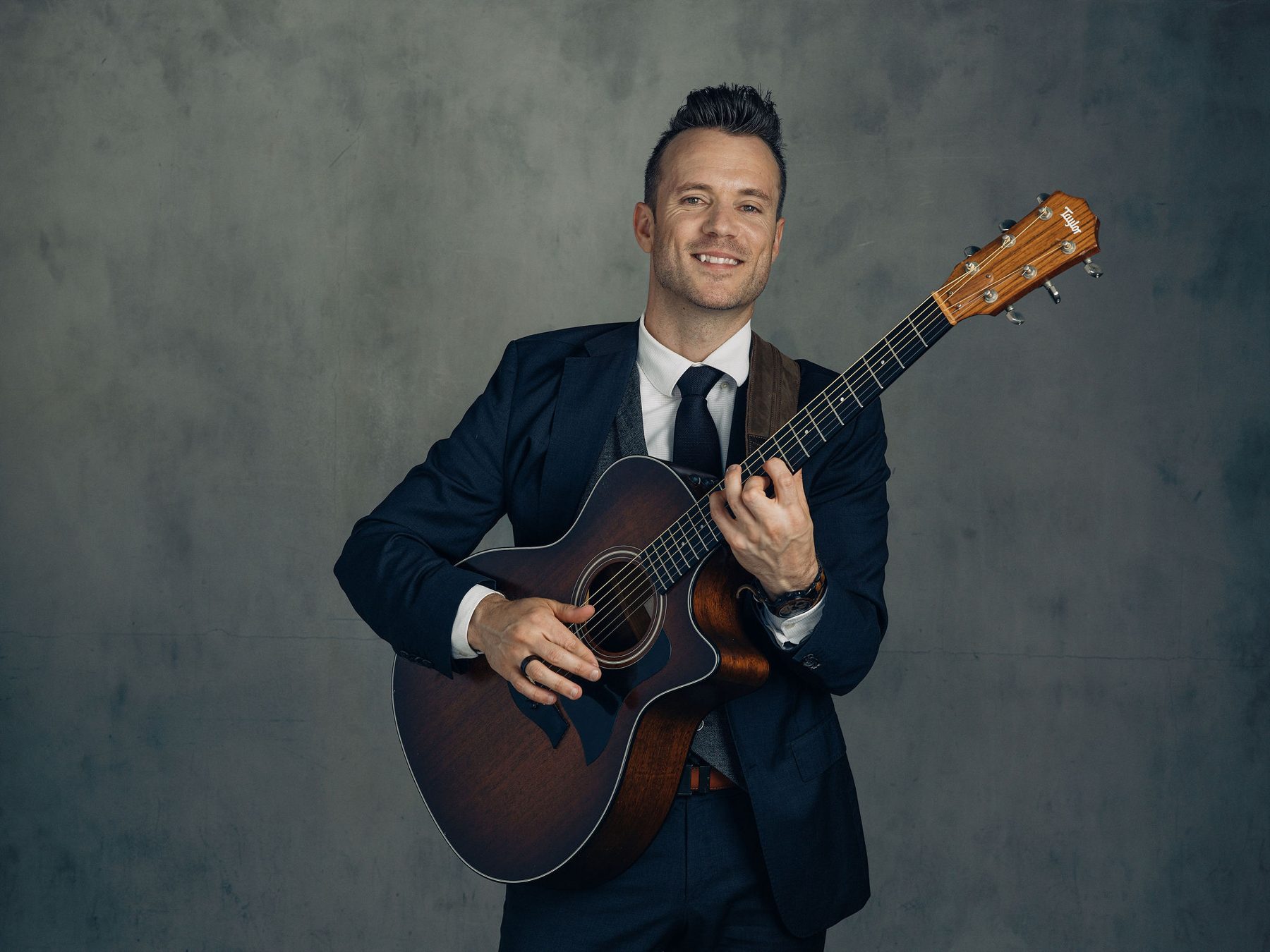
Dylan Galvin's wedding ceremony music is designed around exactly this kind of flexibility seamlessly adapting to the flow of the day so that the music always serves the moment rather than the other way around.
The Cocktail Hour Live Music's Natural Home
Setting the Tone Between Ceremony and Reception
The cocktail hour is where the atmosphere of your reception begins to establish itself. Guests are mingling, congratulating the couple, and transitioning from the formality of the ceremony to the celebration ahead. The music playing during this time does more atmospheric work than most couples realize.
A DJ during cocktail hour typically means a playlist background music that's present but not particularly engaging. Live acoustic guitar during cocktail hour is categorically different. It's conversational without being demanding, sophisticated without being stiff, and it gives guests something genuine to respond to. A skilled performer reads the room and adjusts energy accordingly softer and more intimate when people are in close conversation, slightly more present when the room opens up.
This is where a solo acoustic musician like Dylan who performs while roaming through the crowd creates something genuinely distinctive. Guests interact with the performer directly. The music becomes part of the social experience rather than its backdrop.
The Reception An Honest Comparison
What a DJ Does Well
For the reception, a DJ's strengths are real and worth acknowledging. A DJ has access to every song ever recorded any request, any genre, any era and can transition between them instantly. For couples who want a high-energy dance floor with maximum variety across multiple decades and genres, a DJ with good equipment and strong crowd-reading skills delivers that reliably.
A DJ is also typically less expensive than a full live band for the reception, and the logistics are simpler one person, one setup, no concerns about ensemble coordination.
What Live Music Does Better
What a DJ cannot replicate is the experience of watching and hearing a real musician perform in the room. Live performance has an energy that recordings don't something that guests feel emotionally, not just aurally. A skilled live performer reads the crowd, makes real-time decisions about what to play next, and creates a sense of shared experience that a pre-loaded playlist never achieves.
For couples who want their reception to feel elevated not just entertaining but genuinely memorable live music delivers an atmosphere that guests talk about afterward. The question from the crowd isn't "who made this playlist?" It's "where did you find him?"
The Solo Acoustic Advantage
One of the most common misconceptions about live wedding music is that it requires a full band which means a large budget, a large stage footprint, and the logistical complexity of coordinating multiple performers. A professional solo acoustic musician changes this equation entirely.
Dylan Galvin performs with a top-of-the-line sound system, wireless microphones for guests or officiants, and a repertoire that spans timeless classics, 80s and 90s favorites, pop hits, and modern chart-toppers delivering the variety of a DJ with the presence of live performance. He comes fully equipped with lighting and professional production, so the experience is complete without the band budget or the band logistics.
Cost Comparison What to Actually Expect
Breaking Down the Numbers
Cost is a real factor in this decision, and it deserves an honest treatment. A DJ for a wedding typically ranges from a few hundred dollars on the low end to several thousand for experienced professionals with high-end equipment. A full live band ranges from several thousand to tens of thousands depending on the number of performers, their experience level, and your market.
A professional solo acoustic musician sits between these two less than a full band, and in many cases comparable to a well-regarded DJ, while delivering the live performance experience that a DJ can't provide. When you factor in what the performance adds to the atmosphere of the day, the value calculation typically favors live music.
What You're Actually Paying For
When you hire a professional live musician, you're not just paying for someone to play songs. You're paying for years of training, the experience to read and respond to a room in real time, the flexibility to adapt to the unpredictable flow of a live event, and the irreplaceable quality of a genuine human performance at one of the most important days of your life.
Dylan is a Berklee College of Music graduate, was mentored by John Mayer, Paul Simon, and Livingston Taylor, and has performed at over 1,500 events for Fortune 500 companies, luxury hotels, celebrities, and high-profile private clients. That level of experience and training shows in the performance and in how seamlessly the day flows when the music is in the right hands.
Which Should You Choose?
A Simple Framework for the Decision
The choice between live music and a DJ ultimately comes down to what you want your wedding to feel like and which parts of the day matter most to you.
If the ceremony and cocktail hour are your priority, live music is almost always the stronger choice. These are the moments where atmosphere matters most and where a real performer in the room makes the greatest difference.
If you want a high-energy dance floor for the full reception with maximum song variety, a DJ may serve that specific goal well though a skilled live acoustic musician covers far more ground than most couples expect.
If you want a single, cohesive musical experience across the entire day ceremony through reception a professional solo acoustic musician who can adapt across all of it is often the most elegant and practical solution.
Book Dylan Galvin for Your Wedding
Dylan Galvin's wedding music covers every part of your day ceremony, cocktail hour, and reception with a live acoustic performance that transforms the atmosphere from the first note to the last. Trusted by couples across the United States, Dylan brings Berklee-trained musicianship, 15+ years of performance experience, and a genuine commitment to making your wedding day feel exactly the way you imagined it.
To check availability and request a quote, contact Dylan here. You can also watch performances on YouTube to hear exactly what your guests will experience. For more about Dylan's background and approach, visit the about page.
Frequently Asked Questions
Can a solo acoustic musician really replace a DJ for a full wedding reception?
For many couples, yes particularly those whose priority is atmosphere over maximum dance-floor energy. A professional solo acoustic musician with a strong repertoire, high-quality sound system, and the ability to read a crowd can cover ceremony, cocktail hour, and reception while delivering something a DJ never can: the presence and warmth of live performance in the room.
What songs can a live acoustic musician perform at a wedding?
Dylan's repertoire spans timeless classics, easy listening, 80s and 90s favorites, pop hits, and modern chart-toppers delivered in a sophisticated acoustic style that works for both quiet, intimate moments and more upbeat, celebratory ones. Custom song arrangements for first dances and processionals are also available.
Is live music significantly more expensive than a DJ?
A professional solo acoustic musician is typically less expensive than a full live band and often comparable in price to an experienced DJ while delivering the live performance experience that a recording-based DJ cannot provide. The value comparison typically favors live music when atmosphere and guest experience are the priority.
Can Dylan perform both the ceremony and the reception?
Yes Dylan performs across all parts of the wedding day, from guest arrivals and the ceremony processional through cocktail hour and the full reception. Having one musician cover the entire day creates a cohesive, seamless musical experience rather than the tonal shift that comes from transitioning between different performers or entertainment types.
How far in advance should we book a wedding musician?
Popular dates book quickly, particularly in peak wedding season. Booking six to twelve months in advance is recommended for the best availability. Contact Dylan as early as possible to check your date.
Does Dylan take song requests at weddings?
Yes Dylan works with couples in advance to build a setlist that reflects their taste, and accommodates requests on the day within his repertoire. The process is collaborative from the first conversation through the final performance.
Latest Blogs
.png)
.png)
%20(1).png)
.png)