Hiring a Musician for Your Event: What Actually Matters
Musicians have one of the worst reputations for professionalism in the entire events industry, and a lot of it is earned. Ask any planner who has worked more than a handful of weddings and they will tell you a story about a performer who showed up late, brought an uninvited guest, or played nothing close to what was agreed on. That reputation is exactly why hiring one for your event takes more scrutiny than picking almost any other vendor. Here is what actually separates a reliable performer from a risk, and what a real vetting process looks like before you sign anything.
Musicians Have a Reputation Problem
The stories are common enough that they've become their own genre online: the wedding band that got drunk before the reception, the solo guitarist who brought a girlfriend nobody invited, the DJ who ignored the do-not-play list all night. None of that is exaggerated. Musicians work irregular hours, often alone, with very little oversight once they arrive, and that combination attracts people who treat the job casually.
That doesn't mean every musician is a risk. It means the standard you use to evaluate one should be higher than the standard you'd use for a caterer or a florist, where the product is easier to verify in advance. A good musician expects that scrutiny and makes it easy for you. One who gets defensive about answering questions or providing proof is telling you something.
What Vetting Actually Means
A profile photo and a five-star rating aren't proof of anything. What actually tells you something is real, recent footage of the person performing, at events similar to yours, not a polished studio reel with a static photo behind it. Anyone who has performed regularly for the last few years should be able to produce this without having to go dig for it.
Ask specifically for footage from the last year or two, across a few different kinds of events if the performer plays weddings, corporate functions, and private parties. Someone who has only ever played one type of room performs differently than someone who has adapted to dozens. For a closer look at exactly what to check and which red flags to watch for, see how to vet a live entertainer or event vendor before you book anyone.
The Questions a Real Intake Call Should Answer
A musician who takes the booking seriously will ask you almost as many questions as you ask them. Before you commit, the conversation should cover:
- The shape of the day or event, not just the time slot
- Any dress code or theme, so the performance fits the room
- The venue's audio setup, and whether one speaker or two makes sense for the space
- Names that need to be pronounced correctly, if anyone is being introduced or announced
- A specific plan for backup, in case of illness or equipment failure
If a musician books you off a five-minute phone call without asking any of this, that's worth noticing. The detail level of the intake conversation is usually a preview of the detail level of the performance.
A Video Call Settled What a Website Couldn't
One booking that stands out involved a bride who was completely sold from the start. Her parents, who were paying for the wedding, weren't. They were from a generation that's naturally skeptical of anything found online, and a nice website wasn't going to change that.
We scheduled a video call. Her fiance and both parents joined, and we spent over an hour going through the timeline, song ideas, the wedding's theme, the venue, and a do-not-play list, separately, for the bride, the groom, and each parent. Their taste in music could not have been more different, which made the conversation funny, and it meant actually letting the whole family negotiate the list together instead of just taking the couple's word for it. Parents and their kids don't always want the same songs at the same wedding. I asked about details the parents hadn't thought through yet, and watching them relax in real time was the whole point.
A video call does something a five-star review can't: it lets a skeptical family put a face and a level of preparation next to a name before any money changes hands. If you or someone paying for your event has that same hesitation, ask for a video call instead of settling for email back and forth. Most musicians worth hiring will take it.
What a Fair Contract Should Include
Get the agreement in writing regardless of how the conversation went. A contract that actually protects you covers more than the price and the date.
- A named backup plan: a specific substitute performer, approved by you in advance, not just a vague promise to "figure something out" if the musician can't make it.
- A full refund if the cancellation is on the musician's side, not a partial one or a credit toward a future date.
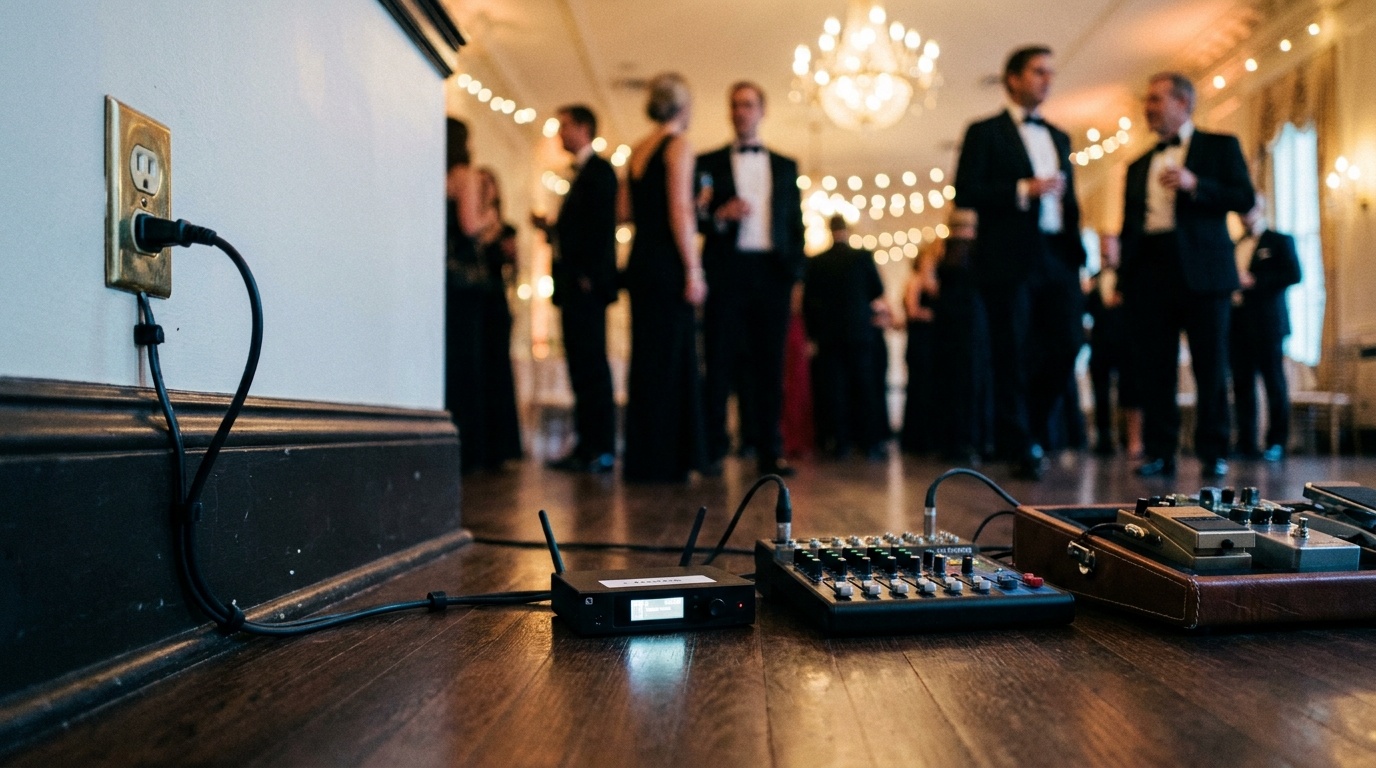
- Backup equipment. Instruments break, cables fail, and battery packs die. A professional carries a way to keep playing through it.
- A certificate of insurance (COI), meaning a copy of a policy that covers at least a million dollars in liability, with the ability to add your venue as an additional insured. Bars, restaurants, and private residences rarely require this. High-end hotels and dedicated wedding venues usually do, and some won't let a performer set up without it.
- The exact start and end time, the equipment being used, and, if the musician or DJ brings a team, who else will actually be there.
A musician who won't put these terms in writing is asking you to trust a handshake for the price of the whole booking.
What This Actually Costs, and When to Start Looking
Entertainment typically runs 10 to 15 percent of a corporate event's total budget, according to 2026 industry data. For weddings, budgets vary more, but the average couple is already coordinating around 14 different vendors, based on The Knot's 2024 wedding data, so the fewer surprises from any one of them, the better.
In the DMV, peak wedding season runs roughly April through October, and the most in-demand performers in DC, Maryland, and Virginia tend to book up several months out for Saturday dates. That said, don't assume it's too late to ask. A musician who responds within a few hours, not days, can often work with a shorter runway than you'd expect. Slow replies before you've even booked someone are a preview of how communication will go afterward.
Frequently Asked Questions
How far in advance should you book a musician for an event?
Book several months out for peak wedding season (spring through fall weekends) if you want your first-choice performer. For corporate events or off-season dates, a few weeks of notice is often enough. Reach out regardless of timeline. Availability depends more on the specific date than a fixed rule.
How much does it cost to hire a live musician?
Entertainment typically makes up 10 to 15 percent of a corporate event budget. For private events like weddings, pricing depends heavily on experience, set length, and equipment, so get a specific quote rather than relying on an average.
Does the musician bring their own sound equipment?
Ask directly, and get it in writing. Some performers travel with a full PA and wireless setup, others expect the venue to provide sound. Confirming this before the event avoids a last-minute scramble.
What happens if the musician gets sick or has an emergency?
A professional should have a specific backup plan, not a vague reassurance. Ask who they would call, and whether that person has actually filled in for them before.
Is a phone call enough to vet a musician, or should you ask for video?
A phone call covers logistics, but a video call answers a different question: whether the person you're trusting with your event is who they say they are. It matters most when someone else, like a parent covering the cost, has doubts a phone call won't resolve.
What's the biggest mistake people make when hiring a musician?
Booking off a profile photo and a price, without ever seeing real performance footage or getting the person on a call. The vetting takes twenty extra minutes and prevents most of the stories that make musicians hard to trust in the first place.
The Bottom Line
Musicians earned their reputation problem, which means the vetting step isn't optional the way it might be with other vendors. Ask for real footage, get on a call, and pay attention to how many questions they ask you back. If you're planning a wedding or private event, live wedding music has more on what that looks like day-of. If it's a corporate event, corporate event entertainment covers the differences in scope and technical needs.
Blog Categories
Latest Blogs